
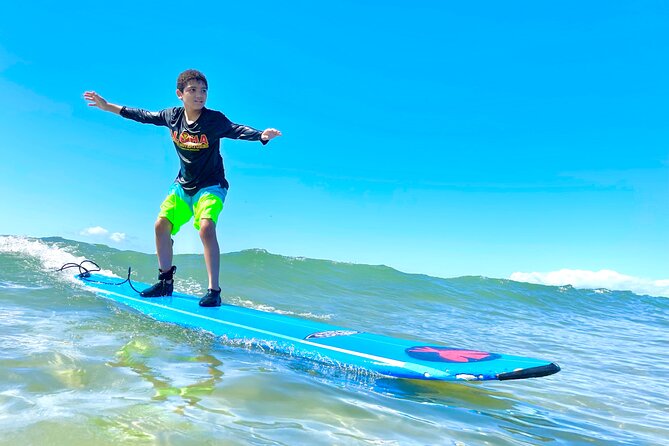
Reviewed · MAUI SURF LESSONS
Hawaiian-owned and Operated Surf Lessons in Kihei, Maui
Surf lessons in Maui feel like vacation—until you’re actually in the lineup. This one stands out because it’s Hawaiian-owned and taught with real local lineage, plus you get a land lesson that sets you up before you ever paddle out. The main thing to keep in mind: this experience depends on good weather, so plans can shift.
What I like most is the clear step-by-step coaching. Instructors teach basics in a calm, encouraging way (Keoki’s relaxed style is a great example), and the pacing helps first-timers feel ready fast. I also appreciate the extras: you’ll get suited up in protective gear that includes Lycra shirts and shoes, and you can capture the moment with photos and videos.
One more practical note: group size is capped (up to 25), which usually keeps the energy friendly. Still, you’re learning in open ocean conditions, so you’ll want to listen closely to safety and surf etiquette and be ready to adjust on the fly.
In This Review
- Key things I’d plan for
- Kihei’s Hawaiian-Led Surf Lesson: What Makes It Different
- The 2-Hour Flow in Plain English (and Why the Timing Works)
- Check-In in Kihei: Where You Start Matters
- Land Lesson: How Standing and Paddling Are Taught First
- Into the Water: Surf Etiquette and Safety You’ll Use Immediately
- Gear and Comfort: Lycra Shirts and Shoes Aren’t Just “Extras”
- Capturing the Moment: Photos and Video During the Lesson
- Group Size: Why Up to 25 Can Still Feel Personal
- Who This Surf Lesson Fits Best (and Who Might Hesitate)
- Value and Booking: Getting Your Money’s Worth in Maui
- Should You Book This Surf Lesson?
- FAQ
- FAQ
- Where does the surf lesson start and end?
- How long is the experience?
- Who operates the surf lesson?
- What language is the lesson offered in?
- Is this lesson for beginners?
- What happens before you go into the water?
- Do you get photos or videos?
- Is there a limit on group size?
- What weather requirements are there?
- What if I need to cancel close to the start time?
Key things I’d plan for
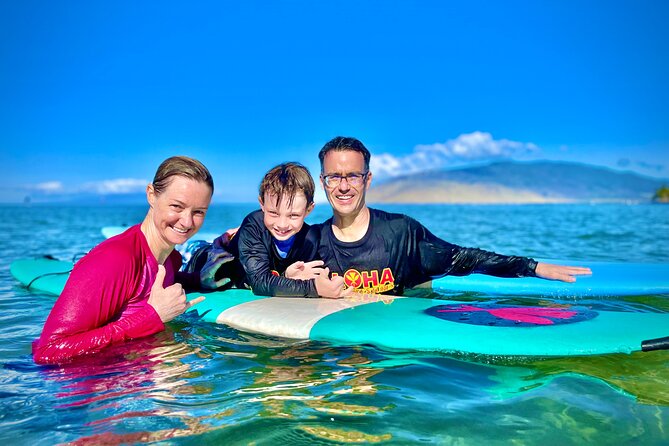
- Hawaiian-rooted coaching from instructors connected to the culture and history of surfing
- Land practice first so you learn standing, paddling, and safety before going in the water
- Protective Lycra + booties to help keep your feet comfortable and safer on Maui surfaces
- Surf etiquette and safety briefing taught in plain steps you can follow in the ocean
- Photo and video options so you can focus on surfing instead of filming everything
- Beginner-friendly energy with instructors like Keoki, Luis, and Keohi aiming to make you feel at ease
Still hoping to stand up? More Maui surf lessons
- Outrageous Surf ScHool Lesson on Lahaina Side★ 4.5 · 547 reviews
- Group Surf Lesson at Kalama Beach in Kihei★ 5.0 · 264 reviews
- Maui Lahaina Group Surf Lesson★ 4.9 · 235 reviews
- Private Surf Lesson for Two Near Lahaina★ 5.0 · 189 reviews
Kihei’s Hawaiian-Led Surf Lesson: What Makes It Different
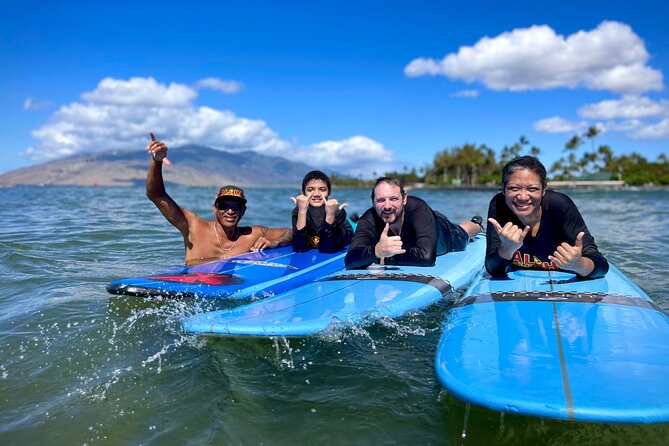
If you’ve ever watched someone stand up on a surfboard and thought, I can never do that, you’re the exact person this lesson is built for. In Kihei, you’re not just getting a quick intro; you’re getting a cultural surf lesson taught by people with Hawaiian roots and a connection to the descendants of the inventors of surfing.
The biggest difference I’d look for is how the vibe is framed. This is taught as something you learn from locals—people who grew up surfing in Hawaiian waters and know how to translate that experience into coaching you can use immediately. That cultural grounding matters because it changes the tone. You’re not treated like you’re there to “try a sport.” You’re treated like you’re learning a skill with respect for the ocean and the community.
You’ll also notice the coaching style from the names that come up repeatedly. Instructors like Keoki and Luis are described as calming, friendly, and encouraging. Keohi, specifically with a 13-year-old first-timer, is highlighted for making it fun while still guiding safely. That blend—joy plus structure—is what helps most first-time surfers make progress within a two-hour session.
One more reason to pay attention: you’re in Maui’s surf environment, not a pool. You’ll be shown safety and etiquette before you head out, so you know what not to do and how to behave around other surfers. That’s not a “nice to have.” It’s the difference between an okay lesson and one that feels like you’re genuinely part of the ocean experience.
The 2-Hour Flow in Plain English (and Why the Timing Works)
This lesson runs about two hours, and it’s paced to keep you from feeling rushed or frozen with nerves. You start by checking in for the lesson—this is where you’ll get oriented and confirm you’re in the right place for the group.
Next comes the practical setup. You’ll get suited up in a Lycra shirt and shoes designed to protect your feet. It’s a small detail, but it makes a big difference. Ocean surfaces can be rough, and your first contact with the board is easier when your feet are protected instead of raw or slipping.
Then you’ll do a land lesson first. This isn’t just “talking at you.” You’re taught step by step how to stand and how to paddle, plus the surf etiquette and safety rules you need in the water. For most beginners, the land portion is where confidence starts to click—because you understand the mechanics before your body has to perform them while wobbling.
After that, you’ll head into the water. The goal isn’t just to get you splashing around; it’s to help you catch waves as you put what you practiced on land into motion. And if you want memories, pictures and videos are available during the lesson, so you can enjoy the moment instead of juggling a camera with ocean chaos.
Why does this timing work? Because it creates a loop: learn a skill on land, understand the rules, then immediately test it in the real setting. You’re not left with hours of theory and no progress.
Check-In in Kihei: Where You Start Matters
The meeting point is in Kihei (the experience starts at PGJW+3Q Kihei, and it ends back at the same meeting point). Keeping it simple like that is a plus—especially on Maui, where you don’t want your day to get eaten up by complicated transfers.
You’ll also be glad it’s near public transportation. That’s useful if you’re not driving, or if you’re building in buffer time between activities.
In practical terms, I’d treat check-in like your “warm-up for the day.” Arrive with enough time to get matched to your group, get instructions, and feel mentally ready. If you show up stressed or late, you’ll spend your early minutes playing catch-up instead of soaking in the land lesson.
Land Lesson: How Standing and Paddling Are Taught First
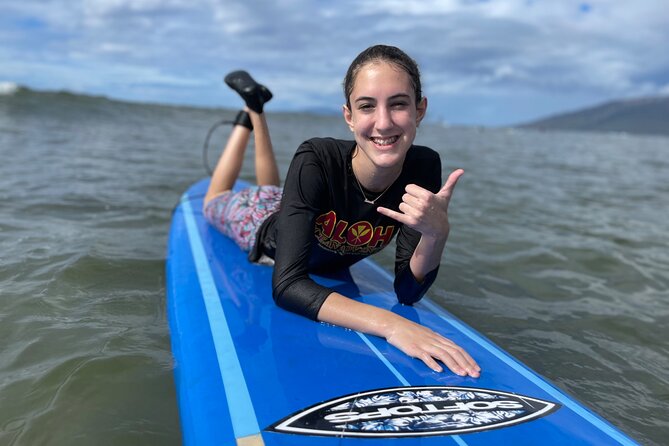
The land lesson is one of the most valuable parts of this experience, even before you get wet. You’re coached on how to stand and paddle step by step, which is the right order. Most beginner mistakes come from trying to learn balance and motion at the same time as wave timing. Here, you separate it.
On land, the instructor can break down body position and movement patterns. You’ll also hear the surf safety instructions and the etiquette rules that keep everyone safer in the lineup. That’s crucial because surfing isn’t just you versus the wave. It’s you plus other surfers plus changing water conditions.
What I’d look for in an instructor (and what comes through in the way people describe their guides) is how they teach this without making you feel embarrassed. Keoki’s calming, relaxed approach is praised for helping students feel at ease quickly. Luis is described as friendly and accommodating with boys, which tells me he’s comfortable teaching different personalities and energy levels. Richard is noted for having experience and keeping training personal with time for one-to-one guidance.
If you’re worried that you’ll be “behind” other people, land coaching helps. You can practice motions repeatedly while you still have stable ground under you. Then, when you move to the ocean, you’re not starting from scratch—you’re translating something you already tried.
A few more Maui experiences we would happily do again

Into the Water: Surf Etiquette and Safety You’ll Use Immediately

When you head into the ocean, you do it with a plan. Before you go, you’ll go over the safety rules and surf etiquette. That matters because Maui surf can be friendly, but it still has rules, timing, and space.
Surf etiquette is one of those things that can feel abstract until you’re out there. The lesson helps turn it into something you can apply right away—like how to think about spacing, how to behave around others, and what safety priorities to follow when conditions change.
In the water, the instructor’s job becomes two things at once: coaching technique and keeping the lesson safe. That’s why the group experience matters. With a maximum of 25 travelers, you’re not looking at a chaotic crowd, but you still benefit from an instructor who can keep attention on key moments.
A big reason people come away happy is that they feel supported rather than thrown into the deep end. The accounts of quick success for total beginners are a consistent theme, including first-time surfers who caught quite a few waves in a short amount of time. That success usually comes from getting real guidance at the exact moments you need it: positioning, timing, paddling effort, and when to try standing.
And yes, there’s still effort. You’ll work. But the coaching approach helps you work with the ocean rather than against it.
Gear and Comfort: Lycra Shirts and Shoes Aren’t Just “Extras”
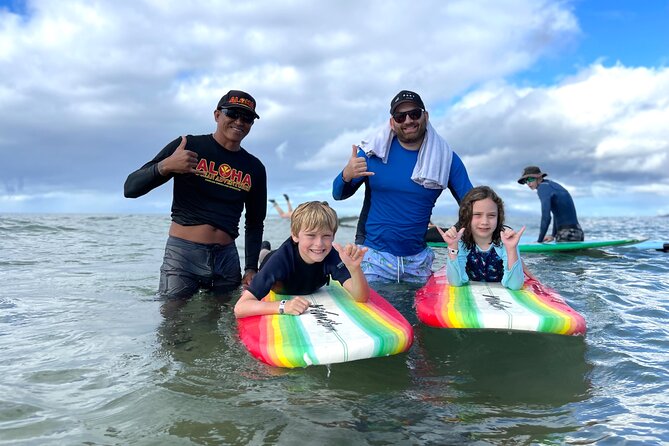
The lesson includes gear that protects your comfort and helps you participate confidently. You’ll be suited up with a Lycra shirt and shoes to protect your feet. If you’ve ever tried walking on beach rocks barefoot, you know why this matters.
Comfort affects learning. If your feet hurt or you’re constantly adjusting because you don’t feel stable, your focus shifts away from technique. Protective footwear reduces that friction, and the Lycra layer also helps with sun and grip depending on the setup.
You’ll likely also appreciate that this gear is handled for you. Surf lessons can become a scavenger hunt if you have to bring everything. Here, you can show up and be prepared quickly.
Capturing the Moment: Photos and Video During the Lesson
Surfing moves fast. The wave you’re proud of lasts seconds. If you’re trying to film everything yourself, you’ll probably end up doing less surfing and more recording.
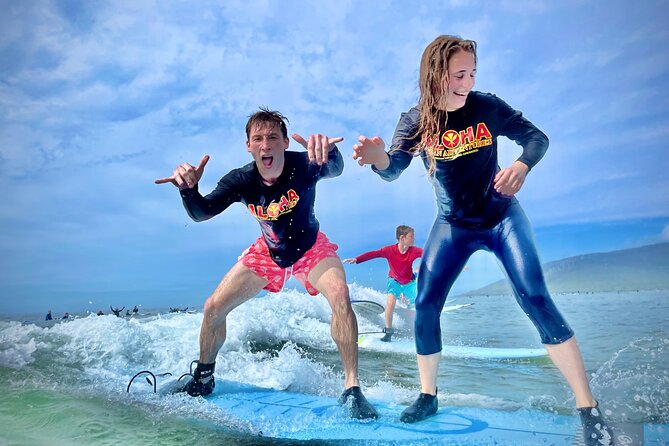
This experience includes pictures and videos available during the lesson, capturing memorable moments for you and your family. That’s a smart value-add because it shifts the pressure away from getting the perfect shot. You can focus on what the instructor is saying and on actually catching a wave.
If you’re traveling with kids or teens, this kind of capture is also helpful. It gives you proof of progress, not just memories of effort. And based on the positive experiences with a 13-year-old first-timer, the lesson can be encouraging enough that families want those moments saved.
Group Size: Why Up to 25 Can Still Feel Personal
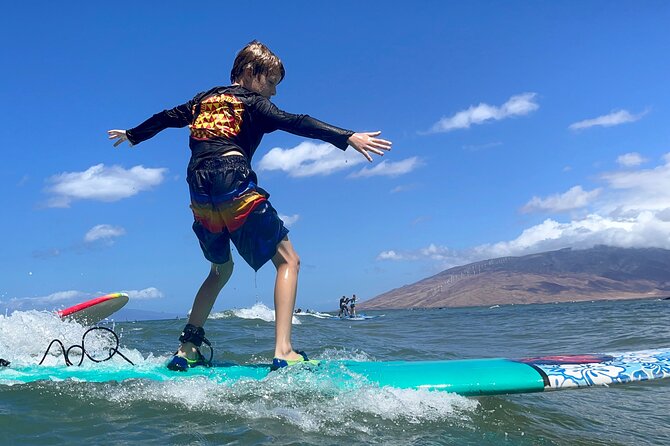
The group limit is 25, and that’s a useful guardrail. A larger group can mean less attention, but a capped size helps keep the lesson structured. What matters most is whether the instructor can give you feedback quickly enough to matter.
You can see how this plays out in the way one instructor’s training is described as personal and with time for one-to-one guidance. That tells me you’re not just stuck watching others. You should expect coaching you can actually apply to your next attempt.
I’d also consider your own comfort level. If you’re someone who likes lots of back-and-forth correction, choose the moments when the instructor is most directly addressing you. If you’re someone who learns by repeating motions and observing others, you’ll still benefit because the land lesson sets a foundation and the in-water coaching can refine what you’re doing.
Who This Surf Lesson Fits Best (and Who Might Hesitate)
This is a strong match for first-time surfers. That’s not a marketing line; it’s supported by the kinds of outcomes people describe: feeling ready quickly and catching waves in a short amount of time. It also works well for families and teens, with an example of a 13-year-old getting encouraging, fun coaching.
It’s also a good choice if you care about authentic connection rather than just sport mechanics. Being Hawaiian-owned and taught through Hawaiian roots changes the feel. You’re learning with cultural context, and that tends to make the experience more meaningful, not less.
Who might hesitate? Anyone who really hates being outdoors in changing conditions. The lesson requires good weather, and it depends on ocean conditions. If you’re planning around a tight schedule, you should build in flexibility. It’s also worth considering that surfing asks for basic physical effort—paddling, balance, and getting up. You don’t need prior experience, but you do need a willingness to try.
If you want a low-stakes introduction with strong coaching, this fits. If you want a long, slow, multi-day program or a highly technical training plan, you might find two hours a bit short for deeper mastery.
Value and Booking: Getting Your Money’s Worth in Maui
Even without a price listed here, I can tell you how to judge the value. This lesson earns its worth in three ways:
1) Teaching time is real. Two hours isn’t long, but the format is efficient: land instruction, safety and etiquette, then actual time in the water. You’re not spending your limited window just listening.
2) You get guided progress. Many beginners quit because they never feel like they can improve quickly. Here, the coaching style is praised for making students feel at ease, and that emotional comfort often translates into physical improvement.
3) You get help with memories. Photos and videos during the lesson mean you can capture results without dragging gear or missing waves.
Booking wise, you’ll get confirmation at the time of booking. And if weather becomes a problem, you’ll be offered a different date or a full refund. That’s the kind of policy that matters on Maui, where conditions can change.
My practical advice: treat this as a flexible, weather-dependent adventure. If you have only one day in Kihei, try to give yourself a backup plan so you’re not disappointed if conditions aren’t right.
Should You Book This Surf Lesson?
I’d book it if you want a beginner-friendly surf lesson with Hawaiian roots, clear coaching, and a format that gets you into the water without wasting time. The consistent praise for instructors like Keoki (calming), Luis (friendly and accommodating), and Keohi (encouraging and fun) points to a lesson culture that respects first-timers.
Skip it only if you’re trying to lock in a rigid schedule with no flexibility for weather, or if you’re looking for a long training program rather than a focused introduction. For most people, this is a smart Maui experience: structured, respectful, and built to help you stand up and enjoy the ocean while learning the rules that make surfing safer for everyone.
FAQ
FAQ
Where does the surf lesson start and end?
It starts at PGJW+3Q Kihei and ends back at the same meeting point.
How long is the experience?
It’s about 2 hours.
Who operates the surf lesson?
The experience is provided by Aloha Ocean Adventures and is Hawaiian-owned and operated.
What language is the lesson offered in?
The lesson is offered in English.
Is this lesson for beginners?
Yes. Most travelers can participate, and the lesson is designed to teach the basics step by step, including standing and paddling.
What happens before you go into the water?
You’ll check in for the lesson, get suited up in Lycra shirts and shoes for foot protection, and receive a land lesson covering standing, paddling, safety instructions, and surf etiquette.
Do you get photos or videos?
Yes. Pictures and videos are available during the lesson to capture your memorable moments.
Is there a limit on group size?
Yes. The experience has a maximum of 25 travelers.
What weather requirements are there?
The experience requires good weather. If it’s canceled due to poor weather, you’ll be offered a different date or a full refund.
What if I need to cancel close to the start time?
You can cancel for a full refund up to 24 hours in advance. If you cancel less than 24 hours before the start time, the amount paid is not refunded.
More Workshops in Maui
- Maui: Two Hour Beginner Group Surf Lesson in Kihei
★ 5.0 · 950 reviews - Outrageous Surf ScHool Lesson on Lahaina Side
★ 4.5 · 547 reviews - Group Surf Lesson at Kalama Beach in Kihei
★ 5.0 · 264 reviews - Maui Lahaina Group Surf Lesson
★ 4.9 · 235 reviews - Private Surf Lesson for Two Near Lahaina
★ 5.0 · 189 reviews
More Tour Reviews in Maui
- Maui Pineapple Farm Tour in Haliimaile
★ 5.0 · 2,855 reviews - Small-Group Road to Hana Adventure Tour with Pickup & Lunch
★ 5.0 · 2,637 reviews - Maui Eco-Raft Tour: Eye-Level Whale or Dolphin Watching – Lahaina
★ 5.0 · 2,482 reviews - Maui Snorkeling Adventure to Molokini and Turtle Town
★ 4.5 · 2,221 reviews - Maui: Haleakala Sunrise Spectacular with Local Breakfast
★ 4.5 · 2,155 reviews
Catch More Maui Surf
- Maui: Two Hour Beginner Group Surf Lesson in Kihei
★ 5.0 · 950 reviews - Outrageous Surf ScHool Lesson on Lahaina Side
★ 4.5 · 547 reviews - Group Surf Lesson at Kalama Beach in Kihei
★ 5.0 · 264 reviews - Maui Lahaina Group Surf Lesson
★ 4.9 · 235 reviews - Private Surf Lesson for Two Near Lahaina
★ 5.0 · 189 reviews
More of Maui we have reviewed, from the crater to the coast




Maui Surf Lessons, compared.
 ★ 5.0Two Hour Beginner Group Surf Lesson in KiheiFrom $98950 reviews
 ★ 4.5Outrageous Surf ScHool Lesson on Lahaina SideFrom $75547 reviews
 ★ 5.0Group Surf Lesson at Kalama Beach in KiheiFrom $108264 reviews
 ★ 4.9Maui Lahaina Group Surf LessonFrom $125235 reviews
 ★ 5.0Private Surf Lesson for Two Near LahainaFrom $145189 reviews
 ★ 5.02 Hour Beginner Group Surf Lessons154 reviews
 ★ 5.0Group Surf Lessons from Kaanapali BeachFrom $120143 reviews
 ★ 5.02 Hour Private Group Surf Lesson in Lahaina MauiFrom $125129 reviews
Browse the lists this tour appears in