
Reviewed · MAUI SURF LESSONS
Private Surf Lesson for Two Near Lahaina
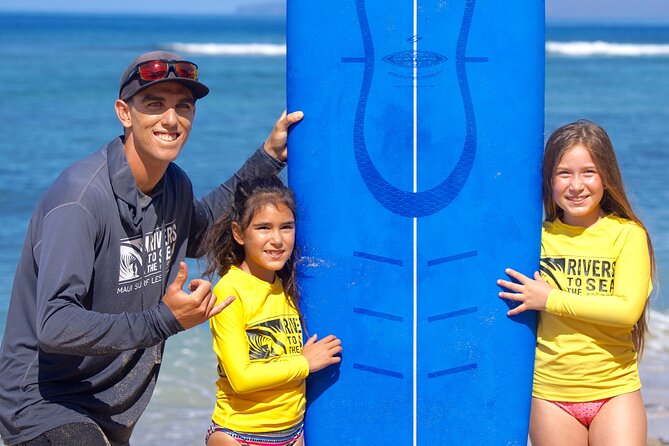
Surfing in Maui, minus the crowding. This 90-minute lesson for two gives you hands-on coaching and a clear path to your first stand-up moments. I like the fact that you get a professional instructor in a small, two-person format, plus starter-friendly gear like a soft-top board and reef shoes. One possible drawback: you still need good weather, and wind or surf conditions can affect what you end up doing that day.
It’s set up for beginners and nervous first-timers alike, from kids age seven and up to adults who are just trying to feel steady on the board. The vibe stays focused on safety and confidence, and the beach setup tends to feel more relaxed than the big, chaotic lesson scenes.
In This Review
- Key things to know before you go
- A 90-minute semi-private surf lesson built for first-timers near Lahaina
- Meeting at Hawaii 30HI-30 and why this spot works for learning
- From land lessons to first rides: how the session usually unfolds
- The instructor factor: the difference between trying and getting it
- Equipment matters: rash guard, brand-new soft-top board, and reef shoes
- What makes the wave conditions beginner-friendly (and what can surprise you)
- Value and price: is $145.30 per person worth it?
- Who this lesson is best for (and when you might want a different plan)
- A practical game plan for your day on the water
- Should you book this surf lesson near Lahaina?
- FAQ
- How much is the surf lesson for two near Lahaina?
- How long is the lesson?
- What’s included with the lesson?
- What’s not included?
- Where do we meet?
- What is the minimum age?
- How many travelers are allowed?
- What happens if the weather is bad?
Key things to know before you go
- Semi-private for two means more direct feedback and less time waiting your turn
- Gear is included: SPF-50 rash guard, soft-top board, and protective reef shoes
- Beginners-friendly location vibe with room to learn and waves chosen for practice
- In-water coaching on top of land basics helps you connect the dots fast
- Instructors adjust for conditions, including possible location shifts when surf weather changes
Still hoping to stand up? More Maui surf lessons
- Outrageous Surf ScHool Lesson on Lahaina Side★ 4.5 · 547 reviews
- Group Surf Lesson at Kalama Beach in Kihei★ 5.0 · 264 reviews
- Maui Lahaina Group Surf Lesson★ 4.9 · 235 reviews
- Private Surf Lesson for Two Near Lahaina★ 5.0 · 189 reviews
A 90-minute semi-private surf lesson built for first-timers near Lahaina
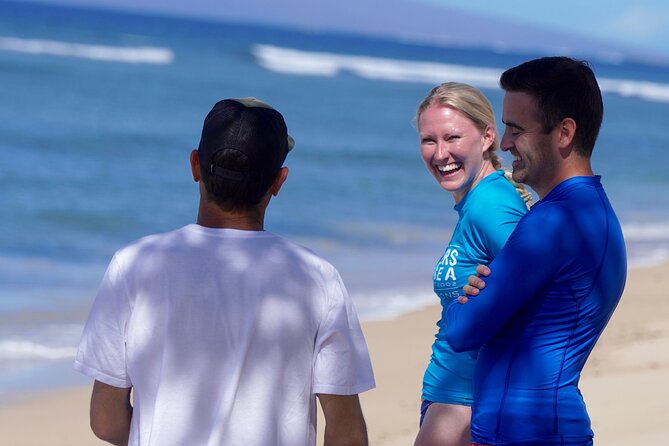
This is a Maui surf lesson designed for real beginners: people who want to learn fundamentals, feel safe in the ocean, and stand up without guessing. You book as a max of two travelers, so it’s not the usual group circus where one instructor can barely reach you.
Price is $145.30 per person for about 1 hour 30 minutes. That number feels easier to swallow when you remember what’s included: you’re getting a pro instructor and a full set of starter gear, not just someone showing up and pointing at the water. If you’ve ever taken a group lesson, you know the big pain point is time—this format leans into time you can actually use.
You’re also not stuck doing “sitting on the beach” learning. The lesson is structured for getting you onto the board and practicing the cycle that matters: paddling, turning, timing, and keeping your balance once you catch a wave.
Meeting at Hawaii 30HI-30 and why this spot works for learning
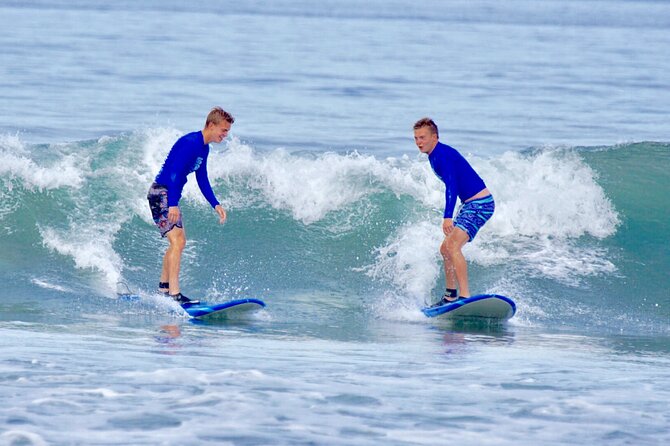
Your meeting point is Hawaii 30HI-30 in Lahaina, and the activity ends back at the same place. That matters because it keeps the experience simple: you’re not juggling long drives or complicated meeting windows once you’re already in Maui.
What makes this area appealing for newcomers is the way the beach tends to run compared with the most crowded surf lesson scenes. In practice, the conditions you’ll be taught around are usually set up for beginner success: small, manageable waves and a setup where you’re not constantly dodging other surfers.
Still, Maui weather loves curveballs. One common theme is wind: even when waves aren’t expected to be huge, wind can change the look of the water. The good news is that your instructor can adapt, and you may get a heads-up if surf conditions mean a location adjustment. That kind of communication is a big deal when you’re learning.
From land lessons to first rides: how the session usually unfolds
A good surf lesson for beginners is all about sequencing. You can’t just toss someone into the lineup and hope for the best. This lesson follows a “get it on land, then try it in the water” pattern, with the instructor giving you practical cues you can repeat the moment you’re back on the board.
Here’s what that flow tends to feel like:
- You start with basics on land: how to position yourself on the board, how to handle the board safely, and what you’re aiming to do once you’re in the surf zone.
- Then you move into the water with safety priorities that come first: where you should be, how to read the situation, and how to avoid panic when a wave isn’t perfect.
- As you get chances to catch waves, you get coaching in real time—short corrections meant to help you stand and stay up longer.
This approach shows up in the outcomes people talk about. Many first-timers manage to stand up within the first hour, especially with patient instruction and waves that roll in at a manageable pace. For novice swimmers, it’s not just about surfing—it’s about guided confidence, like being shown exactly what to do so you can stop thinking and start moving.
The instructor factor: the difference between trying and getting it
Instructors matter. A lot. The most praised part of this experience is how calm and focused the coaching feels while you’re learning something that can otherwise feel scary.
You’ll see recurring praise for specific instructors such as San, Jess, Sharky, Eric, Tanner, and Kane. The common thread isn’t “they’re great surfers” (you’re already in Hawaii for that)—it’s that they coach in a way that helps you succeed. People mention being guided from not quite getting it to standing up, and they highlight patience for kids who need time to build trust.
Two-person lessons make that easier. When an instructor isn’t juggling multiple students, they can watch you more closely and correct the one thing that’s actually holding you back—stance, timing, paddling rhythm, or wave selection.
If you’re the kind of traveler who wants to learn for real (not just collect a photo), this is the right kind of coaching style. The goal is competence, not just entertainment.
A few more Maui experiences we would happily do again



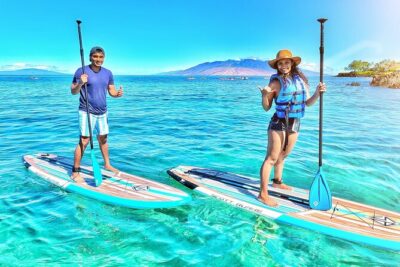
Equipment matters: rash guard, brand-new soft-top board, and reef shoes
This lesson includes the gear you need to focus on surfing instead of shopping last minute. You get:
- A clean, dry, SPF-50 rash guard
- A brand new, state-of-the-art soft-top surfboard
- Protective reef shoes
The soft-top board is the big safety upgrade for beginners. Compared with hard boards, it’s easier to balance on, safer to fall on, and more forgiving when your feet don’t land perfectly at first. That support is what turns a “maybe this will be terrible” day into a “wait, I stood up” day.
Reef shoes also do real work. They help protect your feet in the ocean and make you more confident moving around in the water. It’s a small detail that can change the whole mood—less worry, more focus.
One more note: sunscreen is not included. You’ll get SPF-50 on your rash guard, which helps a lot, but it won’t cover your entire body. Bring your own sunscreen so you’re not scrambling in Maui sun.
What makes the wave conditions beginner-friendly (and what can surprise you)
This lesson is positioned for beginners and new surfers, and many people specifically mention that the waves are not “crazy big.” That’s ideal for your learning stage because it lets you practice without being knocked around or overwhelmed.
Another detail that shows up in the vibe: instructors tend to look for waves that match the group. People talk about “slow rolling sets” and surf that feels more manageable than the chaotic, busy surf scenes some areas can have.
The surprise factor is wind and day-to-day water changes. A day that looks perfect from shore can feel different once you’re in the air and the water’s moving. That’s why the coaching matters and why the lesson being flexible is helpful.
If you’re bringing kids, consider temperature too. A wetsuit can make a difference on Maui windier days, especially when you’re getting in and out of the water. It’s not required by the lesson info, but it’s a smart move for comfort if your kids run cold.
Value and price: is $145.30 per person worth it?
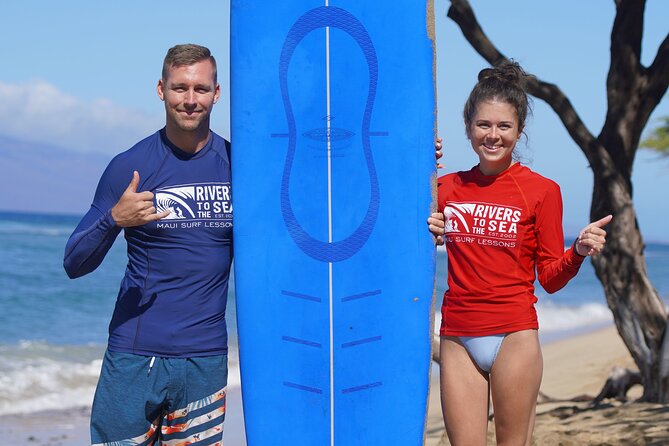
Let’s talk value in the way that actually matters: how likely you are to leave feeling proud you learned something.
At $145.30 per person, you’re paying for:
- A pro instructor
- A two-person setup (so you get attention, not crowd-share)
- Included equipment (rash guard, soft-top board, reef shoes)
For beginners, the biggest cost isn’t money—it’s wasted time. If you’re in a group lesson, you spend more effort waiting to try and less getting corrected. In a two-person lesson, the instructor can keep your learning loop tight: try, get feedback, try again, improve.
That’s why the most praised outcomes focus on success—standing up, feeling safe, and wanting to surf again the next day. You’re paying to compress learning time so you don’t just survive the ocean; you actually learn surfing basics.
Who this lesson is best for (and when you might want a different plan)
This lesson is a strong fit if you’re:
- A total first-timer, or you feel unsure in the ocean
- Learning as a couple and want more coaching than a group lesson
- Bringing kids age seven and up (and you want a patient instructor who prioritizes safety)
- Looking for a memorable Maui activity that feels hands-on, not tour-bus-y
It may be less ideal if you’re already an experienced surfer chasing advanced techniques or bigger surf. Nothing in the lesson description suggests it’s built for high-level progression. You can still learn, but the emphasis is on fundamentals and safe early wins.
A practical game plan for your day on the water
Here are the small choices that help you get the best experience out of your lesson time:
- Plan for weather. This experience requires good conditions, and poor weather can mean a different date or a full refund.
- Bring sunscreen. It’s not included, and your rash guard won’t protect your entire body.
- Don’t over-schedule right before your lesson. It’s easier to learn when you’re not rushed, hungry, or tired. Food and drinks aren’t part of the lesson, so plan your meals around it.
- Expect coaching to be hands-on and specific. The best results come when you listen for the one correction you’re given and try it right away.
Also, if you’re nervous, let that be your normal. People learn faster when they stop fighting fear and start trusting the process. Instructors here are repeatedly praised for helping first-timers feel capable.
Should you book this surf lesson near Lahaina?
I’d book it if you want a beginner-friendly surf experience with real attention, gear handled for you, and a good chance of standing up. The two-person size is the key value piece: it’s the difference between learning at your own pace and being part of a queue.
Book it with confidence if your trip includes a day when the weather looks workable and you’re ready to take instruction seriously but not take yourself too seriously. You’ll come away with the kind of Maui memory that feels earned—not just watched.
FAQ
How much is the surf lesson for two near Lahaina?
It costs $145.30 per person.
How long is the lesson?
The duration is approximately 1 hour 30 minutes.
What’s included with the lesson?
You get a clean, dry SPF-50 rash guard, a brand new soft-top surfboard, protective reef shoes, and a professional instructor.
What’s not included?
Sunscreen is not included, and the lesson also doesn’t include hotel pickup/drop-off or food and drinks.
Where do we meet?
The meeting point is Hawaii 30HI-30, Lahaina, HI 96761, USA, and the activity ends back at the meeting point.
What is the minimum age?
The minimum age is seven years old.
How many travelers are allowed?
This activity has a maximum of 2 travelers.
What happens if the weather is bad?
This experience requires good weather. If it’s canceled due to poor weather, you’ll be offered a different date or a full refund. You can also cancel for a full refund up to 24 hours in advance.
More Private in Maui
- Maui: VIP Private Road to Hana Tour with Pick Up
★ 5.0 · 1,068 reviews - Maui -PRIVATE- Air Tour: 5 Islands: (2-5 people): SEE Even MORE!
★ 5.0 · 785 reviews - Maui -PRIVATE- Air Tour FUN: 3 Islands: (2-5 people): SEE it ALL!
★ 5.0 · 559 reviews - Maui by Storm: Epic Private Luxury Road to Hana Adventure Tour
★ 5.0 · 337 reviews - Private Stand Up Paddle Boarding Tour in Turtle Town, Maui
★ 5.0 · 293 reviews
More Tour Reviews in Maui
- Maui Pineapple Farm Tour in Haliimaile
★ 5.0 · 2,855 reviews - Small-Group Road to Hana Adventure Tour with Pickup & Lunch
★ 5.0 · 2,637 reviews - Maui Eco-Raft Tour: Eye-Level Whale or Dolphin Watching – Lahaina
★ 5.0 · 2,482 reviews - Maui Snorkeling Adventure to Molokini and Turtle Town
★ 4.5 · 2,221 reviews - Maui: Haleakala Sunrise Spectacular with Local Breakfast
★ 4.5 · 2,155 reviews
Catch More Maui Surf
- Maui: Two Hour Beginner Group Surf Lesson in Kihei
★ 5.0 · 950 reviews - Outrageous Surf ScHool Lesson on Lahaina Side
★ 4.5 · 547 reviews - Group Surf Lesson at Kalama Beach in Kihei
★ 5.0 · 264 reviews - Maui Lahaina Group Surf Lesson
★ 4.9 · 235 reviews - 2 Hour Beginner Group Surf Lessons
★ 5.0 · 154 reviews
More of Maui we have reviewed, from the crater to the coast




Maui Surf Lessons, compared.
 ★ 5.0Two Hour Beginner Group Surf Lesson in KiheiFrom $98950 reviews
 ★ 4.5Outrageous Surf ScHool Lesson on Lahaina SideFrom $75547 reviews
 ★ 5.0Group Surf Lesson at Kalama Beach in KiheiFrom $108264 reviews
 ★ 4.9Maui Lahaina Group Surf LessonFrom $125235 reviews
 ★ 5.02 Hour Beginner Group Surf Lessons154 reviews
 ★ 5.0Group Surf Lessons from Kaanapali BeachFrom $120143 reviews
 ★ 5.02 Hour Private Group Surf Lesson in Lahaina MauiFrom $125129 reviews
 ★ 5.0Waves Hawaii Surf School in Kihei MauiFrom $103118 reviews
Browse the lists this tour appears in