
Reviewed · MAUI SURF LESSONS
2 Hour Beginner Group Surf Lessons
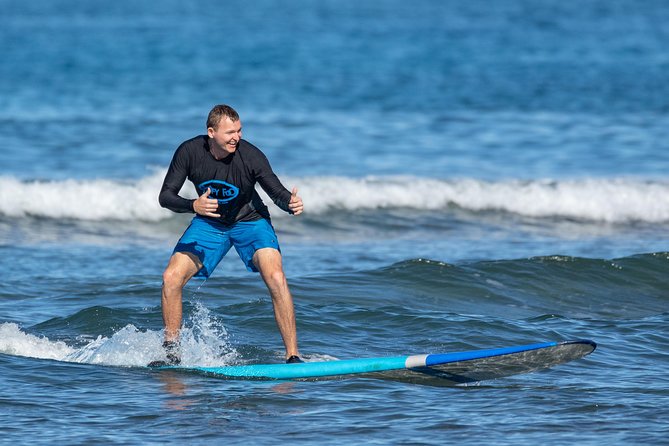
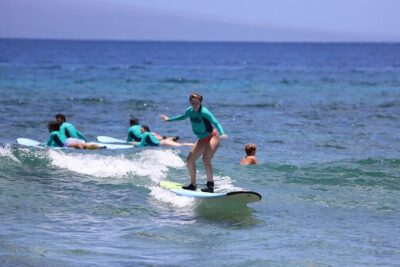
A first surf lesson in Maui feels instantly real. You’re learning where surfing began, with instructors like Mario and Javier who focus on step-by-step progress so you can actually stand and catch waves, not just paddle around. I especially like the small group size (max 5), and the way the school handles the basics with all the gear provided—rash guards, equipment, and reef shoes included. The one thing to keep in mind: group lessons are for ages 9+, and younger kids need private instruction.
You’ll start with a quick land intro, get kitted up, then head into beginner-friendly water for nonstop practice and safety coaching. The vibe from the staff comes through as relaxed and upbeat, even when you wipe out. The only drawback is the age cutoff—if you’re under 9, you’ll have to book a different format to join the water.
In This Review
- Quick hits before you book
- Why Lahaina makes sense for first-time surfing
- The exact 2-hour flow: what happens from check-in to final wave
- Arrive early, get geared up
- Land lesson basics, then right to the staging area
- Practice time that doesn’t drag
- End back where you started
- What you should bring (and what you can leave behind)
- Gear included: why it improves your odds of success
- Small group lessons: the attention you feel in the water
- Instructors who teach the whole way, not just the trick
- Photo options: get the action without ruining your fun
- Choosing a lesson time that fits your Maui day
- Where you can go after: Lahaina is easy to pair with this
- Price and value: what you’re really paying for
- Who this is best for (and who should consider another option)
- Should you book this Maui beginner surf lesson?
- FAQ
- How long is the beginner group surf lesson?
- What’s the minimum age for the group lesson?
- What should I wear and bring?
- What surfing equipment is provided?
- Where does the lesson start and end?
- Do I need to arrive early?
- Is the lesson offered in English?
- Can service animals attend?
- Is free cancellation available?
- Is there an option to get photos during the lesson?
Quick hits before you book
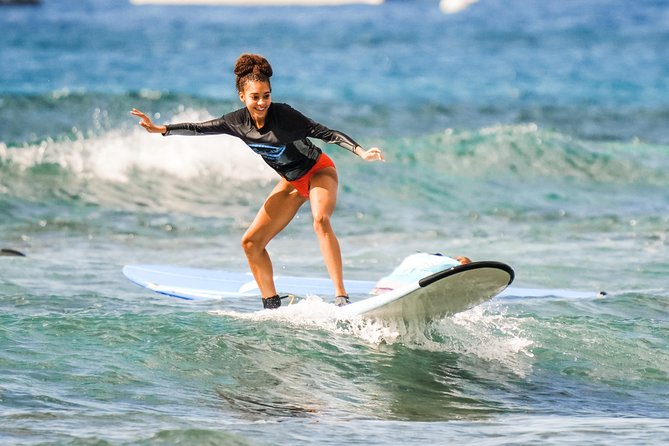
- Max 5 students means more hands-on attention and feedback during the lesson
- Full equipment provided includes surf gear plus reef shoes, so you can travel lighter
- 2 hours of structured practice helps you move from basics to real wave attempts
- Multiple lesson start times let you fit surfing into your Maui plan
- Optional action photos are available for those who want proof of their first stands
Still hoping to stand up? More Maui surf lessons
- Outrageous Surf ScHool Lesson on Lahaina Side★ 4.5 · 547 reviews
- Group Surf Lesson at Kalama Beach in Kihei★ 5.0 · 264 reviews
- Maui Lahaina Group Surf Lesson★ 4.9 · 235 reviews
- Private Surf Lesson for Two Near Lahaina★ 5.0 · 189 reviews
Why Lahaina makes sense for first-time surfing
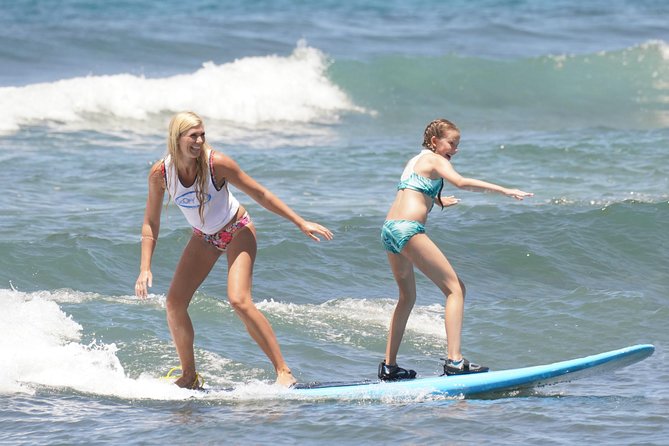
Learning to surf in Maui feels different from a random surf spot. This is Hawaii—surfing’s home ground—so the whole experience has a grounded, local rhythm. You’re not just trying a novelty activity. You’re learning a skill in the place that made it famous.
I like that the lesson is beginner-focused rather than “sink or swim.” You get coaching aimed at your first successful wave attempts: how to position on the board, how to paddle with purpose, and how to pop up when the timing is there. Even if you’re nervous, the instructors’ style in feedback tends to be patient and encouraging, the kind of instruction that keeps you moving forward instead of freezing you.
One more practical point: the meeting point is in Lahaina (Hawaii 30HI-30, Lahaina, HI 96761). It’s close to public transportation, which matters if you don’t want to fight parking at the worst time of day. And if you plan your day well, you can roll straight into food and downtime after your water session.
The exact 2-hour flow: what happens from check-in to final wave
This isn’t a long, wandering tour. It’s a tight lesson built around getting you into the water fast and then practicing in a controlled way.
Arrive early, get geared up
Plan to arrive 30 minutes before your scheduled start. That gives you time to check in, get your sizing sorted, and get your reef shoes on without rushing. You’ll also want to set yourself up for comfort: bring a water bottle, sunscreen, and a towel. Dress in your swim attire so the gear-up part is quick.
Also bring the reality check: you’ll be in and out of the water more than you expect. Even if you’re calm on land, ocean conditions take energy. Having a towel ready helps you stay comfortable while you reset.
Land lesson basics, then right to the staging area
Most beginner lessons follow the same smart rhythm: a short introduction on land, then time in the water with the instructor guiding your attempts.
In feedback, lessons are described as efficient—an intro on land first, then paddling out to the staging area, then repeated tries. That matters because surfing is timing and muscle memory. You don’t learn it from one perfect attempt. You learn it by getting a lot of reps while an instructor spots what’s going wrong.
You may see different instructors, but the common theme is coaching that matches your level. Some instructors are noted for being funny, some for being super hands-on, and many for keeping the group safe and moving. If your instructor is Austin, Mario, Shane, Joe, Hugo, or Phillipe, you’ll likely get that same kind of clear pacing and encouragement shown in past lessons.
A few more Maui experiences we would happily do again

Practice time that doesn’t drag
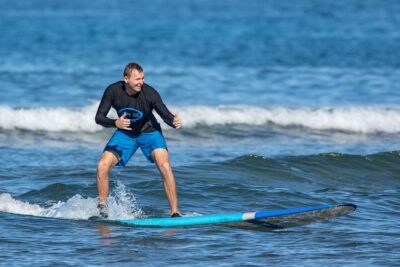
The big win for beginners is the lesson pacing. You should feel like the water time is purposeful, not wasted. Feedback also points out that conditions for learning are typically set up so waves are manageable, and the instructor stays close while you rotate through your attempts.
If you’re doing this early in the morning, you might also notice a calmer crowd situation as the day builds. That’s not guaranteed, but it’s a good reason to consider a first start time if your schedule allows.
End back where you started
The activity ends back at the meeting point, so you can plan your next stop without hunting for a new pickup location. It’s the kind of setup that keeps the day simple.
What you should bring (and what you can leave behind)
The school supplies the surfing gear and reef shoes, plus rash guards. That’s a big value piece, because it means you don’t need to buy or rent specialty items before your Maui trip.
So what should you bring?
- Swim attire (you’ll dress in this before you go)
- A water bottle
- Sunscreen
- A towel
If you’re the type who gets chilled easily after water, bring a dry layer for the ride back. You’ll be surprised how fast the wind cools you when you’re done.
Gear included: why it improves your odds of success
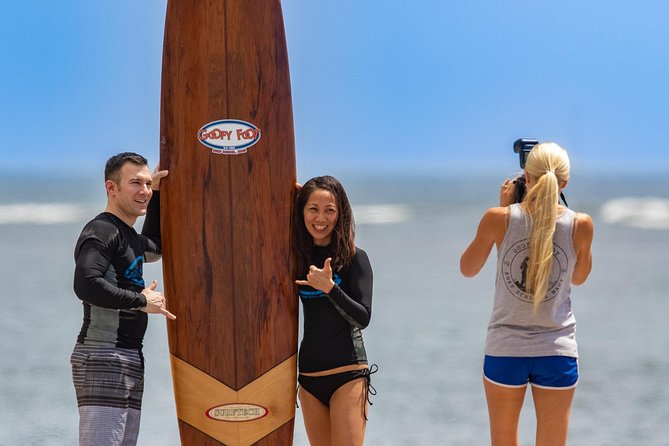
Full gear matters more than people think. When you’re new, setup mistakes turn into missed waves. A board that fits, a rash guard that stays put, and reef shoes that protect your feet all help you focus on the real job: balancing and timing.
Because you’re not spending time figuring out equipment on your own, you can get more practice in less time. The lesson stays focused on technique.
And because the group is small (max 5), it’s easier for the instructor to spot whether your stance is too wide, whether you’re paddling in a way that positions you well, or whether you’re getting stuck during the pop-up phase. That’s where beginners usually win or lose their momentum.
Small group lessons: the attention you feel in the water
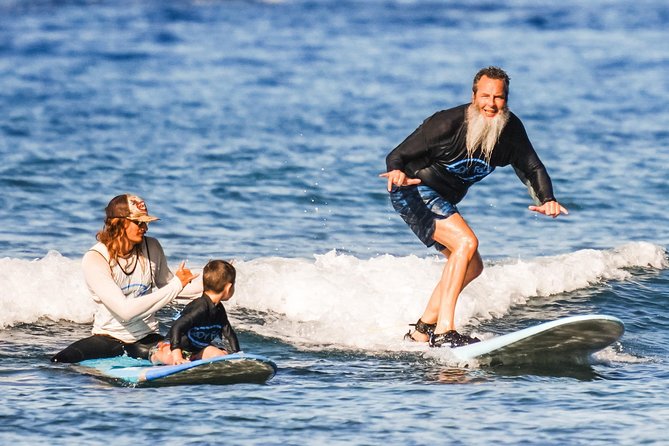
Max 5 travelers sounds like a detail until you’re in it. With a smaller group, you’re less likely to feel like you’re waiting your turn. You also get more frequent feedback, and the instructor can stay present for safety checks.
In feedback, this shows up as instructors staying with students as they learn to stand and then adjusting their coaching in real time. Some lessons even run with enough momentum that students are encouraged to stay out a few extra minutes if conditions and timing allow.
Safety is also easier with a small group. The instructor can track who’s comfortable, who needs more reassurance, and who should take a break. If you get uneasy, the best thing you can do is tell the instructor early. This is exactly the kind of situation where a patient coaching style helps.
Instructors who teach the whole way, not just the trick
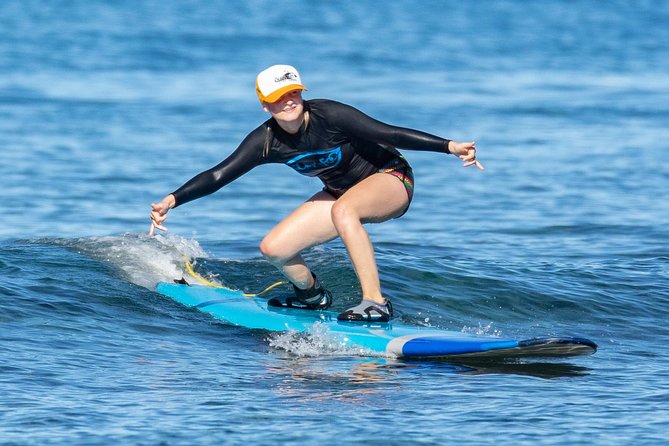
The best beginner instructors don’t just tell you what to do. They explain why, and they keep it calm when you wipe out.
From past sessions, a few teaching traits show up again and again:
- Step-by-step breakdown of the pop-up and paddling rhythm
- Encouragement after wipeouts so you keep trying
- Close support to help you feel secure before you launch into a wave
- Kid-friendly coaching that still respects safety
You’ll see names like Javier, Curran, Kailani, Fabio, Mario, Austin, and Keith connected with these outcomes. You shouldn’t treat names like guarantees, but they’re useful clues about what the school emphasizes: teaching that gets beginners onto waves quickly, while still protecting them.
Photo options: get the action without ruining your fun
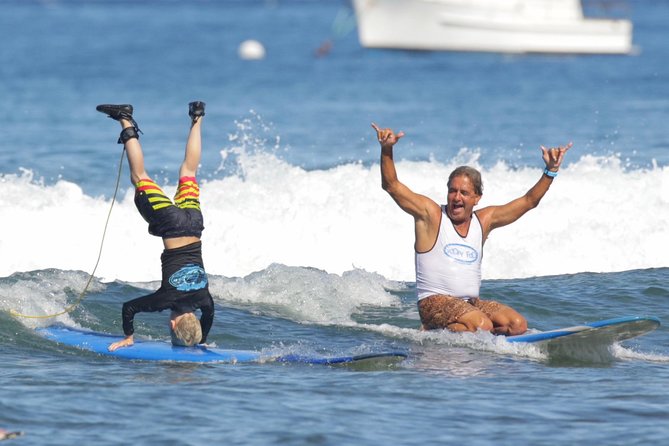
If you want proof that you stood up, there’s often an option for a photographer during the lesson. One instructor’s team included a photographer named Gabriel, capturing action shots, and the feedback described the fees as reasonable.
If you choose photos, it’s smart to treat it as a bonus, not a performance pressure. Your job is to learn. The photos are just the souvenir.
If your goal is maximum focus, you can skip the photo option and just enjoy the practice. Either way, you’ll still have the memory of catching waves.
Choosing a lesson time that fits your Maui day
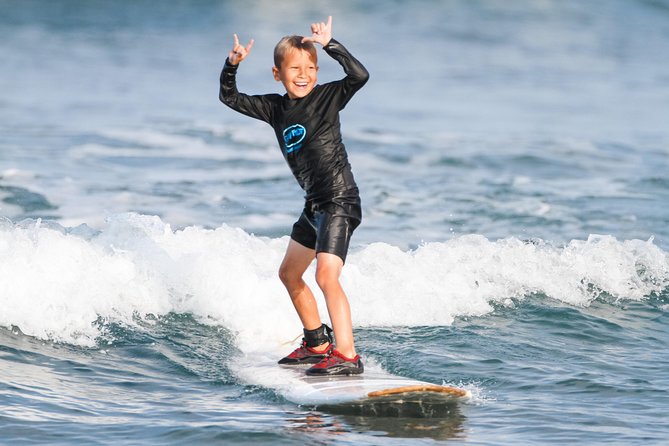
The school offers several lesson times. That’s not just convenience—it changes how the session feels.
- If you’re going for a quieter start, an early lesson can mean fewer people building up around you during your time in the water.
- If you’re traveling with kids or plan to hike later, a mid-morning slot can keep the rest of the day intact.
Pick the time that leaves you energy afterward. Surfing is fun, but it’s still work for your arms and core.
Where you can go after: Lahaina is easy to pair with this
One practical perk of the location is how easy it is to keep your day moving. The meeting area in Lahaina is close to public spots and restaurants, so after you rinse off and towel down, you can slide into food without a long drive.
If you like walking, you may even find it easy to grab a meal near the Banyan tree area (depending on where you park and where you exit). Even if you don’t go far, you’ll probably want a post-surf burger and a cold drink. That’s basically Maui law.
Price and value: what you’re really paying for
No price is provided here, so I can’t compare exact dollars. But I can tell you what you’re buying with this lesson structure.
You’re paying for:
- Two hours of coached reps (not just a quick demo)
- Small-group attention
- All core gear so you don’t bring special equipment
- A setting selected for beginners, so you’re not fighting huge surf on day one
- Optional photos if you want them
If you’re new, the biggest value is the coaching. The gear is a close second. A group class is usually the best first step because your cost is lower than private lessons, while the instruction is still hands-on.
Who this is best for (and who should consider another option)
This is designed for beginners and for groups. It’s most suitable if you:
- Want to learn the fundamentals fast
- Prefer instruction with safety support
- Are traveling as a couple, family, or small group
- Need the lesson to fit into a 2-hour window
The age rule is important: group lessons are for ages 9+. If your child is younger, you’ll need private instruction instead. Also note that most travelers can participate, so unless you have a personal medical concern not covered here, you can likely join.
If you’re already comfortable in the ocean and you want a serious skill build, this group format may feel a little gentle. Still, for your first stands, it’s a smart starting point.
Should you book this Maui beginner surf lesson?
If your goal is simple—get into the water, learn the basics, and try to stand—then yes, book it. This setup is built for that exact outcome: a short lesson with patient instruction, beginner-appropriate practice, and gear taken care of.
Book it especially if:
- You want coaching that doesn’t shame mistakes
- You’re traveling with kids 9 or older
- You’d rather focus on learning than renting boards and rash guards
- You like the idea of a max 5-person group
Skip it or switch formats if:
- Your kid is under 9
- You want one-on-one attention from the start
- You don’t want to follow the required timing (arriving 30 minutes early matters for gear-up)
Overall, if you’re in Maui and you’ve ever watched someone surf and thought, I could try that, this is one of the most practical ways to make it happen.
FAQ
How long is the beginner group surf lesson?
The lesson runs about 2 hours.
What’s the minimum age for the group lesson?
Group lessons are for ages 9 and older. Anyone under 9 needs private instruction.
What should I wear and bring?
Come dressed in your swim attire. Bring a water bottle, sunscreen, and a towel.
What surfing equipment is provided?
You’ll be provided with the surfing equipment you need, along with reef shoes and rash guards.
Where does the lesson start and end?
It starts at Hawaii 30HI-30, Lahaina, HI 96761, USA and ends back at the same meeting point.
Do I need to arrive early?
Yes. You should arrive 30 minutes prior to your scheduled lesson time for check-in and gear up.
Is the lesson offered in English?
Yes. The lesson is offered in English.
Can service animals attend?
Yes, service animals are allowed.
Is free cancellation available?
Yes. You can cancel up to 24 hours in advance for a full refund.
Is there an option to get photos during the lesson?
There may be an optional photographer available during the session if you’re interested, with separate fees.
More Workshops in Maui
- Maui: Two Hour Beginner Group Surf Lesson in Kihei
★ 5.0 · 950 reviews - Outrageous Surf ScHool Lesson on Lahaina Side
★ 4.5 · 547 reviews - Group Surf Lesson at Kalama Beach in Kihei
★ 5.0 · 264 reviews - Maui Lahaina Group Surf Lesson
★ 4.9 · 235 reviews - Private Surf Lesson for Two Near Lahaina
★ 5.0 · 189 reviews
More Tour Reviews in Maui
- Maui Pineapple Farm Tour in Haliimaile
★ 5.0 · 2,855 reviews - Small-Group Road to Hana Adventure Tour with Pickup & Lunch
★ 5.0 · 2,637 reviews - Maui Eco-Raft Tour: Eye-Level Whale or Dolphin Watching – Lahaina
★ 5.0 · 2,482 reviews - Maui Snorkeling Adventure to Molokini and Turtle Town
★ 4.5 · 2,221 reviews - Maui: Haleakala Sunrise Spectacular with Local Breakfast
★ 4.5 · 2,155 reviews
Catch More Maui Surf
- Maui: Two Hour Beginner Group Surf Lesson in Kihei
★ 5.0 · 950 reviews - Outrageous Surf ScHool Lesson on Lahaina Side
★ 4.5 · 547 reviews - Group Surf Lesson at Kalama Beach in Kihei
★ 5.0 · 264 reviews - Maui Lahaina Group Surf Lesson
★ 4.9 · 235 reviews - Private Surf Lesson for Two Near Lahaina
★ 5.0 · 189 reviews
More of Maui we have reviewed, from the crater to the coast




Maui Surf Lessons, compared.
 ★ 5.0Two Hour Beginner Group Surf Lesson in KiheiFrom $98950 reviews
 ★ 4.5Outrageous Surf ScHool Lesson on Lahaina SideFrom $75547 reviews
 ★ 5.0Group Surf Lesson at Kalama Beach in KiheiFrom $108264 reviews
 ★ 4.9Maui Lahaina Group Surf LessonFrom $125235 reviews
 ★ 5.0Private Surf Lesson for Two Near LahainaFrom $145189 reviews
 ★ 5.0Group Surf Lessons from Kaanapali BeachFrom $120143 reviews
 ★ 5.02 Hour Private Group Surf Lesson in Lahaina MauiFrom $125129 reviews
 ★ 5.0Waves Hawaii Surf School in Kihei MauiFrom $103118 reviews
Browse the lists this tour appears in