
Reviewed · MAUI SURF LESSONS
Group Surf Lesson at Ka’anapali Beach
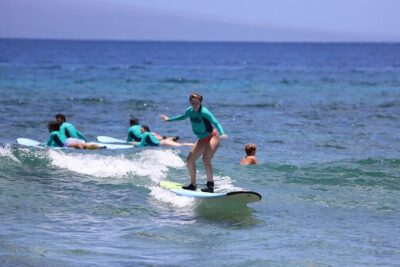
A first surf lesson on Maui is one of those plans that can fix your whole trip. At Ka’anapali Beach with Island Style Adventures, you get a land safety warm-up and then a long session practicing in the water. It’s a fun, beginner-friendly way to find out if surfing is your thing.
I really like the small-group coaching. The setup is designed so an instructor is focused on you and two others, not just managing a crowd. I also love that the lesson gives you the core gear—rash guard, water shoes, and a surfboard—so you’re not hunting down rentals or guessing what to pack.
One thing to keep in mind: this is an active lesson and it calls for moderate physical fitness. Also, it’s not recommended for kids under 8, so younger surfers should switch to a private lesson instead.
In This Review
- Quick takeaways from Ka’anapali surf coaching
- Ka’anapali Beach and a beginner lesson that actually gets you moving
- The 30-minute safety lesson: how you set yourself up for less confusion
- The hour-plus in the ocean: where you get the real practice time
- A realistic note on shore conditions
- Small-group coaching: what up to 15 travelers really means
- Gear included: why it’s worth showing up with less stuff
- Meeting point at Kaanapali Alii Resort: arrive early or you’ll waste minutes
- Parking help for up to 3 hours
- Photos during the lesson: optional purchase, so confirm how to get them
- Weather and rescheduling: how to handle the Maui reality
- Who this Ka’anapali group surf lesson fits best
- The main drawback to plan around: communication and expectation gaps
- Bottom line: should you book this Maui surf lesson?
- FAQ
- What time should I check in for the lesson?
- How long is the Ka’anapali surf lesson?
- What’s included with the lesson?
- Is this lesson offered in English?
- Where is the meeting point?
- What age is the group lesson recommended for?
- Is there parking validation?
- What’s the cancellation policy?
Quick takeaways from Ka’anapali surf coaching
- 30 minutes of land + safety before you get wet, so you start the ocean session with clearer cues
- Hour-plus in the water for real practice time, not just standing around
- Small instruction ratio designed to give you hands-on attention (you and two others per instructor group)
- Included surf gear: rash guard, reef shoes/water shoes, and a board
- On-beach staff photographer during the lesson with optional photo purchases after
Still hoping to stand up? More Maui surf lessons
- Outrageous Surf ScHool Lesson on Lahaina Side★ 4.5 · 547 reviews
- Group Surf Lesson at Kalama Beach in Kihei★ 5.0 · 264 reviews
- Maui Lahaina Group Surf Lesson★ 4.9 · 235 reviews
- Private Surf Lesson for Two Near Lahaina★ 5.0 · 189 reviews
Ka’anapali Beach and a beginner lesson that actually gets you moving
Ka’anapali is the kind of Maui setting where you can feel the vacation energy the moment you arrive. This surf lesson is built for beginners, which matters, because the hardest part of first-timing surfing isn’t the waves. It’s everything around the waves: board control, water basics, and knowing what to do the next time you’re out there.
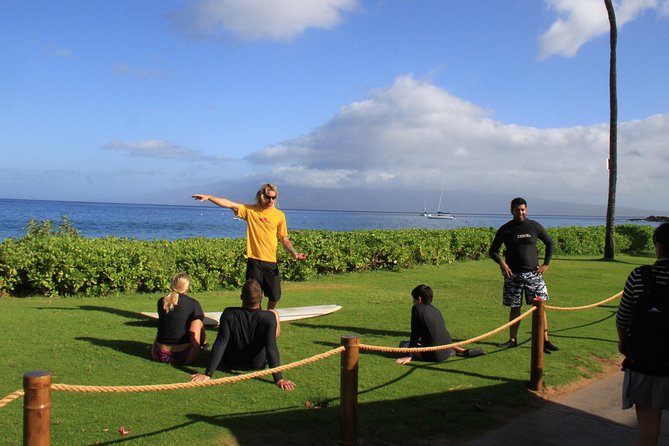
What makes this lesson appealing is the pacing. You don’t just jump straight into the ocean. You start with a 30-minute land/safety session, which helps you understand how the instructor wants you to move, paddle, and handle your board. Then you get about an hour and a half total, with a solid chunk of that time in the water.
If you’re coming as a couple, you’ll still get that focused coaching. If you’re solo, it tends to be manageable because the group stays capped (up to 15 travelers). And if you’re with kids who are ready for water time, the lesson can work well—just keep the under-8 guidance in mind.
The 30-minute safety lesson: how you set yourself up for less confusion
Your lesson starts with check-in 30 minutes before the start time. Once you’re in, you’ll do a land lesson and safety briefing. Think of this as your translation layer between what your brain imagines and what actually happens in the ocean.
Here’s what you should pay attention to during the land portion. First, listen for the repeated cues the instructor will use in the water. In surf lessons, the best moments happen when you do the same action the same way the next time—so consistency is the whole game. Second, take the safety talk seriously. Surfing is fun, but it’s also water-time with physical coordination and shared ocean space, so the rules matter.
If you’re worried about hearing instructions in an active beach setting, bring a practical mindset: arrive early, watch what your instructor is demonstrating, and don’t be afraid to ask one short question. One clean question can save you 20 minutes of frustration in the water.
The hour-plus in the ocean: where you get the real practice time
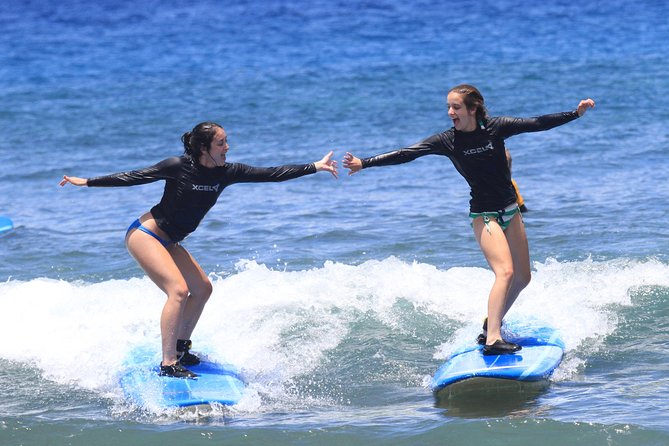
After the land session, you move into the water for your surfing practice time (about an hour and a half total activity). The key promise here is not just access to a board. It’s time. You’ll be out there enough to try, fail, adjust, and try again.
The lesson also aims for specialized attention. The setup is described as an instructor helping you and two other people, which is a big deal for beginners. With that kind of ratio, you’re less likely to feel like you’re being herded from one instruction to the next. You also get feedback tied to what you just tried—so you’re not guessing why you fell.
From the coaching style people describe, the instructors are often patient and encouraging. Names that come up include Nick, Reef, Matt, Tyler, Conan, Reed, Koa, and Juan. Even if your instructor isn’t one of these, the teaching pattern is the same: clear directions, supportive energy, and repeated chances to stand up.
A realistic note on shore conditions
You might also encounter surf spots with uneven or rocky shoreline. That can make the start feel a bit rough on your feet, even when the session is managed well. That’s one reason the lesson includes water shoes. Wear them as soon as you can, and don’t rush the transition into the water.
A few more Maui experiences we would happily do again
Small-group coaching: what up to 15 travelers really means
This experience caps at 15 travelers. That number sounds small, but what it means in real life is simpler. You’re not one face in a big crowd where only a few people get corrected.
More importantly, it’s not just about size. The lesson structure is built around attention. Multiple instructors are described as patient, and the coaching focuses on feedback in the moment. That’s how you go from paddle struggles to standing sooner, and it’s how kids and first-timers usually feel confident enough to keep trying.
If you have a moderate fitness level requirement, treat it as a guide, not a challenge. You’ll be active: getting into water, paddling, balancing, and repeating movements. If you’ve been living in flip-flops for two weeks, plan to stretch your shoulders and calves the day before.
Gear included: why it’s worth showing up with less stuff
One of the simplest forms of value in this lesson is that the important items are included. You get:
- Rash guard
- Water shoes / reef shoes
- Surf board
That matters more than it sounds. Surf gear affects comfort and safety. Rash guards can help with friction and sun exposure. Water shoes protect your feet on shore. And using a board provided by the school avoids the guesswork of picking the wrong size.
If you’re traveling light, this is a win. You’re not packing extra layers for the beach, and you’re not paying separately to rent the basic essentials.
Meeting point at Kaanapali Alii Resort: arrive early or you’ll waste minutes
Your meeting point is:
Kaanapali Alii Resort, 50 Nohea Kai Dr, Lahaina, HI 96761
The activity ends back at the meeting point.
Check in is 30 minutes before your lesson start. Do that. In real surf operations, a few minutes late can snowball. You’ll want time to find the group and get geared up without stress.
A practical tip: the meeting area may not look like a big organized event with obvious signage. If something feels unclear, use your phone to connect with your instructor or staff. People have had better results texting or calling directly when the posted meeting description was vague.
Parking help for up to 3 hours
Parking validation for up to 3 hours is included. That’s the kind of detail that changes the whole experience. It means you can drive in, handle your gear and check-in without anxiety, and then leave after the lesson.
Photos during the lesson: optional purchase, so confirm how to get them
A staff photographer takes photos throughout the lesson. Photos are optional for purchase at the end of the session.
If you care about getting those shots, don’t just assume you’ll receive an email later with everything figured out. Ask at the end how the photo purchase works and what you need to look for. If you want specific images (like a standing moment), be direct and make sure you know the ordering steps before you walk away.
Even if you don’t buy photos, the photographer presence can still be motivating. It’s one more reminder that this is a real activity, not just a “watch someone else surf” experience.
Weather and rescheduling: how to handle the Maui reality
This is a weather-dependent activity. If it’s canceled due to poor weather, you’ll be offered a different date or a full refund. That’s a normal rule for ocean-based activities, and it’s something you’ll want to consider when planning the rest of your Maui schedule.
Also, give yourself some mental flexibility. If conditions shift, the team may adjust the plan to match safer surfing conditions. The best strategy is to keep your day open enough to accommodate a reschedule.
Who this Ka’anapali group surf lesson fits best
This lesson is a strong choice if you want a guided beginner experience without going private. It’s also good if you like the idea of a small group with lots of coaching attention.
It’s especially suitable for:
- Beginners who want structured instruction (not just board rentals)
- Couples who want an activity that feels active and memorable
- Families with kids who are 8 or older
- Solo surfers who don’t mind being in a group but want coaching
If you’re traveling with a younger child, the guidance is clear: the group setting is not recommended under age 8. In that case, a private lesson will fit better.
The main drawback to plan around: communication and expectation gaps
Most people seem to love the instructors and the teaching. The friction point that comes up is often not the lesson itself—it’s the run-up details.
Specifically:
- Meeting instructions may feel unclear if you expect a very obvious landmark.
- Sometimes photo-related expectations can be confusing if you don’t get clear ordering instructions at the right time.
- As with any beginner group, you’ll do best if you follow what the instructor explains on the beach before you get in the water.
So, don’t overthink it. Just do three things: arrive early, confirm the meeting spot if anything feels off, and ask how photos work before you finish.
Bottom line: should you book this Maui surf lesson?
I’d book this if you want a hands-on beginner surf lesson at Ka’anapali Beach with included gear, a land-based safety start, and real time in the water. The small-group attention is the main reason it’s worth considering, especially if you’re nervous about getting enough coaching.
I would choose another option (or go private) if you’re bringing a child under 8, or if you know you don’t do well with active, physical water time. And if photos are a must-have, ask about the photo ordering process right at the end so you’re not left guessing.
If you’re on the fence, here’s the simplest decision rule: if you want structured help and you’re comfortable following instructor cues, this is a very solid Maui first step.
FAQ
What time should I check in for the lesson?
You check in 30 minutes prior to the lesson start time.
How long is the Ka’anapali surf lesson?
The total experience is about 1 hour 30 minutes.
What’s included with the lesson?
You’ll get a local guide, plus a rash guard, water shoes, and a surfboard.
Is this lesson offered in English?
Yes. The lesson is offered in English.
Where is the meeting point?
You meet at Kaanapali Alii Resort, 50 Nohea Kai Dr, Lahaina, HI 96761, and the lesson ends back at the same meeting point.
What age is the group lesson recommended for?
The group setting is not recommended for children under age 8. For younger kids, a private lesson is suggested.
Is there parking validation?
Yes. Parking validation for up to 3 hours is included.
What’s the cancellation policy?
Cancellation is free if you cancel up to 24 hours in advance for a full refund. If it’s canceled due to poor weather, you’ll be offered a different date or a full refund.
More Workshops in Maui
- Maui: Two Hour Beginner Group Surf Lesson in Kihei
★ 5.0 · 950 reviews - Outrageous Surf ScHool Lesson on Lahaina Side
★ 4.5 · 547 reviews - Group Surf Lesson at Kalama Beach in Kihei
★ 5.0 · 264 reviews - Maui Lahaina Group Surf Lesson
★ 4.9 · 235 reviews - Private Surf Lesson for Two Near Lahaina
★ 5.0 · 189 reviews
More Tour Reviews in Maui
- Maui Pineapple Farm Tour in Haliimaile
★ 5.0 · 2,855 reviews - Small-Group Road to Hana Adventure Tour with Pickup & Lunch
★ 5.0 · 2,637 reviews - Maui Eco-Raft Tour: Eye-Level Whale or Dolphin Watching – Lahaina
★ 5.0 · 2,482 reviews - Maui Snorkeling Adventure to Molokini and Turtle Town
★ 4.5 · 2,221 reviews - Maui: Haleakala Sunrise Spectacular with Local Breakfast
★ 4.5 · 2,155 reviews
Catch More Maui Surf
- Maui: Two Hour Beginner Group Surf Lesson in Kihei
★ 5.0 · 950 reviews - Outrageous Surf ScHool Lesson on Lahaina Side
★ 4.5 · 547 reviews - Group Surf Lesson at Kalama Beach in Kihei
★ 5.0 · 264 reviews - Maui Lahaina Group Surf Lesson
★ 4.9 · 235 reviews - Private Surf Lesson for Two Near Lahaina
★ 5.0 · 189 reviews
More of Maui we have reviewed, from the crater to the coast




Maui Surf Lessons, compared.
 ★ 5.0Two Hour Beginner Group Surf Lesson in KiheiFrom $98950 reviews
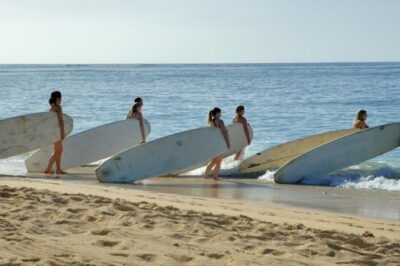 ★ 4.5Outrageous Surf ScHool Lesson on Lahaina SideFrom $75547 reviews
 ★ 5.0Group Surf Lesson at Kalama Beach in KiheiFrom $108264 reviews
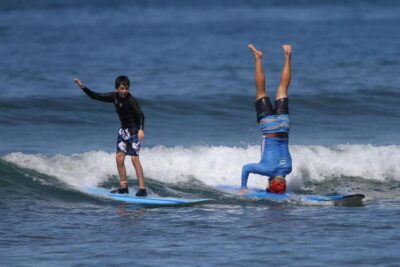 ★ 4.9Maui Lahaina Group Surf LessonFrom $125235 reviews
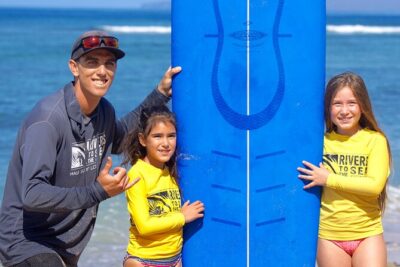 ★ 5.0Private Surf Lesson for Two Near LahainaFrom $145189 reviews
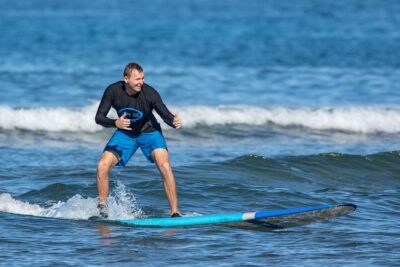 ★ 5.02 Hour Beginner Group Surf Lessons154 reviews
 ★ 5.0Group Surf Lessons from Kaanapali BeachFrom $120143 reviews
 ★ 5.02 Hour Private Group Surf Lesson in Lahaina MauiFrom $125129 reviews
Browse the lists this tour appears in