
Reviewed · MAUI SURF LESSONS
Surf with ALOHA SURF SCHOOL
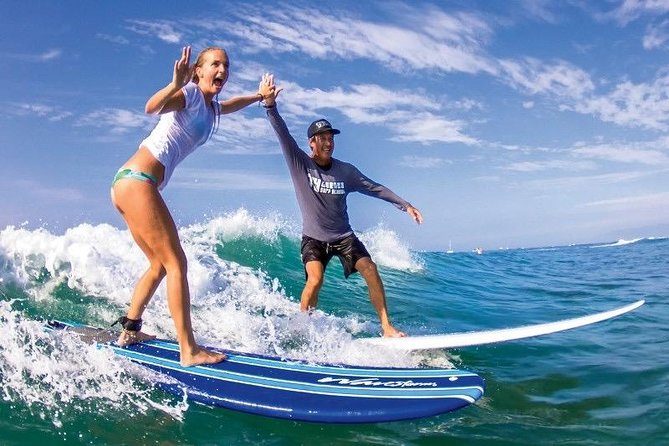
Maui’s first waves feel like magic. This 2-hour small-group surf lesson at Kalama Park pairs safety coaching with hands-on instruction that helps you get your first rides fast. I like that you’re outfitted with real surf gear (rash guard, booties/protective footwear, and a board), and that the teaching is done by patient, professional surfers, with instructors like Jesse, Donald, Sean, Chris, and Jayden mentioned by name. The main drawback is simple: it’s highly physical, and the shoreline can be rocky in shallow water, so you’ll want the right footwear and sun protection.
You’ll meet at the park, get your safety and basics briefing, then walk to the surf area and start working on waves. This is the kind of lesson where you’re not just watching. You’re learning how to read the water, where to position yourself, and how to move on the board with confidence.
In This Review
- Key highlights worth planning around
- Aloha Surf School in Maui: what this lesson is really like
- The physical side (read this part before you book)
- Price and value: why $120 feels fair for a 2-hour intro
- Location choice: why Kalama Park makes sense for first-timers
- What you’ll do right at the park
- Inside the 2-hour surf lesson: the practical flow
- 1) Safety + surfing basics (before you hit the water)
- 2) The walk to the surf area
- 3) Surf practice with coaching in real time
- 4) Session pace and staying power
- What gear you get, and what to bring anyway
- Sun protection is not optional
- Water shoes can save your session
- Who this surf lesson is best for
- Extras that make the experience feel complete
- Timing and booking: how far ahead to plan
- Should you book Surf with ALOHA SURF SCHOOL?
- FAQ
- How long is the ALOHA SURF SCHOOL surf lesson?
- What does the lesson include?
- Where do I meet for the lesson?
- Where does the lesson end?
- How many people are in the group?
- Is the lesson offered in English?
- What should I bring for comfort and safety?
- What is the physical level required?
- Is cancellation free?
- What happens if the weather is poor?
Key highlights worth planning around
- Small group limit (max 15): more coaching time and less waiting.
- Gear included: rash guard, booties, protective footwear, plus a surfboard.
- Beginner-focused spot: shallow water that’s often described as gentle for first-timers.
- Patient instruction for nervous newcomers: instructors coach without judgment.
- Photo help and ride documentation: some sessions include photos and even edited video in reports.
- Expect a workout: moderate fitness helps you enjoy the full session.
Still hoping to stand up? More Maui surf lessons
- Outrageous Surf ScHool Lesson on Lahaina Side★ 4.5 · 547 reviews
- Group Surf Lesson at Kalama Beach in Kihei★ 5.0 · 264 reviews
- Maui Lahaina Group Surf Lesson★ 4.9 · 235 reviews
- Private Surf Lesson for Two Near Lahaina★ 5.0 · 189 reviews
Aloha Surf School in Maui: what this lesson is really like
If you’ve ever watched someone catch a wave and thought, I want to try that, this is the straightforward path. Surf lessons in Maui can range from casual beach meetups to more serious coaching setups. This one leans practical. You get a structured safety briefing, then you move quickly into hands-on practice in the water.
The biggest reason this lesson works for beginners is the combo of instruction and the right environment. The teaching happens right at Kalama Park (the meeting point), and then you walk to the surf area. That “teach, then try” format matters because surfing isn’t one skill. It’s balance, timing, and confidence. When you learn a point and test it minutes later, your brain locks in the lesson faster.
I also like the lesson size. A maximum of 15 travelers keeps the experience personal. In a crowd, instructors can only see a few people at a time. In a smaller group, they can correct posture and positioning when it counts—right when you’re about to paddle or pop up.
The physical side (read this part before you book)
Even if you’re motivated, know this: surfing is not passive. Reviews describe it as highly physical. You’re paddling, balancing, wiping out, and repeating. If you have limited mobility, consider whether you’re comfortable with that level of effort for about 2 hours.
The other reality check is the water entry. The park and shoreline area can be rocky in shallow sections. One review notes it’s difficult to watch kids close up due to the rocky shallow area. Another recommends water shoes if you want to go in. Translation: come prepared so you’re not hobbling around while everyone else is learning.
Price and value: why $120 feels fair for a 2-hour intro
At $120 per person for about 2 hours, the value comes from what’s included and how the time is used.
You get:
- a rash guard
- booties/protective footwear
- a surfboard
That matters because surfing gear for a single session can add up fast if you’re renting everything separately. It also reduces friction. You don’t need to hunt for equipment that fits. You show up and get outfitted.
Then there’s the coaching. This isn’t just someone pointing at the ocean. It’s a guided surf lesson with safety and basics taught by professional surfers, designed to help you stand up and surf as quickly as possible. Multiple reviews highlight how quickly first-timers were getting up—especially with patient instruction and clear cues.
One more value angle: the session is compact. About 2 hours is long enough to learn real basics and try multiple attempts, but short enough that you’re not committing a whole day before you even know whether surfing is your thing.
Location choice: why Kalama Park makes sense for first-timers
Kalama Park is your starting point at 1900 S Kihei Rd, Kihei, HI 96753. The experience ends back at the meeting point. That back-and-forth matters because your transport load stays light, and you’re not guessing where to regroup.
Why this location is good for beginners: the lesson is built around calm, shallow water conditions described as gentle for first-timers. You’re still in Maui ocean water, so it can be unpredictable, but the setup is aimed at reducing frustration.
At the same time, don’t assume it’s a smooth sand entry. One review flags rocky shallow water and difficulty watching close up because of the terrain. If you’re bringing kids or you’re a first-timer who gets nervous around footing, treat footwear as part of your plan, not an afterthought.


What you’ll do right at the park
You’ll start with a safety and surf basics instructional. This isn’t a vague pep talk. It’s the kind of briefing that helps you understand:
- how to behave around other surfers
- what to do before paddling
- basic technique and positioning cues
- how to handle common beginner moments
Then you walk to the designated surf area. That short walk isn’t just logistics. It breaks the session into clear phases: learn on land, then apply the skill where it matters.
Inside the 2-hour surf lesson: the practical flow
Here’s what the session feels like on the ground, based on how instructors run these lessons and what’s consistently described.
1) Safety + surfing basics (before you hit the water)
You’ll get an instructional session first. Expect it to focus on what keeps you safe and what helps you stand sooner. This is where patient, clear teaching makes a difference.
In reports from past lessons, instructors like Jesse and Donald are praised for being super patient and extremely clear. That’s a big deal if you’re nervous. Surfing panic usually comes from not knowing what to do next. Clear steps reduce that.
2) The walk to the surf area
After the briefing, you’ll head to the water zone. This is where the lesson transitions into real practice. A lot of beginner frustration comes from trying to translate instruction while standing in the surf for the first time. Walking together and getting organized makes the first attempts smoother.
3) Surf practice with coaching in real time
Once you’re in the water, you’re not left alone. Instructors stay attentive and professional, especially with newcomers and kids.
Sean and Indie are mentioned in particular for attentiveness and for helping capture the experience with great pictures. Chris and Jayden are also highlighted for making beginners feel like they’re already doing it right—often with coaching that supports quick progress.
4) Session pace and staying power
Most lessons like this end after you’ve had enough tries to feel progress without wearing you out beyond what’s safe. Reviews mention sessions where people could have stayed longer because it was fun and the coaching kept confidence growing.
But again, take the physical part seriously. If you show up underpowered (no water, minimal sun protection, worn footwear), your last attempts will feel harder than your first.
What gear you get, and what to bring anyway
The lesson includes:
- rash guard
- booties/protective footwear
- a surfboard
That’s a strong start. It reduces the hassle of finding the right equipment and helps keep you comfortable in the salt and on the board.
Still, there are two things you should plan to add yourself:
Sun protection is not optional
More than one review stresses bringing extra sun protection. One mentions wearing UV cap and strap glasses. Another notes someone even got a sunburn on the scalp, which is a very Maui problem.
Practical takeaway:
- pack sunscreen that you actually reapply
- bring something for your scalp (hat or UV cap)
- consider strap glasses if you wear glasses
Water shoes can save your session
Because the area can be rocky in shallow water, water shoes are a smart idea if you expect to walk into the surf area. Even if the lesson provides booties, water shoes help for the land-and-transition parts.
Who this surf lesson is best for
This lesson works especially well if you want a real start without drama.
You’ll likely enjoy it if:
- you’re surfing for the first time and want patient, non-judgmental coaching
- you’re traveling with teens or adults who learn best with hands-on guidance
- you like small groups and want instructors to watch you closely
- you want the included gear so you don’t waste time before learning
It may be less ideal if:
- you’re not comfortable with a highly physical 2-hour session
- you have concerns about rocky shoreline footing
- you expect an easy stroll with minimal effort
That said, one review notes instructors got even a 51-year-old up on a wave or two. So don’t self-eliminate based on age alone. Consider mobility and comfort with paddling and wipeouts.
Extras that make the experience feel complete
Some surf lessons feel like: learn basics, then paddle until you’re tired. This one tends to feel more supportive.
Here are the “quality of life” wins that show up in reports:
- Instructors are described as welcoming and kind, especially for nervous newcomers
- Coaches are attentive in the water, not just at the start
- People mention great photos and helpful documentation of rides
- Some sessions have included an edited video of rides without extra cost (in reports)
Not every lesson will produce the same exact “extra,” but the pattern is clear: the team treats the whole experience as more than just getting you in the water.
Also, the session is offered in English, and you’ll receive confirmation at booking time. For solo travelers and groups alike, that clarity reduces stress.
Timing and booking: how far ahead to plan
The lesson is typically booked about 17 days in advance on average. That’s not “book months ahead,” but it does suggest demand isn’t tiny. If Maui is your only window, I’d aim to reserve around the two to three week mark.
The experience is also described as requiring good weather. If conditions don’t cooperate, you’ll be offered a different date or a full refund.
Should you book Surf with ALOHA SURF SCHOOL?
I’d book this lesson if you want your first surf experience to feel organized, supportive, and focused on getting you standing. The small group size, included gear, and clear coaching style are exactly what you want when you’re brand new.
I’d also book it with a little realism: you’re paying for a short, intense practice session. Bring sun protection, consider water shoes, and be ready to work for it.
If you’re looking for a surf lesson that feels like a guided skill session rather than a trial-and-error beach moment, this one fits the bill.
FAQ
How long is the ALOHA SURF SCHOOL surf lesson?
It’s about 2 hours.
What does the lesson include?
You receive a rash guard, booties/protective footwear, and a surfboard.
Where do I meet for the lesson?
Meet at Kalama Park, 1900 S Kihei Rd, Kihei, HI 96753, USA.
Where does the lesson end?
The activity ends back at the meeting point.
How many people are in the group?
The maximum group size is 15 travelers.
Is the lesson offered in English?
Yes, the experience is offered in English.
What should I bring for comfort and safety?
Sun protection is strongly recommended. Strap glasses and a UV cap are suggested. If you want to walk into the water, water shoes are recommended.
What is the physical level required?
Travelers should have a moderate physical fitness level.
Is cancellation free?
Yes. You can cancel for a full refund if you cancel at least 24 hours before the experience starts.
What happens if the weather is poor?
The experience requires good weather. If it’s canceled due to poor weather, you’ll be offered a different date or a full refund.
More Tour Reviews in Maui
- Maui Pineapple Farm Tour in Haliimaile
★ 5.0 · 2,855 reviews - Small-Group Road to Hana Adventure Tour with Pickup & Lunch
★ 5.0 · 2,637 reviews - Maui Eco-Raft Tour: Eye-Level Whale or Dolphin Watching – Lahaina
★ 5.0 · 2,482 reviews - Maui Snorkeling Adventure to Molokini and Turtle Town
★ 4.5 · 2,221 reviews - Maui: Haleakala Sunrise Spectacular with Local Breakfast
★ 4.5 · 2,155 reviews
Catch More Maui Surf
- Maui: Two Hour Beginner Group Surf Lesson in Kihei
★ 5.0 · 950 reviews - Outrageous Surf ScHool Lesson on Lahaina Side
★ 4.5 · 547 reviews - Group Surf Lesson at Kalama Beach in Kihei
★ 5.0 · 264 reviews - Maui Lahaina Group Surf Lesson
★ 4.9 · 235 reviews - Private Surf Lesson for Two Near Lahaina
★ 5.0 · 189 reviews
More of Maui we have reviewed, from the crater to the coast




Maui Surf Lessons, compared.
 ★ 5.0Two Hour Beginner Group Surf Lesson in KiheiFrom $98950 reviews
 ★ 4.5Outrageous Surf ScHool Lesson on Lahaina SideFrom $75547 reviews
 ★ 5.0Group Surf Lesson at Kalama Beach in KiheiFrom $108264 reviews
 ★ 4.9Maui Lahaina Group Surf LessonFrom $125235 reviews
 ★ 5.0Private Surf Lesson for Two Near LahainaFrom $145189 reviews
 ★ 5.02 Hour Beginner Group Surf Lessons154 reviews
 ★ 5.0Group Surf Lessons from Kaanapali BeachFrom $120143 reviews
 ★ 5.02 Hour Private Group Surf Lesson in Lahaina MauiFrom $125129 reviews
Browse the lists this tour appears in