
Reviewed · MAUI SURF LESSONS
Semi-Private Surf Lesson at Ka’anapali Beach
Surf lessons start with safety, not bravado.
I love the semi-private pace and the land safety lesson that gets you ready before you ever paddle. One thing to consider: the whole session is about 1 hour 30 minutes, so if you want maximum time on the water, make sure you are comfortable with the shorter format.
You also get an experienced instructor, a small group capped at 15, and a staff photographer who tracks the action the whole time. Check in is 30 minutes early, though, and the meeting spot can take a minute to find if you arrive late.
In This Review
- Key Highlights You’ll Feel Right Away
- Ka’anapali Surf, With a Semi-Private Flow
- Before You Hit the Beach: Check-in, Location, and Parking Reality
- What’s Included in Your Maui Surf Kit (and Why It Matters)
- The 30-Minute Land Lesson: Safety That Builds Confidence Fast
- In the Water for About an Hour: What the Coaching Looks Like
- Staff Photographer: Maui Surf Photos Without the Stress
- Rash Marks, Coral, and Other Ocean Variables (Plan for Them)
- Timing and Wave Size: When You Should Consider Rescheduling
- Price and Value: What You Get for 1.5 Hours
- Who Should Book This Ka’anapali Surf Lesson
- Should You Book Island Style Adventures at Ka’anapali?
- FAQ
- What time should I arrive for the lesson?
- How long is the semi-private surf lesson at Ka’anapali Beach?
- What gear is included?
- Where do I meet for the surf lesson?
- Is the group size small?
- What happens if weather is bad?
Key Highlights You’ll Feel Right Away
- Semi-private coaching with a maximum group size of 15, so you are not just watching from shore
- 30 minutes of land safety before water time, which helps first-timers relax faster
- Ka’anapali Beach sessions with surfboard, rash guard, and water shoes provided
- Staff photography during the lesson, with optional photo purchases afterward
- Parking validation for up to 3 hours, helpful around Kaanapali’s busy resort area
- Multiple lesson times daily, so you can fit Maui surf into real vacation plans
Still hoping to stand up? More Maui surf lessons
- Outrageous Surf ScHool Lesson on Lahaina Side★ 4.5 · 547 reviews
- Group Surf Lesson at Kalama Beach in Kihei★ 5.0 · 264 reviews
- Maui Lahaina Group Surf Lesson★ 4.9 · 235 reviews
- Private Surf Lesson for Two Near Lahaina★ 5.0 · 189 reviews
Ka’anapali Surf, With a Semi-Private Flow
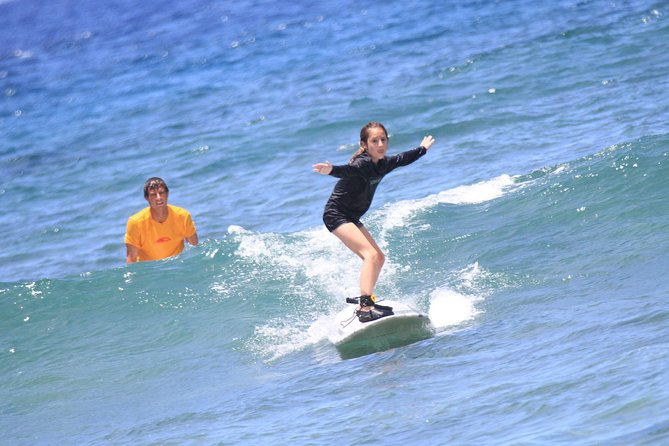
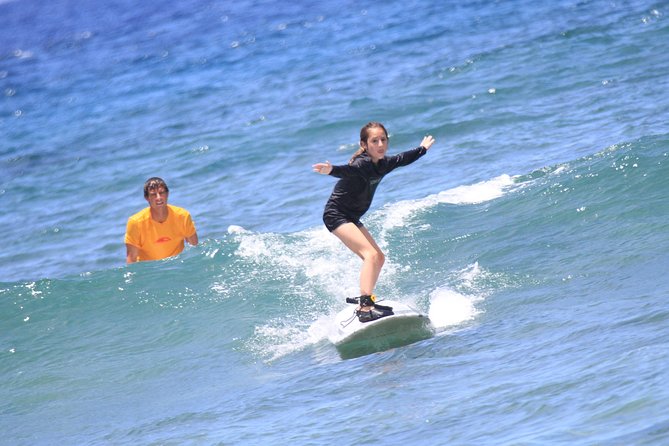
Ka’anapali Beach is a big-deal spot for learning. It is a famous stretch of Maui coastline, and the setting alone makes the whole lesson feel like more than a basic class. What I like here is the structure: you get guided instruction, then real wave time, without the lesson dragging on forever.
The semi-private setup matters. With group limits and hands-on coaching, you are more likely to catch your share of rides instead of spending most of your hour waiting your turn. In one recent family group of kids, the lesson was fun for a wide age range, from about 10 up to the mid-teens, and everyone stayed engaged instead of getting bored or overwhelmed.
Still, surf is surf. Conditions can be stronger or shallower than you expect, and that can change how hard it feels to paddle out or recover after a fall. One negative experience specifically called out more coral and shallow water, which can mean more scrapes when you wipe out.
Before You Hit the Beach: Check-in, Location, and Parking Reality
Plan to arrive early. The schedule calls for check-in 30 minutes prior to your lesson start, and that buffer is not just a suggestion. You need a little time to park, find the right spot at the waterline, and get your gear ready before the instructors start pairing people up.
Your start point is Kaanapali Alii Resort, 50 Nohea Kai Dr, Lahaina, HI 96761. The activity ends back at the same place, which is convenient when you are trying to stitch surf into a day of beach hopping.
Parking is often where first-time Maui activities go sideways, so pay attention. You get parking validation for up to 3 hours, which helps you avoid that last-minute scramble. One family specifically warned that finding the staff and parking can be tricky, and the fix was simple: show up early. They also pointed out there is free beach-access parking along the paths to the beach, and they were able to snag three spots.
Practical tip: if you are using GPS, do a quick check that you are aiming at the resort area near 50 Nohea Kai Dr, not just the broader beach zone. It can look close, but the last stretch matters.
What’s Included in Your Maui Surf Kit (and Why It Matters)
This lesson supplies a lot of the things that usually make beginners hesitate. You are provided:
- Rash guard and water shoes
- Surf board
- A local guide/instructor team
- Parking validation (up to 3 hours)
The rash guard and water shoes are not just comfort items. They also help reduce how much your skin gets chewed up by board contact and sand. One family even reported getting pretty fierce thigh rashes from sitting on the boards while waiting for waves, but they said it healed in a couple days. That is a reminder: even with gear, plan for some skin friction if you are learning and spending extra moments seated on the board.
In other words, you still want to be kind to your body. Wear the provided gear correctly, keep your water shoes on during breaks, and don’t assume you will stay dry. Surf lessons move fast, and small habits make the difference between a mild wipeout and an annoying one.
The 30-Minute Land Lesson: Safety That Builds Confidence Fast
The lesson starts with about 30 minutes on land. This is your safety and safety-instruction phase, and it is why first-timers often feel better than they expected. You learn the basics before you are asked to paddle in a moving ocean.
From the way the program is described, the land time is meant to set you up with:
- Safety expectations
- How to handle the surfboard properly
- What to listen for once you are in the water
This part matters more than people think. When you show up knowing what the instructor is trying to do, you stop guessing. You can focus on the simple tasks, like getting stable on the board, instead of freezing when you hear cues.
Also, the photo staff is usually already in motion during the overall lesson window, so you will likely be getting set up while your instructor explains what comes next. That is one reason the end-of-lesson photo option is popular: you are not getting photographed for only one dramatic moment. You get the whole sequence.
A few more Maui experiences we would happily do again



In the Water for About an Hour: What the Coaching Looks Like
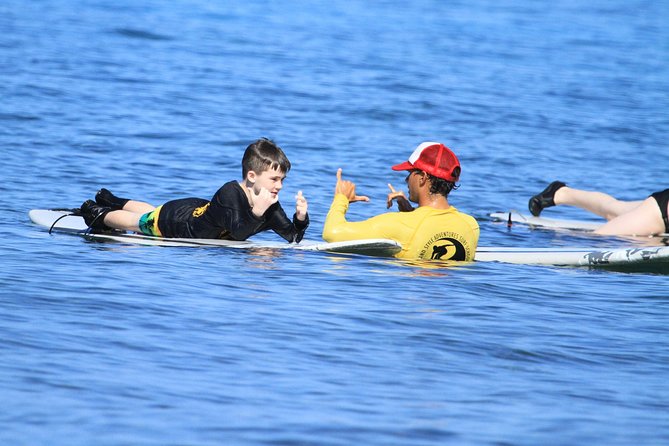
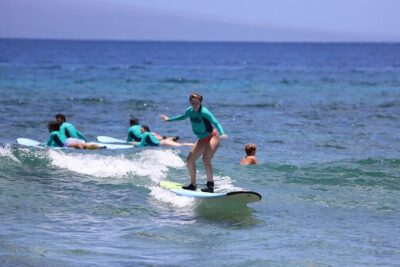
After land training, you move into the surf for roughly an hour in the water. The goal is straightforward: stand up, ride when the wave cooperates, and learn how to recover if you fall.
Semi-private means you should get hands-on attention while you practice. In one group where there were six people, the team helped them get up for long rides. Another family with three kids said they had several long wave rides and recommended the team strongly.
Instructors can make or break a beginner lesson, and the feedback here is strong. Names that come up in positive accounts include:
- Nick, including calming a nervous 10-year-old and getting them out confidently
- Christian, for kid-focused kindness and safety throughout
- Carlos and Andy, praised for making it easy going and for matching instruction to different comfort levels
- Peter, for a strong teaching job and a great experience
- Nic, plus an ISA team that was patient and energetic
You may also hear a balance of encouragement and practical cueing. The best lessons tend to do two things at once: they push you to try, and they keep you from panicking when a wave does not line up. One positive review even described instructors giving options when waves were a bit large for beginners and offering the ability to reschedule, which is a smart way to handle risk and confidence.
That said, not every session will feel perfect. One negative account claimed the instructor was late with timing cues, and that the coaching was more yelling-for-the-wave than technique-focused feedback. While that is not the typical theme, it is a fair warning: ask yourself if you respond well to blunt ocean-style commands. If you need extra reassurance and calm, arrive early, communicate nervousness during check-in, and stick with the gear and safety rules.
Staff Photographer: Maui Surf Photos Without the Stress
A staff photographer takes pictures during the entire lesson. At the end, you have the option to purchase them.
This is one of those details that sounds small until you remember that a beginner’s main job is staying upright. You do not have time to grab your phone, frame a shot, and also catch your next wave. Having a photographer means you get action photos you might not be able to recreate later.
Several people praised the photographer and described the photo purchase as worth it. One person called out that pricing for the photos was reasonable, and another said the photos were the keepers, meaning they were the kind you actually want to keep.
If you prefer to travel light and skip souvenirs, you can simply ignore the purchase. But if you want proof that you really did surf Ka’anapali, this is a practical add-on.
Rash Marks, Coral, and Other Ocean Variables (Plan for Them)
Surfing in Maui is not a controlled gym. Even with water shoes, you should anticipate contact, friction, and the occasional surprising wipeout.
A couple real-world issues showed up in the feedback:
- Board contact can cause rash or skin irritation, especially when you are seated and waiting for waves
- One person noted shallower, coral-heavy conditions compared with other Maui beaches, leading to more coral injuries
I would not let that scare you off. It just changes how you should prepare your body:
- Keep your water shoes on during breaks
- Take the rash guard seriously
- If you are prone to skin irritation, bring a travel-size soothing product for after
- Avoid trying to be a hero if you feel the water is too rough for your comfort
Semi-private instruction helps because you are not entirely on your own in the chaos. Still, the ocean has its own schedule.
Timing and Wave Size: When You Should Consider Rescheduling
The lesson is short: about 1 hour 30 minutes total including the land safety portion and water time. That is a sweet spot for many first-timers. You get real waves without eating an entire vacation morning.
But because it is short, conditions matter. One positive review mentioned that waves were larger than ideal for beginners, and the instructors offered an option to reschedule. That is exactly the kind of flexibility you want from a surf school.
If you arrive and the water looks more intense than you expected, you have two choices: push through with focus and safety, or ask about a reschedule if that is available for your time. The key is to stay honest about your comfort level and listen to instructor guidance.
Price and Value: What You Get for 1.5 Hours
You do not have the lesson length of 2-plus hours here. Some people are totally fine with 1 hour 30 minutes, especially if they are visiting from a resort and want one strong experience rather than a half-day commitment.
However, one negative review said the price felt high for 1.5 hours compared with other Maui lessons that run longer. That is the main value question you should ask yourself:
- Do you want the maximum time on the water, or do you want the best coaching structure for a shorter session?
If you are aiming for a first surf attempt, the included gear, semi-private style, land safety, and photo coverage can make the value feel more solid. You are also capped at a maximum of 15, which usually means the team can keep closer tabs on who is learning and who is struggling.
If you already have some surf experience and you want more practice time per dollar, you might look for a longer session. If you are brand-new and want a confidence-building start, this one is often a great fit.
Who Should Book This Ka’anapali Surf Lesson
This is a strong choice for:
- Beginners who want step-by-step help with safety first
- Families with kids or teens, since the instruction and coaching style gets praised repeatedly for keeping nerves down and keeping people smiling
- People staying near Kaanapali who want a lesson close to resort life rather than a long drive to another shoreline
In one family group, the instructor was praised for helping multiple kids stand up and ride. Another review highlighted teenagers loving learning, plus the ocean lesson that creates a real respect for wave power.
You might rethink it if:
- You need a longer surf session to justify the cost
- You have very specific expectations about lots of constant technique talk in the water
- You are sensitive to ocean conditions like shallow coral areas, because falls can be rough on unbroken skin even with gear
Should You Book Island Style Adventures at Ka’anapali?
I’d book it if you want a structured first surf lesson with safety training built in, a semi-private pace, and the convenience of gear included near the Kaanapali resort zone. The high rating and strong praise for staff patience is exactly what you want when you are learning something that can feel scary at first.
I’d also book it with one expectation set: this is about learning the basics and getting a few good wave moments, not about turning you into a regular at the reef break. If the idea of 90 minutes feels short, consider going in early, being ready to learn, and treating your first session as the start of a Maui surfing arc.
If you are nervous, lean on the team. The instructors in the feedback who were best at calming people down are the ones you want to trust when the ocean throws you a surprise.
FAQ
What time should I arrive for the lesson?
Check in is 30 minutes before your lesson start time. Arriving early also gives you time to park and get to the beach without rushing.
How long is the semi-private surf lesson at Ka’anapali Beach?
The session is about 1 hour 30 minutes total, including approximately 30 minutes of land safety lesson followed by about 1 hour in the water.
What gear is included?
You get a rash guard and water shoes, plus a surf board. A local guide/instructor team leads the lesson.
Where do I meet for the surf lesson?
You meet at Kaanapali Alii Resort, 50 Nohea Kai Dr, Lahaina, HI 96761. The activity ends back at the meeting point.
Is the group size small?
Yes. This activity has a maximum of 15 travelers, and it’s described as semi-private.
What happens if weather is bad?
This experience requires good weather. If it’s canceled due to poor weather, you’ll be offered a different date or a full refund.
More Private in Maui
- Maui: VIP Private Road to Hana Tour with Pick Up
★ 5.0 · 1,068 reviews - Maui -PRIVATE- Air Tour: 5 Islands: (2-5 people): SEE Even MORE!
★ 5.0 · 785 reviews - Maui -PRIVATE- Air Tour FUN: 3 Islands: (2-5 people): SEE it ALL!
★ 5.0 · 559 reviews - Maui by Storm: Epic Private Luxury Road to Hana Adventure Tour
★ 5.0 · 337 reviews - Private Stand Up Paddle Boarding Tour in Turtle Town, Maui
★ 5.0 · 293 reviews
More Tour Reviews in Maui
- Maui Pineapple Farm Tour in Haliimaile
★ 5.0 · 2,855 reviews - Small-Group Road to Hana Adventure Tour with Pickup & Lunch
★ 5.0 · 2,637 reviews - Maui Eco-Raft Tour: Eye-Level Whale or Dolphin Watching – Lahaina
★ 5.0 · 2,482 reviews - Maui Snorkeling Adventure to Molokini and Turtle Town
★ 4.5 · 2,221 reviews - Maui: Haleakala Sunrise Spectacular with Local Breakfast
★ 4.5 · 2,155 reviews
Catch More Maui Surf
- Maui: Two Hour Beginner Group Surf Lesson in Kihei
★ 5.0 · 950 reviews - Outrageous Surf ScHool Lesson on Lahaina Side
★ 4.5 · 547 reviews - Group Surf Lesson at Kalama Beach in Kihei
★ 5.0 · 264 reviews - Maui Lahaina Group Surf Lesson
★ 4.9 · 235 reviews - Private Surf Lesson for Two Near Lahaina
★ 5.0 · 189 reviews
More of Maui we have reviewed, from the crater to the coast




Maui Surf Lessons, compared.
 ★ 5.0Two Hour Beginner Group Surf Lesson in KiheiFrom $98950 reviews
 ★ 4.5Outrageous Surf ScHool Lesson on Lahaina SideFrom $75547 reviews
 ★ 5.0Group Surf Lesson at Kalama Beach in KiheiFrom $108264 reviews
 ★ 4.9Maui Lahaina Group Surf LessonFrom $125235 reviews
 ★ 5.0Private Surf Lesson for Two Near LahainaFrom $145189 reviews
 ★ 5.02 Hour Beginner Group Surf Lessons154 reviews
 ★ 5.0Group Surf Lessons from Kaanapali BeachFrom $120143 reviews
 ★ 5.02 Hour Private Group Surf Lesson in Lahaina MauiFrom $125129 reviews
Browse the lists this tour appears in