
Reviewed · HALEAKALA BIKE TOURS
Best Haleakala Downhill Self-Guided Bike Tour with Maui Sunriders
Two wheels, Maui altitude, and your own pace. This self-guided Haleakalā ride starts you at 6,500 ft and lets you bomb (or cruise) the upper and lower switchbacks at a tempo that actually fits you. I love how the stops are built into the experience—Kula, Makawao, then a finish in Paia—so you’re not just riding in a vacuum.
First, I really like the hands-on bike setup: you get a mountain bike with disc brakes and front suspension, plus helmet choice and daily tuning by in-house mechanics. Second, the safety net matters here—roadside assistance is part of the deal, and you’ll also get wind/rain gear and gloves for early mornings. That said, there’s one thing to be clear about before you book: the ride happens in two downhill segments with van time in between, so you’re not pedaling from the summit to the finish.
In This Review
- Key things to know before you ride
- Why start at 6,500 ft on Haleakalā?
- Self-guided but not on your own
- The ride pattern: Haleakalā to Kula to Makawao to Paia
- Stop 1: Haleakalā staging at 6,500 ft
- Stop 2: Kula (about 3,200 ft) for a quick break
- Stop 3: Makawao for lunch and paniolo culture
- Stop 4: Finish in downtown Paia
- What you get for the price: more than a rental bike
- Bikes, brakes, and why this matters on steep switchbacks
- Guides who actually make the ride feel easier
- Weather and timing: the early start isn’t optional
- Where people feel happiest—and where they get disappointed
- Parking tip and practical logistics at Paia
- Who should book this Haleakalā bike tour?
- Should you book Maui Sunriders for Haleakalā?
- FAQ
- How long is the Haleakalā downhill bike tour?
- Where do I meet, and does the tour end there?
- Is this tour fully guided?
- Do you bike all the way down from the top to the finish?
- What stops are included?
- What bike and safety gear comes with the tour?
- Is there a rider weight limit?
- Is roadside assistance provided?
- What’s the cancellation cutoff for a full refund?
Key things to know before you ride
- A self-guided schedule: ride on your pace, with a route map in your Dakine backpack
- Two downhill segments: upper and lower volcano portions, connected by shuttle time
- Tuned bikes every day: front suspension, disc brakes, and mechanic prep before you roll
- Helmet + weather gear included: wind/rain jacket and pants plus bike gloves
- Built-in town time: you get meaningful breaks in Kula, Makawao, and Paia
Still deciding on the downhill? More Haleakala bike tours here
- Best Haleakala Downhill Self-Guided Bike Tour with Maui Sunriders★ 5.0 · 496 reviews
- Cycle to the Sea with Maui Bombers★ 5.0 · 406 reviews
- Haleakala Sunrise Best Guided Bike Tour with Bike Maui★ 4.5 · 271 reviews
- Haleakala Express Self-Guided Bike Tour with Bike Maui★ 4.5 · 271 reviews
Why start at 6,500 ft on Haleakalā?
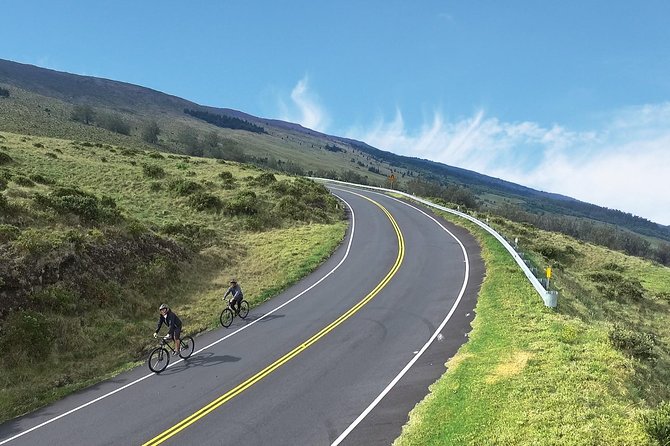
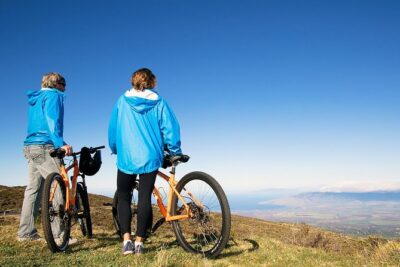
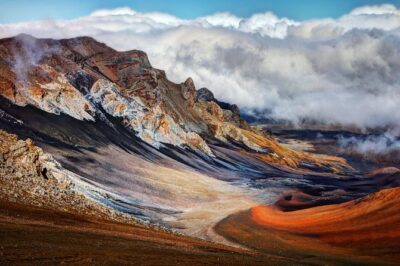
Starting at 6,500 ft is the whole magic of this tour. You feel the change in terrain fast: the air is cooler up top, the road grades feel dramatic, and the switchbacks make every turn feel like a mini event. Even if you’re not “an adrenaline person,” it’s the kind of descent where you can concentrate on steering and coasting, then pause for photos when the view earns it.
The best part is that this isn’t a race. You’re self-guided, which means you can ride tight and focused when the road curves, and slow down when you want to take in what’s around you. And when you want a break, you can actually plan one into your day instead of just surviving the ride.
Self-guided but not on your own
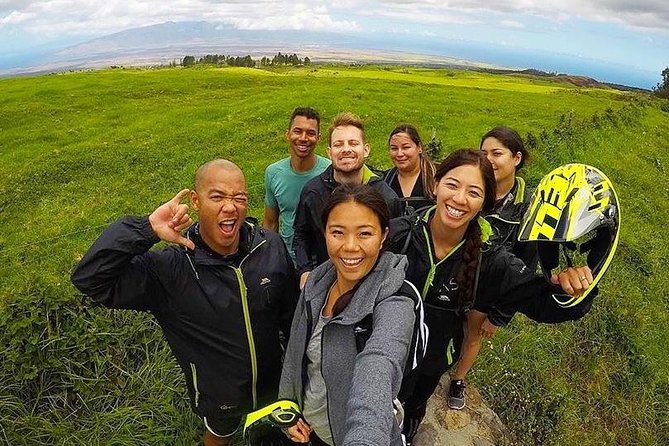
Self-guided sounds like you’re left staring at a map. Here it feels more like guided vibes with more freedom. You’re given the route materials (a route map inside your Dakine backpack), safety gear, and a prep process for the ride. Plus, you’re backed by roadside assistance, so you’re not treating a mechanical problem like a DIY project.
In practice, this setup works well for mixed groups. Some people want the thrills of the descent; others prefer to go steady, take breaks, and enjoy the towns along the way. The self-paced nature is also a real win for first-timers: you can get comfortable with the bikes and the grade before committing to your own speed.
The ride pattern: Haleakalā to Kula to Makawao to Paia
This itinerary is designed to give you both biking and island-town wandering. It’s not just “mountain then done.”
Stop 1: Haleakalā staging at 6,500 ft
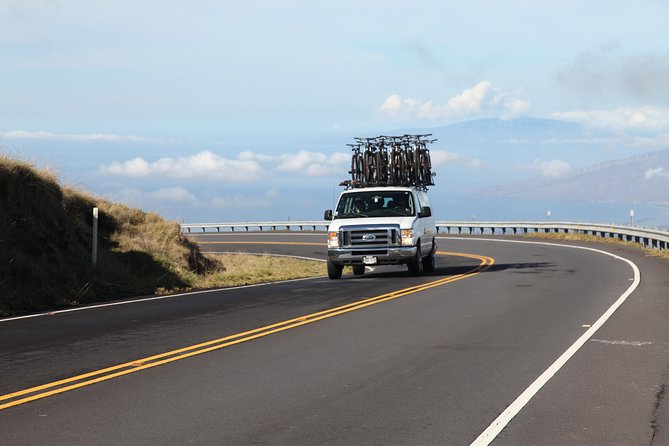
You begin at the staging area where bike operators on Maui typically launch rides—right around 6,500 ft. From there, you start in the upper switchbacks and get the core downhill experience in a self-guided way. This is the portion where you’ll notice bikes with good brakes and steering control really matter, especially on hairpin turns.
A few more Maui experiences we would happily do again
Stop 2: Kula (about 3,200 ft) for a quick break
Kula is part scenic viewpoint, part neighborhood stop. You get a short window (about 15 minutes) where the van shuttle brings you through the Kula area around 3,200 ft on the western slopes of Haleakalā. You’re not there long, so treat it like a “reset” moment: stretch, snap a few shots, and get ready for the next riding segment.
Stop 3: Makawao for lunch and paniolo culture
Makawao is where the ride turns into a real town break. You’ll get about an hour here, in the paniolo (Hawaiian cowboy) country vibe. It’s also an arts community, so the stop can be a blend of practical fuel (lunch) and low-effort browsing through shops and galleries.
This stop is especially valuable if you want your day to feel like more than just physical activity. A bike tour that ends with a walkable town is a big quality-of-life win.
Stop 4: Finish in downtown Paia
You end back at the bike shop in downtown Paia, with about an hour to return your bike and then roam. Paia is known for a casual, funky, laid-back shopping-and-people-watching feel, and it’s a solid place to treat yourself after a steep descent. If you want to keep eating easy, the area around Paia offers plenty of options right after the tour.
What you get for the price: more than a rental bike
At $139 per person for about 4 to 5 hours, the value depends on what you want out of the day. If your goal is simply to ride, you might wonder why the bike time isn’t continuous from top to bottom. But if you want safety gear, daily-tuned equipment, and a planned mix of riding plus town time, the price starts to make sense.
Here’s what’s included that actually changes your day:
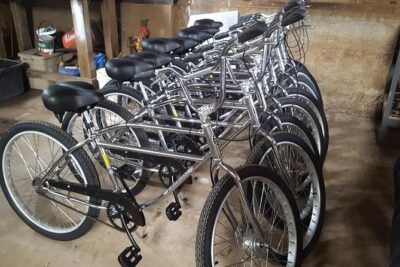
- Mountain bike with front suspension and disc brakes, tuned every day
- Helmet: full-face helmet available for maximum protection, with regular helmets noted for advanced–expert cyclists
- Wind/rain jacket, pants, and bike gloves (handy for morning chill)
- Dakine backpack with bike lock and route map
- Guided drive up to 6,500 ft and roadside assistance
- Only-operator benefit: 3 full-service bike shops, with USA Cycling and BICP certified coaches
That daily tuning detail matters. Steep descents punish bad setups. Good tires, correct gearing for the climb portions, and reliable brakes are the difference between feeling in control and feeling stressed.
Bikes, brakes, and why this matters on steep switchbacks
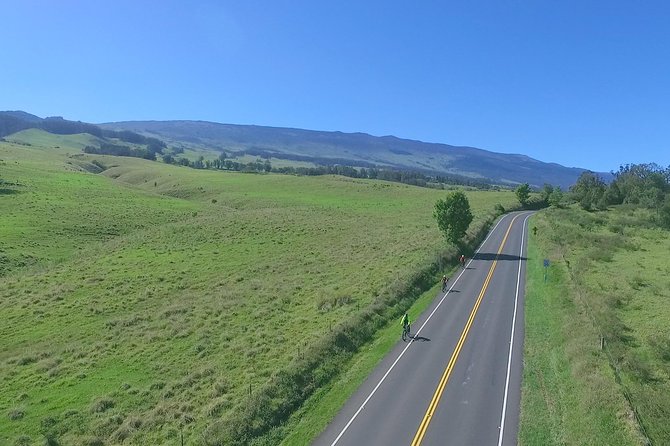
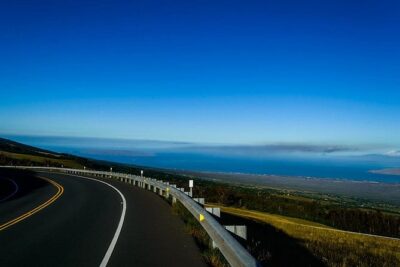
On Haleakalā, steep grade and sharp turns can turn a fun ride into a workout fast. The bikes here are set up for downhill comfort, with front suspension and disc brakes. You’re also told the bike manufacturers’ rider maximum weight is 300 lbs, which is useful if you want to sanity-check fit and safety before you commit.
One theme that shows up again and again is confidence. Many riders found the gear easy to manage, and they pointed to reliable braking and tires as key. Also, the route prep helps—if the road feels confusing, your day can slow down in the wrong way.
If you’re the kind of rider who likes to steer and coast, this fits you. If you want lots of big climbs or lots of pedaling, you may find the ride format more “downhill-focused” than “cycling workout.”
Guides who actually make the ride feel easier
Even with a self-guided format, guides still play a big role. You’ll be driven up, prepped, and supported by staff at the shop. In the experience reports, names like Remy, Dane, Ron, Roy, and Johnny pop up—usually in connection with safety talk, route clarity, and local history.
A good guide can turn an unfamiliar road into something you understand quickly. You’ll hear tips that help you read the ride better: where to relax, when to pay closer attention, and how to make the most of stop time in the towns.
Weather and timing: the early start isn’t optional
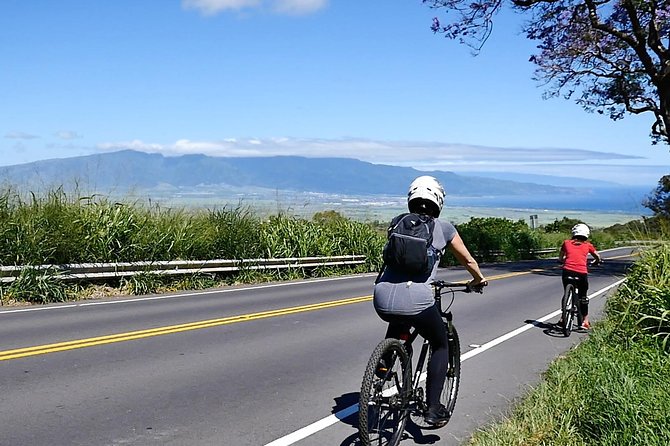
This tour starts at 8:45 am. That morning timing affects what you’ll feel on the first part of the ride—cooler air up at elevation is real, even when lower-elevation Maui feels warm.
You should treat “good weather required” as a serious condition, not a casual note. If the day can’t deliver acceptable riding conditions, you’ll be offered another date or a full refund. On days that do run, the provided wind/rain jacket and pants help a lot, but it still pays to dress like it’s cooler than you think.
Where people feel happiest—and where they get disappointed
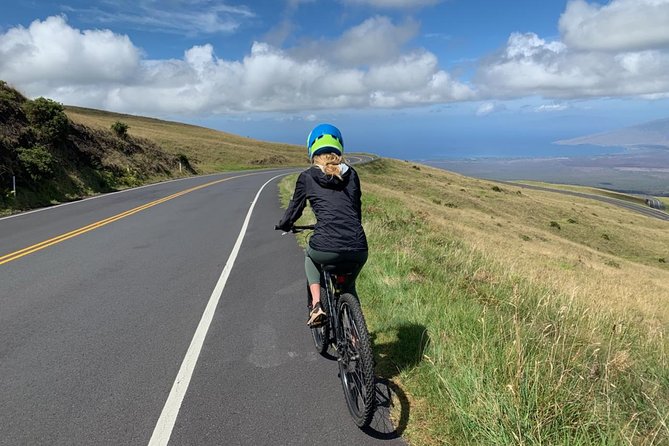
I love that this tour isn’t trying to be a one-speed thrill ride. You can go slow, you can stop for photos, and you can use the self-guided nature to match the day to your group. The Makawao and Paia breaks also stop you from feeling like you spent hours just moving from point A to point B.
The drawback to weigh is simple: you ride the volcano in two separate downhill segments with shuttle time in between. Some days that’s just the design; other days road work can add a little stress and reduce how much pure downhill riding you experience. If you’re expecting a full-from-top-to-bottom biking fantasy, you may feel the time split.
It’s also fair to point out that even great staff can’t change the fact that your best “bike time” isn’t the entire duration. You’re paying for the whole package: gear, safety support, bike tuning, transport up top, and the island-town stops.
Parking tip and practical logistics at Paia
The shop in Paia is your meeting point and return point. If you’re driving, note that parking right in front of the shop costs about a $15 credit card-only fee. A free public lot is available nearby, which can save you hassle if you’re arriving early.
Also keep in mind the tour has a maximum of 30 travelers, which usually helps keep the experience feeling organized rather than chaotic.
Who should book this Haleakalā bike tour?
Book it if:
- you want downhill biking without worrying about constant instruction
- your group includes different comfort levels with steep roads
- you want towns (Kula, Makawao, Paia) built into the day, not as optional detours
- you care about safety gear and bikes tuned daily
Consider skipping if:
- you’re specifically hunting for uninterrupted, summit-to-finish biking time
- road work or van time would frustrate you more than the ride itself
- you’re hoping for a warm-weather, all-pedaling “fitness ride” rather than a steep descent experience
Should you book Maui Sunriders for Haleakalā?
If you’re excited about the idea of riding Haleakalā at your own pace, this is one of the easier ways to do it without feeling like you’re winging it. The value is strongest when you treat it as a half-day plan: tuned bikes, strong safety support, plus Makawao and Paia as real rewards after the descent.
My rule of thumb: if you can accept two riding segments connected by shuttle time, you’ll likely love this. If your dream is maximum bike time with no gaps, you might find yourself wishing for more pedals and less transport.
FAQ
How long is the Haleakalā downhill bike tour?
It runs about 4 to 5 hours.
Where do I meet, and does the tour end there?
You meet at Maui Sunriders Bike Co, 71 Baldwin Ave Suite D3, Paia, HI 96779, and the activity ends back at the meeting point.
Is this tour fully guided?
It’s self-guided. You ride the downhill segments on your own pace, and the tour includes support like roadside assistance and a drive up to the starting elevation.
Do you bike all the way down from the top to the finish?
You ride the upper and lower segments of the volcano, with shuttle time in between that includes a stop in Kula.
What stops are included?
You’ll have stops connected to the route at Haleakalā (starting at 6,500 ft), Kula (about 3,200 ft, around 15 minutes), Makawao (about 1 hour), and Paia (about 1 hour to finish and explore).
What bike and safety gear comes with the tour?
Included are a mountain bike with front suspension and disc brakes, a helmet, wind/rain jacket and pants, and bike gloves, plus a Dakine backpack with a bike lock and route map.
Is there a rider weight limit?
Yes. The bike manufacturers’ recommended maximum weight is 300 lbs.
Is roadside assistance provided?
Yes. Roadside assistance is included for your safety.
What’s the cancellation cutoff for a full refund?
You can cancel for a full refund up to 24 hours in advance of the experience’s start time.
More Tours in Maui
- Maui Pineapple Farm Tour in Haliimaile
★ 5.0 · 2,855 reviews - Small-Group Road to Hana Adventure Tour with Pickup & Lunch
★ 5.0 · 2,637 reviews - Maui Eco-Raft Tour: Eye-Level Whale or Dolphin Watching – Lahaina
★ 5.0 · 2,482 reviews - Road to Hana Adventure Maui Tour with Lunch
★ 5.0 · 1,832 reviews - From Maalaea: Whale Watching Tour Aboard the Quicksilver
★ 4.5 · 1,461 reviews
More Tour Reviews in Maui
- Maui Pineapple Farm Tour in Haliimaile
★ 5.0 · 2,855 reviews - Small-Group Road to Hana Adventure Tour with Pickup & Lunch
★ 5.0 · 2,637 reviews - Maui Eco-Raft Tour: Eye-Level Whale or Dolphin Watching – Lahaina
★ 5.0 · 2,482 reviews - Maui Snorkeling Adventure to Molokini and Turtle Town
★ 4.5 · 2,221 reviews - Maui: Haleakala Sunrise Spectacular with Local Breakfast
★ 4.5 · 2,155 reviews
Coasting Down Haleakala
- Cycle to the Sea with Maui Bombers
★ 5.0 · 406 reviews - Haleakala Express Self-Guided Bike Tour with Bike Maui
★ 4.5 · 271 reviews - Haleakala Sunrise Best Guided Bike Tour with Bike Maui
★ 4.5 · 271 reviews - Maui Haleakala Sunrise Downhill Bike Tour with Mountain Riders Rated #1
★ 4.5 · 262 reviews - Haleakala Summit Best Self-Guided Bike Tour with Bike Maui
★ 4.5 · 107 reviews
More of Maui we have reviewed, from the crater to the coast

Haleakala Bike Tours, compared.
 ★ 5.0Cycle to the Sea with Maui Bombers406 reviews
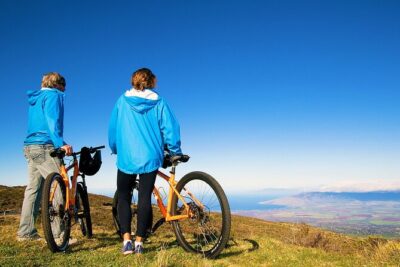 ★ 4.5Haleakala Express Self-Guided Bike Tour with Bike MauiFrom $146271 reviews
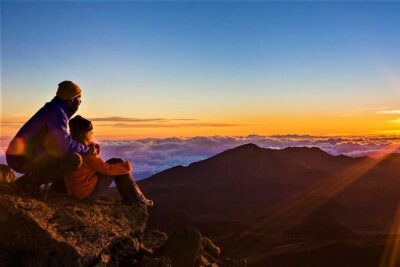 ★ 4.5Haleakala Sunrise Best Guided Bike Tour with Bike MauiFrom $317271 reviews
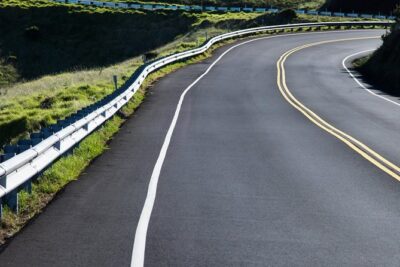 ★ 4.5Maui Haleakala Sunrise Downhill Bike Tour with Mountain Riders Rated #1From $279262 reviews
 ★ 4.5Haleakala Summit Best Self-Guided Bike Tour with Bike MauiFrom $238107 reviews
 ★ 4.5Maui Haleakala Day Bike Tour with Mountain Riders from 6500 to sea levelFrom $14594 reviews
 ★ 4.0Predawn-Morning Haleakala Bike Tour 6,500 to Sea LevelFrom $16559 reviews
 ★ 4.5Maui Haleakala Self Paced Downhill Bike Tour with Mountain RidersFrom $13958 reviews
Browse the lists this tour appears in