
Reviewed · MAUI WHALE WATCHING TOURS
Whale Watching Maui: 2-Hour Small Group Raft Tour from Lahaina
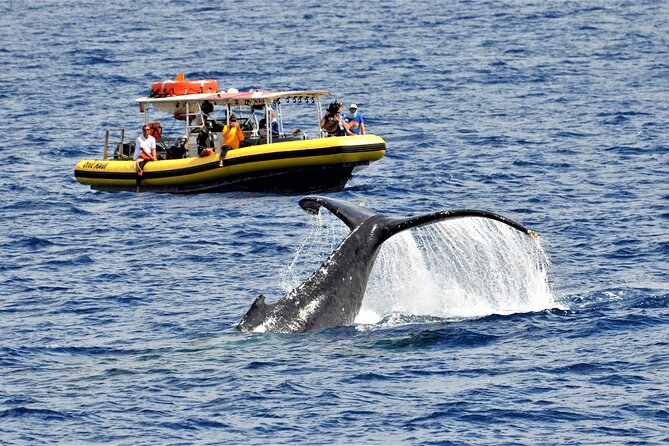
Whales feel close on this Lahaina raft trip. I love the small-group raft setup with wide 360-degree viewing, and I love how the hydrophone helps you hear humpback songs while naturalists like Renee and captains like Will explain what you’re seeing. One thing to keep your expectations realistic: whale activity changes day to day, and boat proximity is regulated, so a slower day can still feel less action-packed.
This is a straight-up winter whale excursion—about two hours out in the Maui Nui whale sanctuary—built around comfort and fast scanning. You’ll get bottled water, and on wet days you’ll be handed rain ponchos so you’re not miserable just because the sky had ideas.
In This Review
- Quick Takeaways
- Why This Lahaina Raft Tour Feels More Personal
- Winter Humpbacks in the Maui Nui Sanctuary: What You’re Really Chasing
- The 2-Hour Flow: From Check-In to Whale Song Time
- Step one: Meet, check in, and get weather-ready
- Step two: Head out into Maui Nui country
- Step three: Positioning for close viewing (when the whales cooperate)
- Step four: Hydrophone moment
- Step five: Back to Lahaina
- Who’s on the Crew and Why Their Roles Matter
- Comfort, Safety, and the Small Details That Save Your Day
- Included comforts and sensible extras
- Simple onboard rules
- Who can and can’t join
- Price and Value: Is $80.60 Worth It?
- The one drawback to price
- What Weather and Whale Behavior Can Do to Your Plans
- Who This Tour Suits Best
- Should You Book This Lahaina Whale Watching Raft Tour?
- FAQ
- How long is the whale watching tour?
- How many people are on the raft?
- Is there a whale spotting guarantee?
- What’s included with the ticket?
- Is alcohol allowed onboard?
- Where do I meet for the tour?
- Are children allowed on this tour?
- Can pregnant people join?
- What’s the cancellation/refund approach if weather is bad?
Quick Takeaways
- Max 20 people keeps the vibe calm and viewing easier.
- Hydrophone + speakers means you can actually hear whale songs.
- Custom inflatable raft gives near-front-row sightlines in many directions.
- Whale guarantee: see whales or take another trip for free (as advertised).
- Rain ponchos and reef-safe sunscreen cover the basics without scrambling.
When the humpbacks are in: more Maui whale watches
- From Maalaea: Whale Watching Tour Aboard the Quicksilver★ 4.5 · 1,461 reviews
- Maui: Ultimate Whale Watch from Lahaina★ 5.0 · 1,162 reviews
- WHALES GUARANTEED Maui Whale Watching Makai Adventures★ 5.0 · 1,081 reviews
- Ma’alaea Harbor: Whale Watching Tour Aboard Power Catamaran★ 4.6 · 979 reviews
Why This Lahaina Raft Tour Feels More Personal
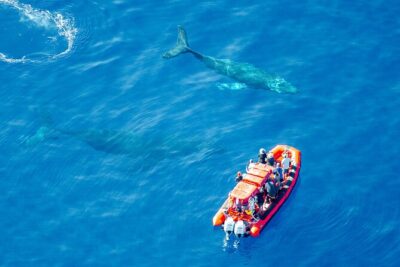
If you’ve ever been on a big boat where everyone crowds to one side, this is the opposite energy. The raft is built for visibility. With a maximum of 20 people, you’re not stuck behind tall hats or the world’s largest sun umbrella.
I also like that the experience isn’t only about spotting whales. The captain and crew are part of the show—scanning, repositioning quickly, and teaching you what to look for so you understand the moment instead of just seeing it for a second.
Finally, the tone is practical. People who care about whale biology get details. People who just want the magic get it too. You get both, without a long lecture that kills the vibe.
Winter Humpbacks in the Maui Nui Sanctuary: What You’re Really Chasing
This tour targets humpback whales during their winter migration. That matters because you’re not just watching random wildlife—you’re in the right area when whales are mating and giving birth, which is when you’re most likely to see the behavior that makes people say wow.
Here’s what tends to stand out when conditions line up:
- Mom-and-calf pairs, which often draw the most attention because they’re close to the action.
- Escort males, which can add extra energy when multiple whales are near each other.
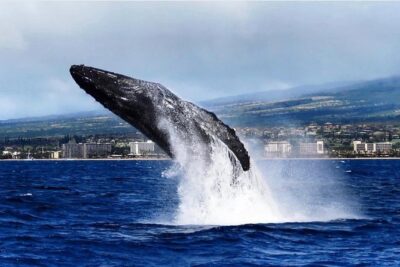
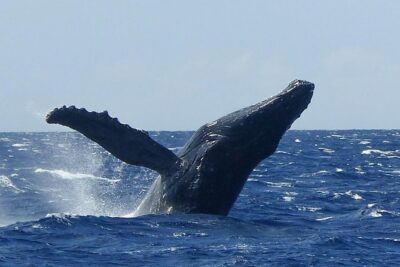
- Breaches and tail activity, the stuff that makes your camera forget how to focus.
You also get something many whale tours don’t emphasize enough: sound. With the hydrophone and speakers onboard, you’re not guessing. When whales sing, you can listen right there on the raft. It turns a visual event into a full sensory one—especially on a quiet day when your brain has room to notice patterns.
The 2-Hour Flow: From Check-In to Whale Song Time
This is an about-two-hours-on-the-water trip, starting and ending back at the same meeting point in Lahaina. What makes it work is the pacing. Instead of wasting time, the boat focuses on being where whales are likely to appear, then repositioning as needed.
Step one: Meet, check in, and get weather-ready
You’ll start at the Dive Maui / Hawaiian Rafting Adventures location on Front St: 1223 Front St, Lahaina, HI 96761. Once you arrive, you’ll get your water and get oriented. On rainy days, you’ll be issued rain ponchos—so you’re not hunting for plastic ponchos in the parking lot.
Practical tip: bring a camera strap you can trust and keep your phone secure. Even on calm water, a raft outing can feel like you’re bouncing along the edge of real life.
A few more Maui experiences we would happily do again
Step two: Head out into Maui Nui country
The tour goes to the Maui Nui whale sanctuary area. You’ll spend this phase looking outward: scanning the horizon and watching for the signs that whales are near. Since humpbacks surface in bursts—not constantly—you’ll learn the value of patience here. The crew’s job is to help you not miss the brief moments.
Step three: Positioning for close viewing (when the whales cooperate)
When whales surface, the captain aims for good viewing while keeping the experience respectful. The raft format helps you see from more angles, so if whales move around, you’re not limited to one side.
But keep expectations grounded. The tour can’t force whale behavior. Even on a “best” day, activity level is always a little unknown. That’s the reality of wild animals.
Step four: Hydrophone moment
One of the standout features is the hydrophone and speaker setup. When it’s working at the right time, it’s the kind of moment that feels personal—like the ocean is letting you listen in. A few guides also take the time to place the equipment so you can hear more clearly, which is when whale songs really land.
Step five: Back to Lahaina
After the 2 hours are up, the trip ends back where you met. It’s long enough to feel complete, short enough that you can still enjoy the rest of your day in Lahaina without it turning into your whole vacation.
Who’s on the Crew and Why Their Roles Matter
The crew is a big part of what you’re paying for—and the names show up again and again. From captain-led driving to naturalist-led interpretation, the experience is built around people who actually care about what humpbacks do and why.
In the real world, that means:
- The captain is focused on finding active whales and moving the raft to keep sightlines strong.
- The marine naturalist shares whale facts in plain language, so you can connect behavior to biology.
You may meet staff such as:
- Captain Will (shown in multiple accounts)
- Captain Joe
- Naturalist Renee
- Naturalist Brian
Even if you don’t get the same exact team, the pattern is clear: you’re meant to leave understanding more than you arrived with. And that’s worth something, because humpbacks are not simple “pop up and wave” animals. Learning what you’re seeing makes the sightings feel bigger.
Comfort, Safety, and the Small Details That Save Your Day
This trip is designed to keep you comfortable in Maui’s winter weather swings. The raft stays practical—less fuss, more function.
Included comforts and sensible extras
- Bottled water is included.
- Filtered water and paper cups are used to reduce plastic waste.
- Reef-safe sunscreen is provided.
- Rain ponchos are provided on rainy days.
- Hydrophone and speaker are included so you can hear whale songs.
Simple onboard rules
BYO alcohol is not allowed in glass containers. If you bring alcohol, keep it in non-glass packaging—or plan to skip it and focus on the whales.
Who can and can’t join
Based on the tour rules:
- Most travelers can participate.
- No children under age 3.
- No pregnant persons.
- Service animals are allowed.
If you’re traveling with kids, this is best for families where everyone is old enough to enjoy a boat outing without needing constant breaks. If you’re pregnant, you’ll need a different activity.
Price and Value: Is $80.60 Worth It?
At $80.60 per person, you’re paying for more than a boat ride. You’re paying for:
- A small group size (max 20) that improves viewing.
- A naturalist-led experience that adds meaning to what you see.
- Hydrophone listening with speakers, which is not standard on every tour.
- Water and gear support (including rain ponchos and reef-safe sunscreen).
- A whale guarantee as advertised: see whales, or take another trip for free.
That last point—the free return if you don’t see whales—can be real value if you’re booking during peak season and want reassurance. Just remember the big caveat: wildlife is wildlife. You’re not buying a performance. You’re buying a good shot at a great day, plus a plan if it doesn’t work out.
The one drawback to price
There is at least one critical perspective: some people felt the “small boat” experience didn’t translate into noticeably closer viewing compared to larger, cheaper tours. Their argument was that the raft stayed at roughly the same distance as big commercial boats.
So how do you decide? I’d treat the “small” part as a comfort and visibility upgrade, not as a guaranteed proximity upgrade. You’re likely to get a better feel onboard, and you may get more opportunities to track whale behavior quickly—but you can’t expect the ocean to follow your ticket.
What Weather and Whale Behavior Can Do to Your Plans
This is a “good weather” tour. That’s not just a line—it’s the nature of small-raft outings in open water.
High winds and rough waves can cause cancellations. When weather is the issue, you’ll typically be offered another date or a full refund, depending on how it’s handled. If you’re booking near the start of your trip, it’s smart to leave some flexibility.
Also: even when the weather is fine, whales can be active or quiet. Humpbacks can be close and lively—or present in a way that’s more subtle. That’s why the crew’s scanning matters, and why the hydrophone feature is such a nice backup. On quieter visual days, listening can still make it feel special.
Who This Tour Suits Best
This raft whale watching trip is a strong fit for:
- Couples who want a memorable, not-too-crowded Maui activity.
- Families with kids age 3 and up who can handle a boat ride and enjoy learning.
- Anyone who likes wildlife education and wants a naturalist involved, not just a driver.
If you hate waiting and need constant action every minute, you might feel restless. But if you can appreciate wild timing—watching for spouts, tails, and sudden movement—this is a good match.
Also, if you care about hearing whale songs (not just seeing whales), the hydrophone setup is a real reason to choose this kind of tour.
Should You Book This Lahaina Whale Watching Raft Tour?
I’d book it if you want a small-group experience with lots of viewing angles, strong interpretation, and the chance to hear whale songs. The price starts to make sense when you factor in what’s included: water, sunscreen, ponchos on wet days, the hydrophone setup, and the whale guarantee as advertised.
I would think twice if your main goal is maximum closeness and you believe “small raft” automatically means dramatically closer than other operators. The ocean doesn’t follow marketing promises, and whale behavior can vary. Still, even when sightings aren’t nonstop, the combination of naturalist talk plus audio from the hydrophone can keep the experience meaningful.
My practical advice: book with a little flexibility in your schedule, wear real rain-ready layers, and bring a camera you can manage one-handed. Then let the crew do what they’re trained to do—find whales, keep you oriented, and help you notice the details that make humpback encounters unforgettable.
FAQ
How long is the whale watching tour?
The tour runs for about 2 hours.
How many people are on the raft?
The tour caps at a maximum of 20 travelers.
Is there a whale spotting guarantee?
Yes. The tour is advertised as a guarantee to see whales, or you can take another trip for free.
What’s included with the ticket?
Included items are hydrophone and speaker equipment to listen to whales, a marine naturalist, reef-safe sunscreen, and filtered water/paper cups. Bottled water is also included.
Is alcohol allowed onboard?
Alcohol is not included, and alcohol is BYO, but glass is not allowed.
Where do I meet for the tour?
The meeting point is at Dive Maui / Hawaiian Rafting Adventures, 1223 Front St, Lahaina, HI 96761. The tour ends back at the meeting point.
Are children allowed on this tour?
Children under age 3 are not allowed.
Can pregnant people join?
No. The tour does not allow pregnant persons.
What’s the cancellation/refund approach if weather is bad?
You can cancel for a full refund up to 24 hours before the experience starts. If the experience is canceled due to poor weather, you’ll be offered a different date or a full refund.
More Tours in Maui
- Maui Pineapple Farm Tour in Haliimaile
★ 5.0 · 2,855 reviews - Small-Group Road to Hana Adventure Tour with Pickup & Lunch
★ 5.0 · 2,637 reviews - Maui Eco-Raft Tour: Eye-Level Whale or Dolphin Watching – Lahaina
★ 5.0 · 2,482 reviews - Road to Hana Adventure Maui Tour with Lunch
★ 5.0 · 1,832 reviews - From Maalaea: Whale Watching Tour Aboard the Quicksilver
★ 4.5 · 1,461 reviews
More Tour Reviews in Maui
- Maui Pineapple Farm Tour in Haliimaile
★ 5.0 · 2,855 reviews - Small-Group Road to Hana Adventure Tour with Pickup & Lunch
★ 5.0 · 2,637 reviews - Maui Eco-Raft Tour: Eye-Level Whale or Dolphin Watching – Lahaina
★ 5.0 · 2,482 reviews - Maui Snorkeling Adventure to Molokini and Turtle Town
★ 4.5 · 2,221 reviews - Maui: Haleakala Sunrise Spectacular with Local Breakfast
★ 4.5 · 2,155 reviews
Whale Season on Maui
- Maui Eco-Raft Tour: Eye-Level Whale or Dolphin Watching – Lahaina
★ 5.0 · 2,482 reviews - From Maalaea: Whale Watching Tour Aboard the Quicksilver
★ 4.5 · 1,461 reviews - Maui: Ultimate Whale Watch from Lahaina
★ 5.0 · 1,162 reviews - WHALES GUARANTEED Maui Whale Watching Makai Adventures
★ 5.0 · 1,081 reviews - Ma’alaea Harbor: Whale Watching Tour Aboard Power Catamaran
★ 4.6 · 979 reviews
More of Maui we have reviewed, from the crater to the coast


Maui Whale Watching Tours, compared.
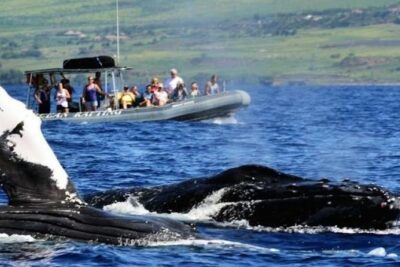 ★ 5.0Maui Eco-Raft Tour: Eye-Level Whale or Dolphin Watching – LahainaFrom $852,482 reviews
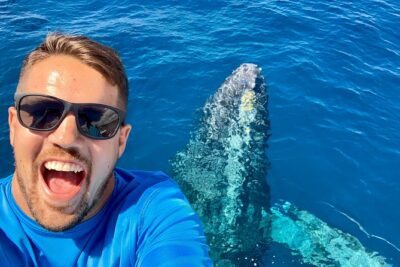 ★ 4.5From Maalaea: Whale Watching Tour Aboard the QuicksilverFrom $491,461 reviews
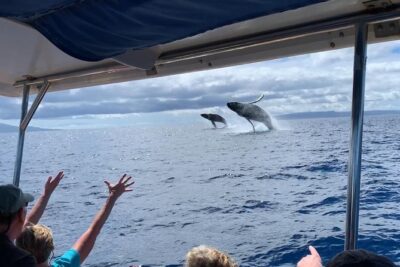 ★ 5.0Ultimate Whale Watch from LahainaFrom $771,162 reviews
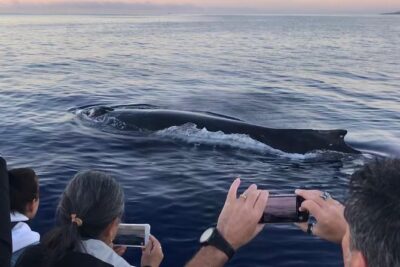 ★ 5.0WHALES GUARANTEED Maui Whale Watching Makai AdventuresFrom $971,081 reviews
 ★ 4.6Ma’alaea Harbor: Whale Watching Tour Aboard Power CatamaranFrom $49979 reviews
 ★ 5.0Whale Watching Cruise with Open Bar from Ka’anapali BeachFrom $115802 reviews
 ★ 5.0Maui Whale-Watching Tour by Raft from KiheiFrom $84646 reviews
 ★ 5.0Whale Watching from Ma’alaea HarborFrom $82537 reviews
Browse the lists this tour appears in