
Reviewed · MAUI CRAFT & ART CLASSES
Polynesian Wood Carving on Maui
Carving on Maui, with history built in. You’ll begin at the Oni Foundation in Kahului with three costume galleries that trace Polynesian and Hawaiian influences over the centuries, and then you shift into a Talk Story session with Uncle Vili. It’s a nice pairing: context first, craft second, and you leave with more than just a photo.
I also really like the hands-on practice. You watch Uncle Vili work, learn the tools and methods, and then you get time to give carving a try with the wood and tools provided. The main drawback: this is only about one hour, so it’s more of an introduction than a long, deep workshop, and you’ll want to manage expectations if you’re hoping for a big project.
In This Review
- Key highlights before you go
- Where you start: Oni Foundation in Kahului
- Three galleries first: costume exhibits and Polynesian-to-Hawaiian connections
- 1:00 pm Talk Story with Uncle Vili
- Watching a full carving come to life
- Try-it-yourself carving: what you’ll actually do
- Price and timing: is $25 worth it?
- Who this Maui wood carving experience suits best
- Small group, English-led, hands-on—what matters on the day
- Should you book Polynesian Wood Carving on Maui?
- FAQ
- How long is the Polynesian wood carving experience on Maui?
- What time does the Talk Story and carving start?
- Where is the meeting point?
- Do I need any carving experience to participate?
- What’s included in the $25 ticket price?
- Is the experience offered in English, and is it for children too?
- Is there free cancellation?
Key highlights before you go
- Three galleries to set the scene: costume exhibits that connect Polynesian migrations to dance, art, and Hawaiian life.
- Talk Story begins at 1:00 pm with Uncle Vili explaining tools, methods, history, and symbology.
- A step-by-step carving demonstration from start to finish, not just a quick show-and-tell.
- You’ll get to try: no experience needed, and tools and wood are provided.
- All ages welcome in a small group (maximum 25 travelers).
- English only, with a local guide who helps you follow along.
Other island craft classes to try your hand at
- Private One Piece Glassblowing Lesson for 1 or 2 People★ 5.0 · 32 reviews
- Lauhala Bracelet Craft Class on Maui★ 5.0 · 18 reviews
- Hula Lesson on Maui (Basics)★ 5.0 · 15 reviews
- Epoxy Resin Cheese Board Art Class★ 5.0 · 15 reviews
Where you start: Oni Foundation in Kahului
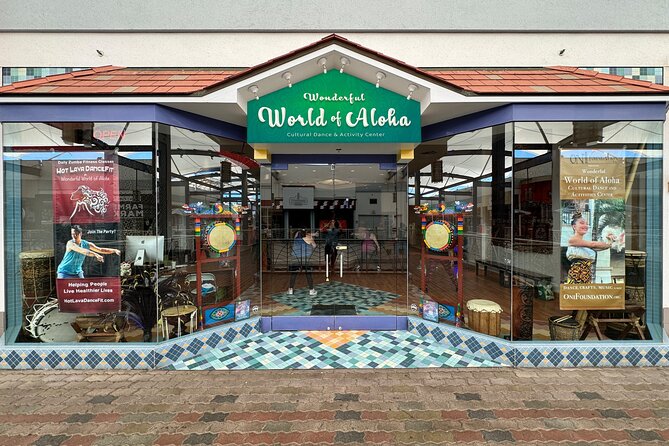
Your experience meets at Oni Foundation Inc – Wonderful World of Aloha Cultural Activity Center, 275 W Kaahumanu Ave, Kahului. This matters because it’s not a random craft booth. The center sets the tone with cultural exhibits that help you understand what you’re about to watch.
Plan to arrive early for check-in. That time gap is part of the value here. Instead of jumping straight into carving, you get a grounding “why” before the “how.”
The session is also structured for real participation. The group size caps at 25 travelers, so it doesn’t feel like being lost in a crowd while someone demonstrates a skill you can’t touch. And since it’s offered in English and described as suitable for all ages, it’s a good option if you’re traveling with kids or multigenerational family members.
Three galleries first: costume exhibits and Polynesian-to-Hawaiian connections
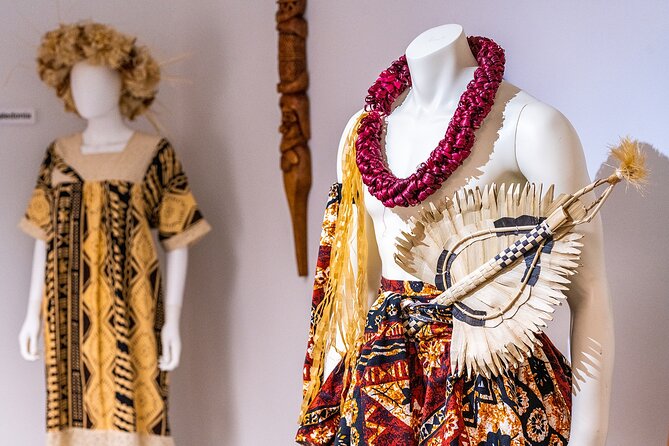
Before 1:00 pm, you’ll spend time exploring three galleries of cultural costume exhibits. The displays focus on migrations to Hawai’i over the centuries and how different cultures influenced dance, art, and everyday Hawaiian life.
I like this setup because it prevents a common problem in craft activities: you see a final carving but don’t understand the cultural grammar behind it. Here, the exhibits give you the “read” that helps you notice meaning later when Uncle Vili talks about tradition and symbols.
You’ll also see the story unfold across major eras, from early Polynesian arrivals to the plantation era and through to modern Hawai’i. Even if you know a little already, this kind of timeline helps your brain connect the dots between heritage, artistic choices, and what people do with their hands and bodies—like dance and carving.
What to consider: this part is more gallery time than sit-and-watch theater. If you prefer a purely active activity with little browsing, you might wish the carving started sooner. But the whole point is to give the craft context.
1:00 pm Talk Story with Uncle Vili
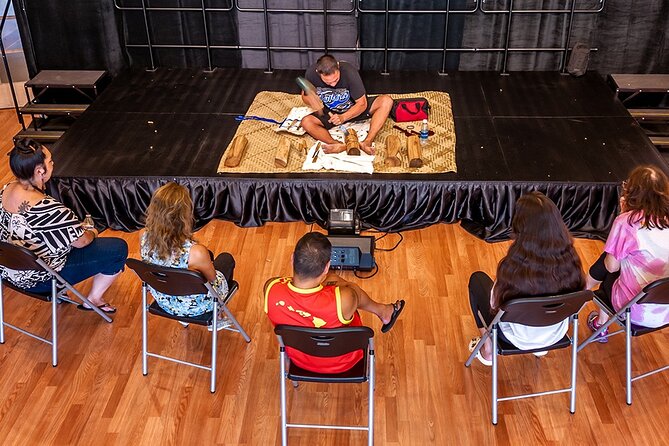
At 1:00 pm, the focus shifts from exhibits to Talk Story with Uncle Vili. The format is described as an expert wood carver sharing how the craft is done and how it’s understood—tools, methods, and his approach to an ancient tradition.
This is where the experience earns its “more than a demo” feel. Uncle Vili talks about the history, tradition, and symbology of Polynesian carving, and he also connects it to his own family’s generations of carving. That family thread is important. Carving here isn’t presented as a one-off skill; it’s portrayed as a practiced lineage and a way of carrying meaning forward.
I also appreciate that the session is paced for conversation. Based on how the activity is described, the vibe is friendly and down-to-earth, with a storyteller’s rhythm—not a stiff lecture. If you enjoy asking questions, this setup tends to be the kind where you can actually talk, not just listen.
One practical note: since it starts at 1:00 pm, you’ll want to be checked in and ready before then. Arriving late can mean you miss the gallery time you paid for with your ticket.
Watching a full carving come to life
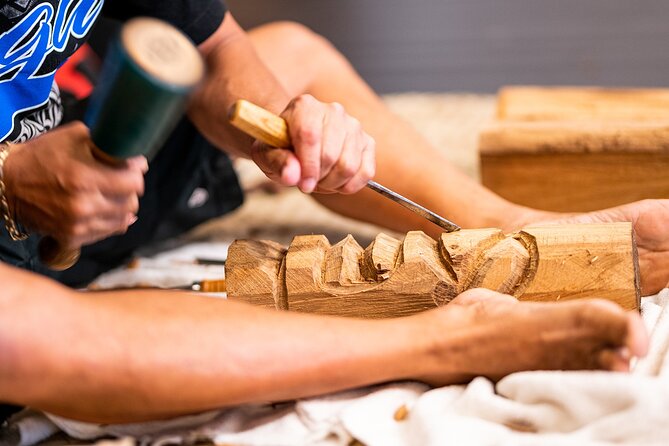
Once Uncle Vili begins, you’ll watch him create a carving from start to finish. The best part of this section is that it’s framed as a process, not a magic trick. You’re supposed to understand the tools and methods while you see the transformation happen.
From a value standpoint, this matters. If you only see the finished result, you miss the craft logic—how makers shape, refine, and stay consistent through each step. Here, the demonstration is built to show you the sequence.
Uncle Vili also shares history and tradition alongside the carving itself. That combination helps you connect technique with meaning. You’re not just learning how wood gets cut—you’re getting a sense of why certain patterns and decisions carry symbolic weight in Polynesian carving.
What you’ll likely notice: the contrast between quick motion and careful work. Even in an hour, the demonstration is paced to highlight the “slow thinking” parts of carving—how the maker approaches the piece.



Try-it-yourself carving: what you’ll actually do
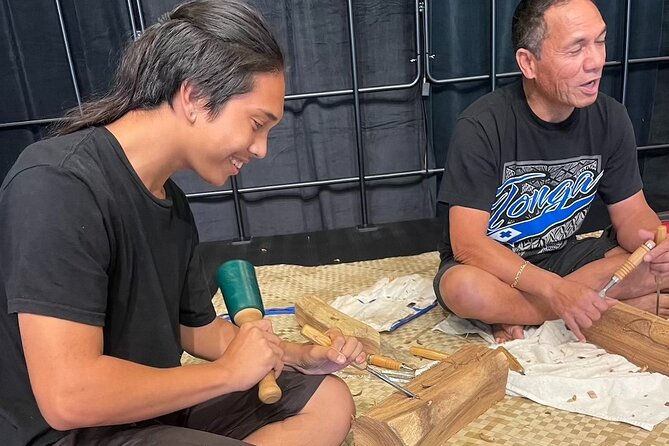
Yes, you get a chance to try. The experience includes tools and wood provided to practice, and it explicitly says no experience is necessary. That’s a big deal for most people, because the hardest part of craft classes isn’t learning—it’s the fear that you’ll be terrible and feel awkward.
This session is set up to avoid that. You’re given what you need, and you’re guided as you try. That means you can participate even if you’re traveling on short notice or don’t want to commit to a full class.
One thing you should keep in mind: the activity is about an hour overall, with gallery time before the main carving Talk Story. So your “try it” portion is likely brief and focused on getting you comfortable with the basics rather than finishing a major artwork.
Also, the info provided doesn’t clearly state whether you’ll take a completed carving home. If that matters to you, ask during check-in so you know what to expect.
Price and timing: is $25 worth it?
At $25.00 per person for about an hour, this is priced like a short cultural experience rather than a long workshop. The value comes from the mix: cultural context in the galleries, a guided Talk Story, a full start-to-finish demonstration, and hands-on time.
A lot of “craft” experiences either lean too museum-like (lots of exhibits, little making) or too workshop-like (lots of making, but minimal cultural grounding). This one aims to balance both. You’ll spend time learning about Polynesian carving’s tools and methods, and you’ll also hear history and symbology explained by Uncle Vili.
If you’re trying to fit Maui into a tight schedule, the one-hour length is a win. It’s long enough to feel real, but short enough that it won’t swallow your whole day.
Possible drawback for budgeting: meals and refreshments aren’t included, and gratuity isn’t included. If you’re someone who likes to plan meals around activities, you’ll want to account for that so you don’t end up hungry at the wrong moment.
Who this Maui wood carving experience suits best
This is a great match if you want culture you can see and touch—without needing special skills. It’s described as suitable for all ages, which makes it a solid family-friendly pick. Kids can enjoy the exhibits and watch the transformation, while adults get the craft and history angle.
It’s also a good choice if:
- you’re a first-timer who wants a gentle on-ramp to Polynesian carving
- you like storytelling and context, not just technique
- you want something more interactive than a standard show
- you prefer a small-group setting (maximum 25 travelers)
And if you’re the type who likes to learn through observation before you try, the “galleries first, carving second” flow fits your style. You’ll get your bearings, then you’ll put your hands to the process.
Small group, English-led, hands-on—what matters on the day
A few practical details can make or break the experience quality.
First: arrive early. You’ll want time to check in and browse all three galleries before 1:00 pm. That pacing is part of the design.
Second: language. The experience is offered in English, with a local guide. If you’re traveling with someone who reads English comfortably, you’ll likely feel included throughout the Talk Story and during the hands-on portion.
Third: group size. With a maximum of 25 travelers, the session should feel manageable rather than chaotic. That’s especially helpful when you’re trying something yourself and need the guide’s attention.
Fourth: location access. It’s near public transportation, which is useful if you don’t want to rely entirely on parking or taxis. Service animals are allowed, which can also matter for family planning.
Should you book Polynesian Wood Carving on Maui?
If you want a short, meaningful Maui activity that blends cultural context with a real craft demonstration, I think you should book it. The best part is the combination: three galleries to frame the story, then Uncle Vili’s Talk Story explaining tools, methods, history, and symbology, followed by hands-on time.
Book it especially if you’re bringing kids, want a small-group cultural stop, or you’d rather do one focused experience well than a long list of quick tourist hits. With an overall 4.8 rating and strong praise for the presentation and Uncle Vili’s friendly, engaging style, the odds are good you’ll leave smiling and a little more curious than when you arrived.
Just go in with the right expectation: this is about learning and trying, not completing a huge project. If you’re okay with that one-hour format, it’s an excellent value way to experience Polynesian wood carving in Maui.
FAQ
How long is the Polynesian wood carving experience on Maui?
It runs for about 1 hour.
What time does the Talk Story and carving start?
The carving Talk Story starts at 1:00 pm.
Where is the meeting point?
You meet at Oni Foundation Inc – Wonderful World of Aloha Cultural Activity Center, 275 W Kaahumanu Ave, Kahului, HI 96732.
Do I need any carving experience to participate?
No experience is necessary. You’ll get a chance to try it yourself, and tools and wood are provided.
What’s included in the $25 ticket price?
The ticket includes tools and wood provided to try it yourself, plus a local guide (English).
Is the experience offered in English, and is it for children too?
Yes, it’s offered in English and it’s listed as suitable for all ages.
Is there free cancellation?
Yes. You can cancel up to 24 hours in advance for a full refund.
More Tour Reviews in Maui
- Maui Pineapple Farm Tour in Haliimaile
★ 5.0 · 2,855 reviews - Small-Group Road to Hana Adventure Tour with Pickup & Lunch
★ 5.0 · 2,637 reviews - Maui Eco-Raft Tour: Eye-Level Whale or Dolphin Watching – Lahaina
★ 5.0 · 2,482 reviews - Maui Snorkeling Adventure to Molokini and Turtle Town
★ 4.5 · 2,221 reviews - Maui: Haleakala Sunrise Spectacular with Local Breakfast
★ 4.5 · 2,155 reviews
Made-on-Maui Classes
- Make your own Maui Souvenir/Ocean resin class
★ 5.0 · 57 reviews - Private One Piece Glassblowing Lesson for 1 or 2 People
★ 5.0 · 32 reviews - Lauhala Bracelet Craft Class on Maui
★ 5.0 · 18 reviews - Hula Lesson on Maui (Basics)
★ 5.0 · 15 reviews - Epoxy Resin Cheese Board Art Class
★ 5.0 · 15 reviews
More of Maui we have reviewed, from the crater to the coast




Maui Craft & Art Classes, compared.
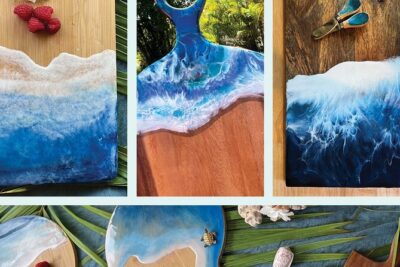 ★ 5.0Make your own Maui Souvenir/Ocean resin classFrom $14957 reviews
 ★ 5.0Private One Piece Glassblowing Lesson for 1 or 2 PeopleFrom $30032 reviews
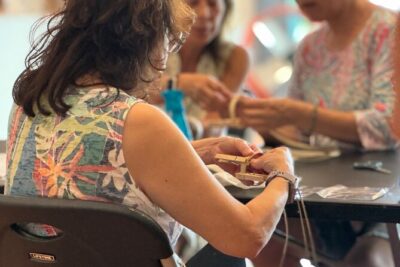 ★ 5.0Lauhala Bracelet Craft Class on MauiFrom $2518 reviews
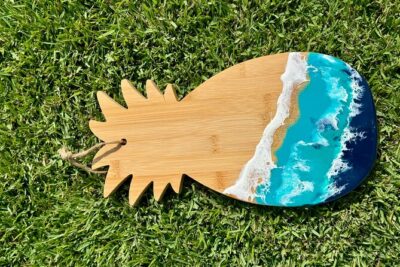 ★ 5.0Epoxy Resin Cheese Board Art ClassFrom $14515 reviews
 ★ 5.0Hula Lesson on Maui (Basics)From $2515 reviews
 ★ 5.0Kukui Nut Airport Lei Greeting (Maui, Kahului Airport, OGG)From $479 reviews
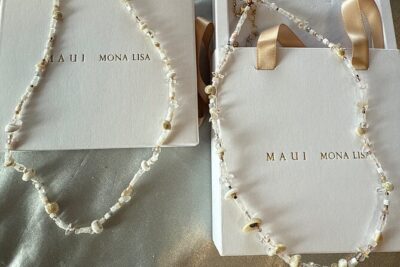 ★ 5.0Maui Jewelry Making Class with Puka Shells and PearlsFrom $1807 reviews
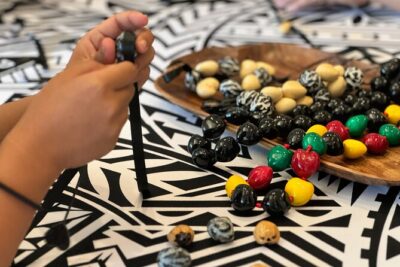 ★ 5.0Make a Kukui Nut Bracelet on MauiFrom $255 reviews
Browse the lists this tour appears in