
Reviewed · MAUI WHALE WATCHING TOURS
Maui: Guided Whale Watching Tour on Eco Raft
You’re watching whales, and you can actually hear them. This semi-private eco-raft tour from Lahaina pairs small-group cruising with a marine naturalist guide and a hydrophone, so you’re not just scanning for spouts—you’re learning what the whales are doing and why it matters.
What I like most is the combo of wildlife time plus interpretation. The guides (people like captain Jack and naturalist Val or Jill are repeatedly praised) focus on behavior and environment, and the hydrophone lets you listen to communication underwater.
The main thing to consider is that “eco raft” also means “adventure raft.” It’s a low-to-the-water setup, so you may get wet, and if seas get choppy, taking steady photos from certain spots can be tougher.
In This Review
- Key takeaways before you book
- Guaranteed whale time from Lahaina’s Front Street
- How the 2–5 hour eco-raft outing really plays
- Whale songs through the hydrophone (not just a visual scan)
- Marine naturalist guidance that makes whales click
- Small-group, family-style cruising that avoids the big-tour chaos
- Staying dry with no snorkeling (and what “no in-water” means)
- What to expect in the whale-watching window
- When seas get choppy: comfort and photo reality
- Snacks on board: a small perk that keeps momentum going
- Bring this so the raft doesn’t steal your trip
- Price and value: is $96 fair for Maui wildlife time?
- Who should book this eco-raft whale tour
- Should you book? My take
- FAQ
- Is the whale sighting guaranteed?
- Do I have to swim or snorkel?
- How long is the tour?
- Where do I check in in Lahaina?
- What should I bring?
- Is this tour good for non-swimmers?
- Who isn’t allowed on this tour?
- What happens if weather affects the trip?
Key takeaways before you book
- Guaranteed whale sighting, with real-world notes: it’s promoted as guaranteed, yet encounter success can vary in wild conditions
- Hydrophone included: you hear whale communication via an underwater microphone
- Small-group feel: semi-private and designed to avoid big-tour crowds
- No snorkeling, all viewing: you stay on the raft, including for non-swimmers
- Snacks on board: pastries, fruit, Maui-style potato chips, cookies, and beverages
- Weather/capacity dependent: you’re heading out for wildlife, so conditions can change plans
When the humpbacks are in: more Maui whale watches
- From Maalaea: Whale Watching Tour Aboard the Quicksilver★ 4.5 · 1,461 reviews
- Maui: Ultimate Whale Watch from Lahaina★ 5.0 · 1,162 reviews
- WHALES GUARANTEED Maui Whale Watching Makai Adventures★ 5.0 · 1,081 reviews
- Ma’alaea Harbor: Whale Watching Tour Aboard Power Catamaran★ 4.6 · 979 reviews
Guaranteed whale time from Lahaina’s Front Street
This tour runs out of Lahaina and keeps the experience simple: you check in at the Hawaii Ocean Rafting Tours location on 1223 Front St, then you’re taken to the departure spot. Most of your time is spent out on the water around West Maui and nearby Lanai waters, looking for whales and also keeping an eye out for dolphins and general ocean scenery.
Even before you go, the “why” is clear. Maui’s whale watching isn’t just about seeing something huge—it’s about seeing the behavior in context. The promise here is strong: a guaranteed whale sighting is part of the pitch. At the same time, the tour info also notes that encounters vary since this is the wild. So I’d treat the guarantee as the operator’s commitment, but still plan for natural variability.
How the 2–5 hour eco-raft outing really plays
The total time is listed as 2 to 5 hours, with actual on-water whale watching time of about 1.5 hours. Your day has a straightforward rhythm: check in, a short push to the boat, then cruising and whale searching, followed by the return ride back to Lahaina’s front-street area.
You’ll spend time on the water in a small eco-raft setup. There’s a 15-minute cruise segment near the start and another 15-minute ride back, so you should expect travel time as part of the experience, not just one long whale-watching block. If you’re the kind of person who hates waiting around, this structure helps because the action starts early.
Whale songs through the hydrophone (not just a visual scan)
One of the most memorable parts of this kind of tour is turning the “mystery” of whale behavior into something you can understand. That’s where the included hydrophone comes in.
Instead of relying only on sight, you listen to whale communication using an underwater microphone. When whales are active near the raft, that sound adds a whole new layer to the trip. In past departures, people have been especially impressed by the impact of hearing whales clearly, not just seeing them.
If you’re thinking, okay, but will I know what I’m hearing, don’t stress. The marine naturalist guide fills in what the sounds likely represent and how whales behave in the area you’re cruising. The goal is not to make you a marine biologist. It’s to help you notice the details that make the sightings more meaningful.
Marine naturalist guidance that makes whales click
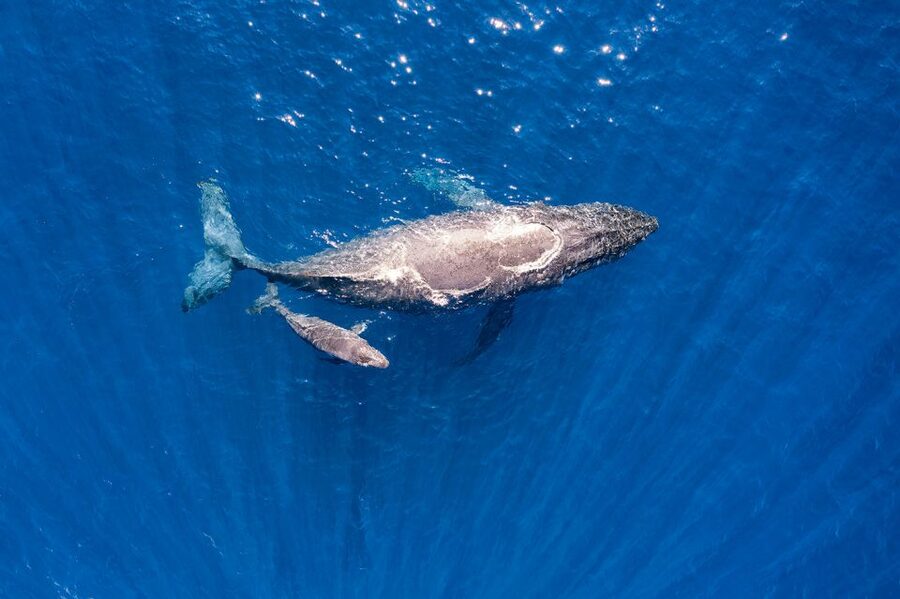
This tour is built around interpretation by a marine naturalist guide. That’s the difference between a basic “spot and stare” cruise and something you actually remember.
The guide time matters because whales follow patterns. When you learn what you’re seeing—breaching, tail action, feeding behavior, social movement—it stops being random. It becomes a story. Past riders have praised guides for bringing new info, and for making the experience feel fun and clear even for families.
A nice touch is that the narration isn’t only about whales. You also get context about the islands and marine environment while the raft cruises the coast. And if dolphins show up, you’re likely to get help interpreting that too, since the tour route also focuses on West Maui and Lanai waters.
A few more Maui experiences we would happily do again



Small-group, family-style cruising that avoids the big-tour chaos
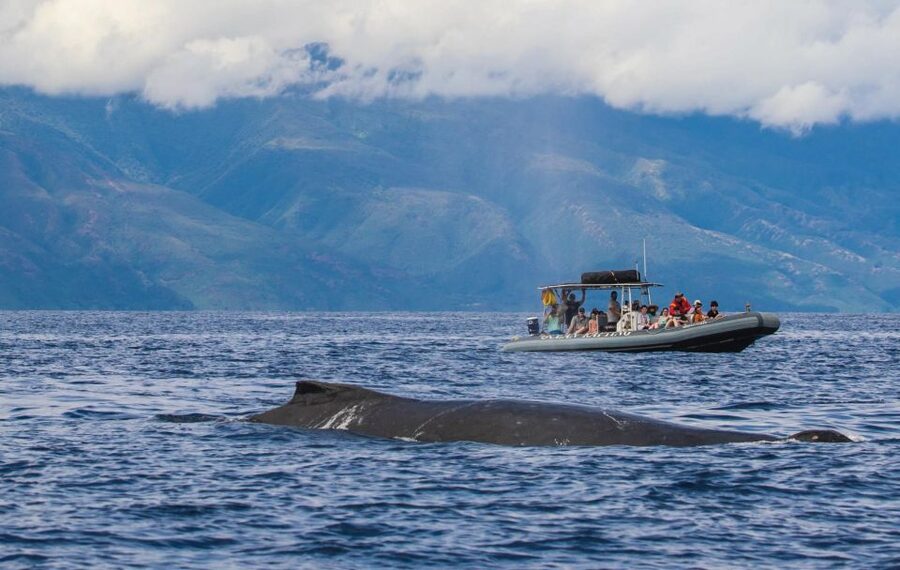
This is positioned as a semi-private and small group option. Translation: fewer people competing for camera angles and less time stuck in a big-group rhythm. The tour info also frames it as family-style and upbeat.
That matters on a raft, because comfort isn’t just about the boat. It’s about how the group moves when whales are spotted. With a smaller setup, it’s easier to feel like you’re part of the search effort, rather than being one more body in a crowd.
Staying dry with no snorkeling (and what “no in-water” means)
You do not do in-water activity here. There’s no snorkeling. All viewing stays on the raft, which is a big deal if you’re traveling with people who don’t want to get wet in the water or can’t swim.
That said, the raft experience can still be a little splashy. The tour notes that the raft is low-to-the-water and passengers may get wet. So this is not a pool-day situation. Bring a waterproof bag for your phone and camera, and a towel in case you end up with spray or mist.
Also pack your expectations correctly: you’re there for whale behavior and ocean watching from the raft, not for swimming with marine life.
What to expect in the whale-watching window
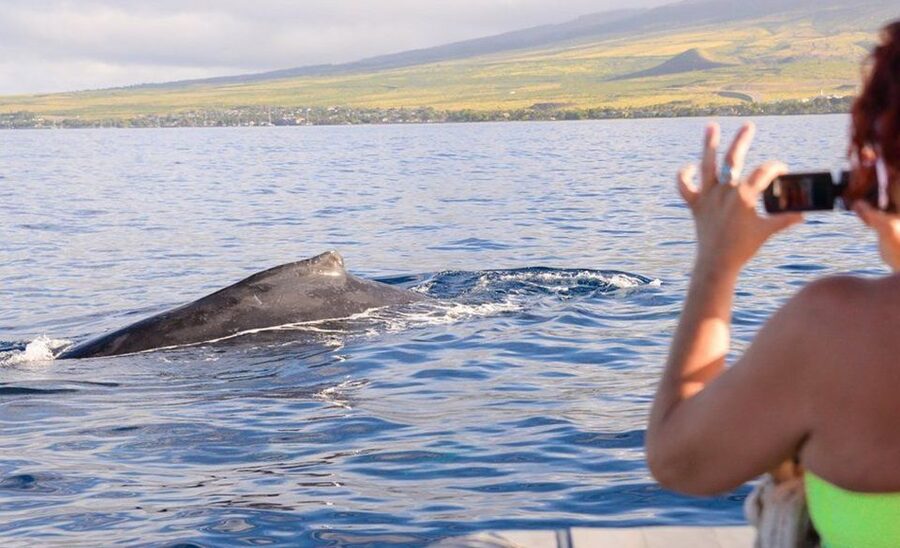
The whale-watching portion is about 1.5 hours. That’s enough time to find action, reposition as whales move, and get multiple moments instead of one brief sighting.
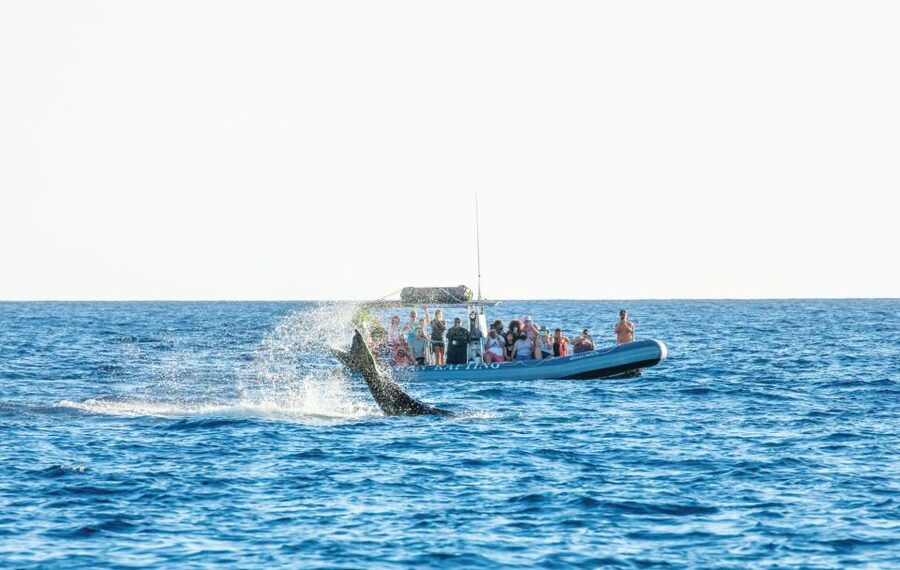
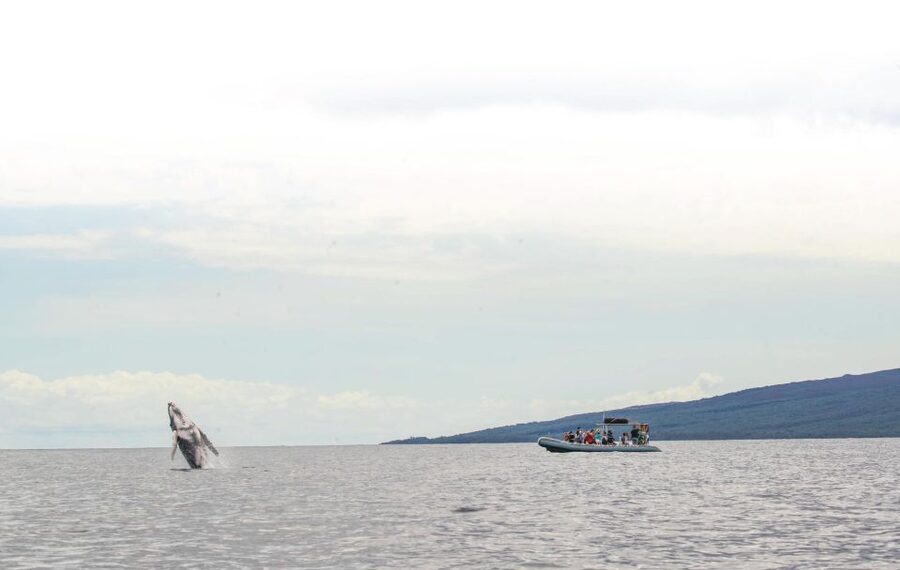
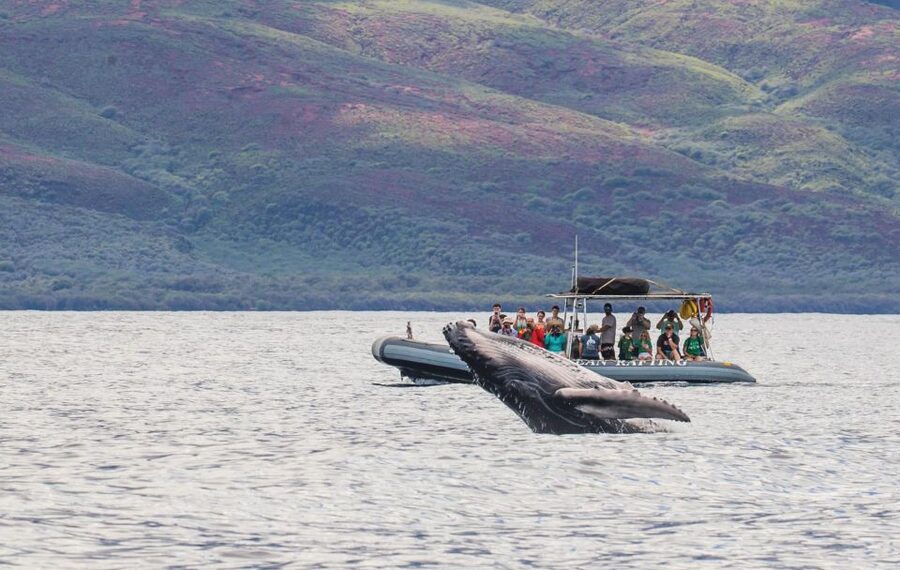
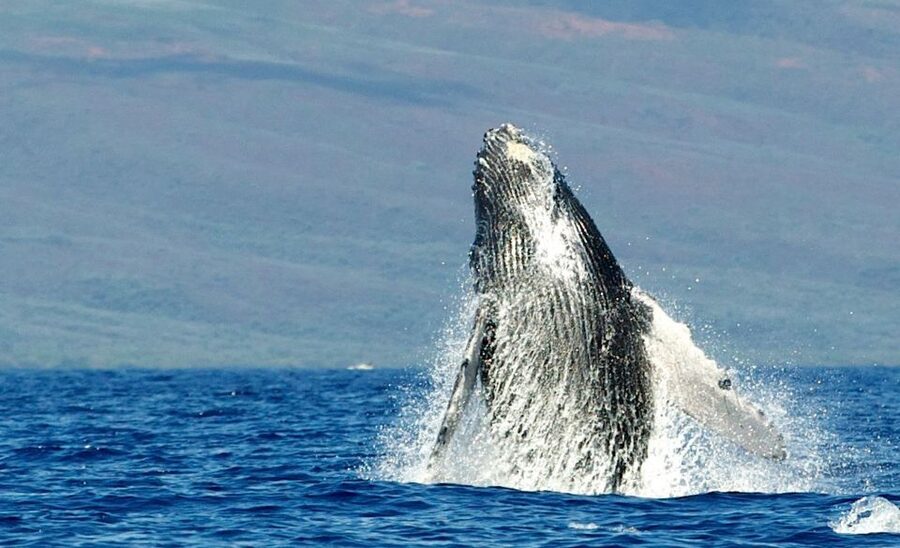
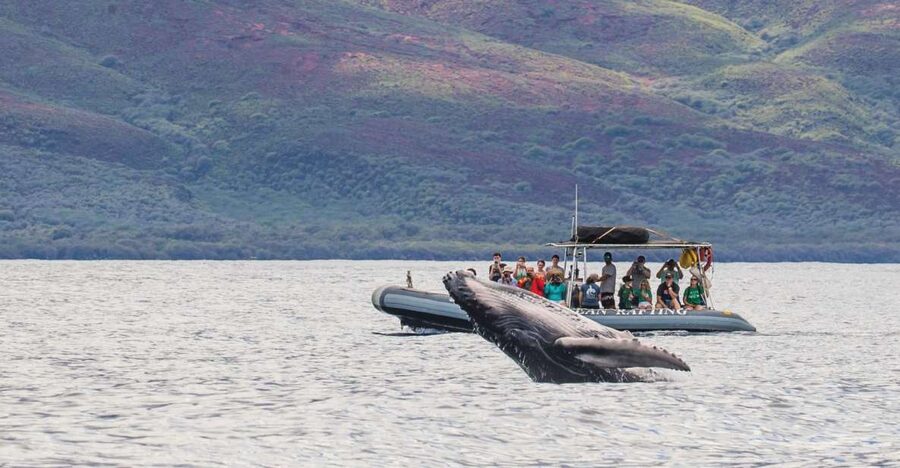
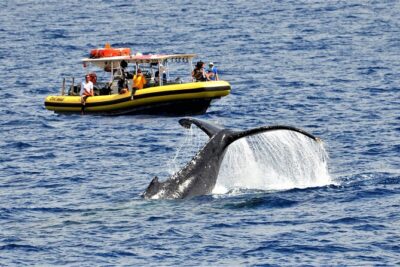
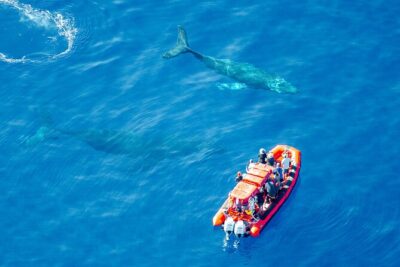
Past trips have included dramatic behavior—breaches, active groups, and close-up moments where whales appear to swim nearby. Some riders also talk about getting clear views of fins and flukes. Those are exactly the kinds of details that come from being on the water long enough to catch whales as they surface and travel.
One practical note: where you sit can matter for views and comfort, especially if the captain adjusts position based on whale locations. If you’re sensitive to motion or want the best sightlines for your camera, ask the check-in team or crew where they suggest you sit once you’re aboard.
When seas get choppy: comfort and photo reality
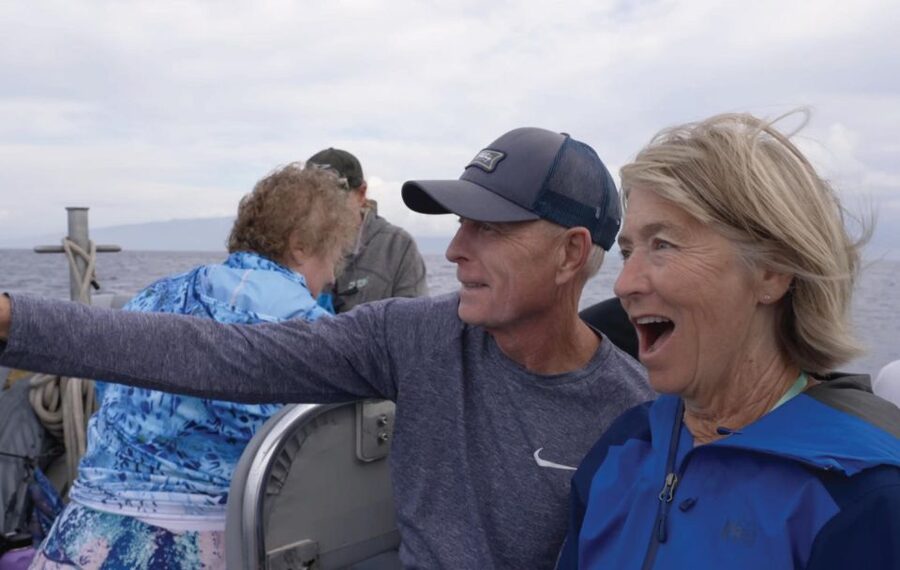
Rafts are fun in Maui because you feel close to the ocean. But you also feel the ocean. The info is honest that it’s an adventure-style low-to-water raft and you may get wet.
The comfort story is generally positive: several past riders say they didn’t get sea sick and that the raft handled real waves well. Still, for photography, expect limits. One review pointed out that taking photos from the front of the vessel can be nearly impossible in choppy seas.
So here’s my practical advice. If photo quality matters a lot, bring a simple strap setup so you can shoot quickly, and be ready to use short bursts instead of trying to hold perfectly steady frames for long. A waterproof camera bag or dry case is worth it if you’re chasing those tail and breach shots.
Snacks on board: a small perk that keeps momentum going
This tour is not just cold ocean air and binoculars. You get sweet pastries, fruit, Maui-style potato chips, cookies, and beverages while the naturalists share facts on marine animals and island life.
Why this matters: whale watching can involve waiting, searching, and repositioning. Having snacks aboard means you can stay focused on the water instead of mentally timing when you can eat next. If you have food allergies, pay close attention to the allergen disclosure. The tour says they cannot guarantee menu items are free of common allergens due to onboard preparation and cross-contact risk.
Bring this so the raft doesn’t steal your trip
You’ll have a better time if you pack for sun, spray, and camera protection. Here’s what the tour lists as recommended:
- Sunglasses
- Sun hat
- Towel
- Waterproof camera (or a dry bag setup)
- Biodegradable sunscreen
- Water shoes
- Waterproof bag
I’d treat the waterproof bag as the must-have. Even if you stay mostly dry, you’ll still want your phone and wallet protected in case of splash. And if you’re bringing sunscreen, choose biodegradable since that’s the expectation for marine-area tours.
Price and value: is $96 fair for Maui wildlife time?
At $96 per person, this sits in a mid-range spot for Maui wildlife tours. Whether it’s a good value depends on what you care about.
If you want a guaranteed shot plus interpretation, the price looks reasonable. You get a marine naturalist guide, hydrophone, and a structured whale-watching window around 1.5 hours plus cruising time. You also get snacks and purified water, which reduces extra spend and keeps the tour feeling complete.
If your main goal is maximum time on the water and the most dramatic possible close-ups, you should compare other options carefully. But based on the way this tour is designed—small group, raft stability, and educational focus—this is a solid pick for most people who want a high-likelihood, low-hassle wildlife outing without dealing with snorkeling logistics.
Who should book this eco-raft whale tour
This tour is a strong fit for:
- Non-swimmers who want ocean wildlife viewing without getting in the water
- People traveling as families who want an organized, straightforward experience
- Anyone who likes learning, since the marine naturalist and hydrophone make it more than sightseeing
- Photographers who understand that some angles can be tough if seas are choppy
It’s not suitable for:
- Children under 3 years
- Pregnant women
- People with back problems
- Wheelchair users
Also, double-check the whale-sighting expectation with their team, since the info includes a promotional “guaranteed” message plus a note that wild encounters vary.
Should you book? My take
If you want a Maui whale-watching trip that feels personal, not crowded, and you love the idea of hearing whale communication—not just seeing it—this is worth booking. The combination of a small eco-raft, a marine naturalist guide, and the hydrophone is a rare mix, and it’s exactly the kind of detail that turns a scenic tour into a lasting memory.
The choice comes down to your comfort with raft conditions. If you’re okay with possible spray and you’re okay letting the crew handle positioning while you focus on the experience, you’ll probably have a great time.
FAQ
Is the whale sighting guaranteed?
The tour is promoted as having a guaranteed whale sighting, though the description also notes encounters can vary in the wild. It’s smart to confirm expectations with the operator before you go.
Do I have to swim or snorkel?
No. This is a no in-water activity tour. You stay on the raft for sightseeing.
How long is the tour?
The duration is listed as 2 to 5 hours, with about 1.5 hours of whale watching time.
Where do I check in in Lahaina?
Check in for Hawaii Ocean Rafting Tours is at 1223 Front St, Lahaina, HI. After check-in, you’ll be taken to the departure location.
What should I bring?
Bring sunglasses, a sun hat, a towel, a waterproof camera, biodegradable sunscreen, water shoes, and a waterproof bag.
Is this tour good for non-swimmers?
Yes. The tour is described as a great option for non-swimmers to enjoy wildlife encounters from the water.
Who isn’t allowed on this tour?
It’s not suitable for children under 3 years, pregnant women, people with back problems, or wheelchair users.
What happens if weather affects the trip?
The tour information says it can be subject to cancellation or rescheduling due to weather or capacity reasons.
More Tours in Maui
- Maui Pineapple Farm Tour in Haliimaile
★ 5.0 · 2,855 reviews - Small-Group Road to Hana Adventure Tour with Pickup & Lunch
★ 5.0 · 2,637 reviews - Maui Eco-Raft Tour: Eye-Level Whale or Dolphin Watching – Lahaina
★ 5.0 · 2,482 reviews - Road to Hana Adventure Maui Tour with Lunch
★ 5.0 · 1,832 reviews - From Maalaea: Whale Watching Tour Aboard the Quicksilver
★ 4.5 · 1,461 reviews
More Tour Reviews in Maui
- Maui Pineapple Farm Tour in Haliimaile
★ 5.0 · 2,855 reviews - Small-Group Road to Hana Adventure Tour with Pickup & Lunch
★ 5.0 · 2,637 reviews - Maui Eco-Raft Tour: Eye-Level Whale or Dolphin Watching – Lahaina
★ 5.0 · 2,482 reviews - Maui Snorkeling Adventure to Molokini and Turtle Town
★ 4.5 · 2,221 reviews - Maui: Haleakala Sunrise Spectacular with Local Breakfast
★ 4.5 · 2,155 reviews
Whale Season on Maui
- Maui Eco-Raft Tour: Eye-Level Whale or Dolphin Watching – Lahaina
★ 5.0 · 2,482 reviews - From Maalaea: Whale Watching Tour Aboard the Quicksilver
★ 4.5 · 1,461 reviews - Maui: Ultimate Whale Watch from Lahaina
★ 5.0 · 1,162 reviews - WHALES GUARANTEED Maui Whale Watching Makai Adventures
★ 5.0 · 1,081 reviews - Ma’alaea Harbor: Whale Watching Tour Aboard Power Catamaran
★ 4.6 · 979 reviews
More of Maui we have reviewed, from the crater to the coast

Maui Whale Watching Tours, compared.
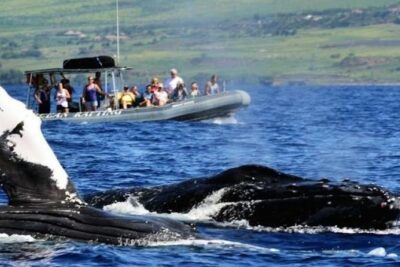 ★ 5.0Maui Eco-Raft Tour: Eye-Level Whale or Dolphin Watching – LahainaFrom $852,482 reviews
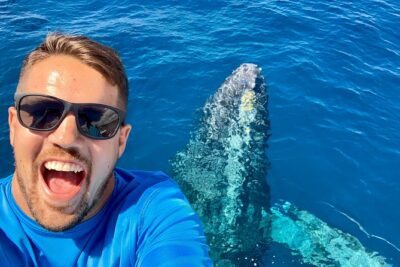 ★ 4.5From Maalaea: Whale Watching Tour Aboard the QuicksilverFrom $491,461 reviews
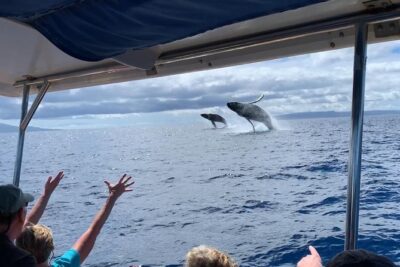 ★ 5.0Ultimate Whale Watch from LahainaFrom $771,162 reviews
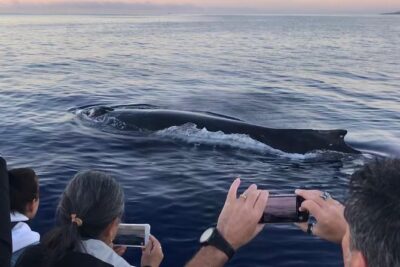 ★ 5.0WHALES GUARANTEED Maui Whale Watching Makai AdventuresFrom $971,081 reviews
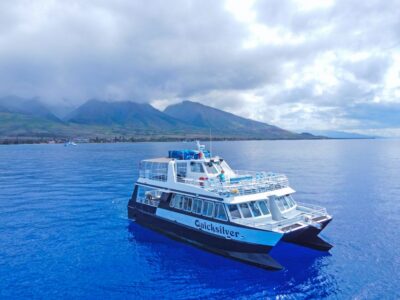 ★ 4.6Ma’alaea Harbor: Whale Watching Tour Aboard Power CatamaranFrom $49979 reviews
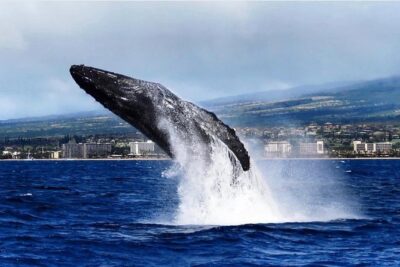 ★ 5.0Whale Watching Cruise with Open Bar from Ka’anapali BeachFrom $115802 reviews
 ★ 5.0Whale Watching Maui: 2-Hour Small Group Raft Tour from LahainaFrom $80661 reviews
 ★ 5.0Maui Whale-Watching Tour by Raft from KiheiFrom $84646 reviews
Browse the lists this tour appears in