
Reviewed · MAUI SCUBA DIVING
Certified Divers! Scuba dive the Ka’anapali Coast and more!
West Maui reefs come up close here. This shore-based scuba session along the Ka’anapali Coast is built for certified scuba participants who want strong safety habits, pro guidance, and a real reef experience just off shore.
I like two things right away: the thorough pre-water briefings that set you up for an easier entry, and the clear focus on safety and solid gear. You’ll also get hands-on leadership from guides like Sarah Sisco and Sarah, with support from the shop team (including owner/manager Deborah) that runs like a tight operation.
One drawback to consider: you must be physically ready to carry gear and handle shore entry/exit, plus there’s a 1000-foot elevation rule for 18 hours after your session.
In This Review
- Key things that make this Ka’anapali shore scuba outing worth your time
- West Maui shore scuba at Kahekili Beach Park: the big picture
- Getting started: meeting at Kahekili Beach Park and what happens first
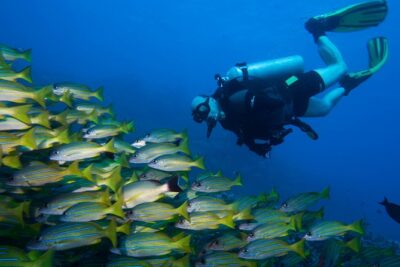
- What you’ll see underwater along the Ka’anapali Coast reef
- The guides and the safety rhythm that makes it feel professional
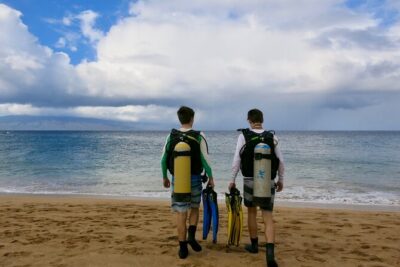
- Shore entry and gear weight: the part that can make or break your comfort
- The 1000-foot elevation rule: don’t treat this like trivia
- Price and value: $169 for 2 hours with gear and fees
- When night or other site types might come up
- Who this Ka’anapali shore scuba outing suits best
- Should you book this shore scuba session with Aloha Maui Diving?
- FAQ
- How long is the Ka’anapali coast shore scuba experience?
- Where do we meet for the tour?
- Is private transportation included?
- Do I need proof of certification?
- What fitness level do I need?
- What is the elevation restriction after the scuba session?
Key things that make this Ka’anapali shore scuba outing worth your time
- Small group (max 6) keeps the attention on you and your buoyancy/comfort.
- Gear + government fees included means you can budget cleanly at $169 per person.
- Shore-based reef time lets you skip boat logistics and focus on the water.
- Real marine-life targets like green turtles, octopus, eagle rays, reef sharks, and more.
- English-required means you’ll get instructions clearly from the professionals.
- Physical and certification requirements are strict for a reason: it keeps the water time safer and smoother.
More Maui dives, from first tank to fully certified
- 2 Tank Lanai Cathedral Scuba Dive Via Boat for Certified Divers★ 5.0 · 548 reviews
- Small-Group Shark and Turtle Dive for Certified Divers★ 5.0 · 219 reviews
- Beginner Scuba Dive in Lahaina: Swimming Required★ 5.0 · 219 reviews
- Discover Scuba Diving Class from Lahaina★ 5.0 · 185 reviews
West Maui shore scuba at Kahekili Beach Park: the big picture
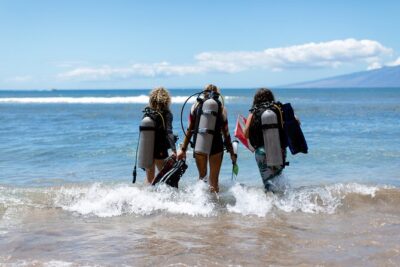
If you’ve ever watched the ocean near Ka’anapali and thought, I want to see what’s under that, this is the straightforward answer. You meet at Kahekili Beach Park in Lahaina, you get set up, and you spend the next stretch of time working an extensive coral reef from shore with certified professionals.
What makes this trip feel different from random reef snorkel plans is the combination of (1) formal scuba requirements and (2) an experienced shop that actually knows how West Maui dives are run. The best part is that the experience is designed around shore access, so the pacing is efficient: check in, gear up, brief, then you’re off into the water and back to the same starting point.
For about 2 hours total, you’re not just booking tank time. You’re buying a structured setup that includes equipment and the local fees—so you can arrive, follow the plan, and spend your energy on enjoying the reef instead of figuring logistics on the fly.
Getting started: meeting at Kahekili Beach Park and what happens first
Your day starts at Kahekili Beach Park, 65 Kai Ala Dr, Lahaina. The tour ends back at the meeting point, which keeps the end of the outing simple—no separate drop-off maze.
Plan on arriving with your documentation and mindset ready for a real shore setup. This isn’t a casual “let’s see how it goes” water adventure. Before you head in, you’ll need to be able to show proof of certification. If you haven’t logged a session in the last two years, a refresher is strongly recommended. The shop’s goal here is confidence: if your skills and comfort are rusty, you’ll get more value from practicing first rather than trying to “wing it” in salt water.
They also keep the requirements clear for safety:
- You must be in good physical health.
- Shore entry/exit is required with the ability to manage your gear. The requirement includes carrying a minimum of 40 lbs for shore entry/exit, and the general note says you must be able to carry at least 50 lbs overall.
- You must be fluent in English, since the professionals are not guaranteed to speak other languages.
If you’ve done scuba before, that may sound like “paperwork.” In practice, it’s what makes shore sessions go smoothly. You’ll spend less time stuck negotiating basic gear steps and more time watching fish and critters.
What you’ll see underwater along the Ka’anapali Coast reef
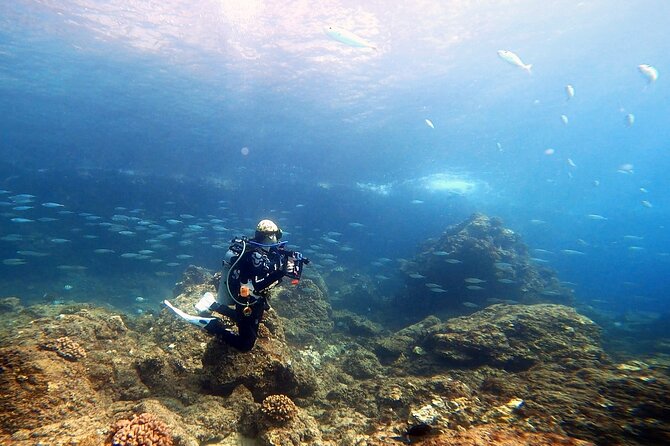
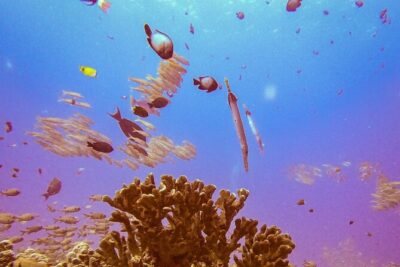
The reef here is the main event. Expect an extensive coral reef area accessed from shore, with guides guiding your path through “hidden corners” of the reef—meaning you’re not just hovering over the nearest spot.
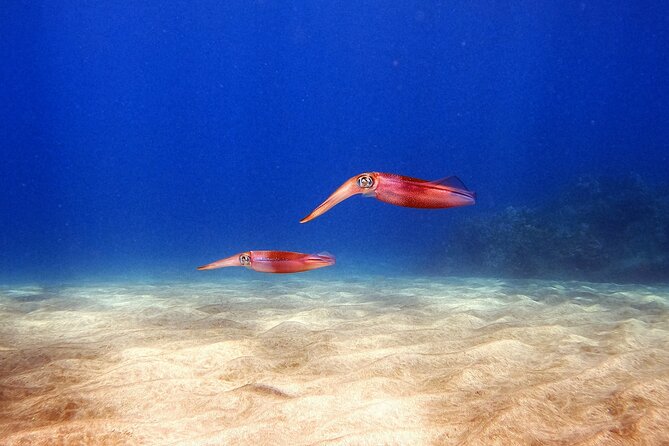
The marine-life list is specific, and it matches what many divers hope for in West Maui:
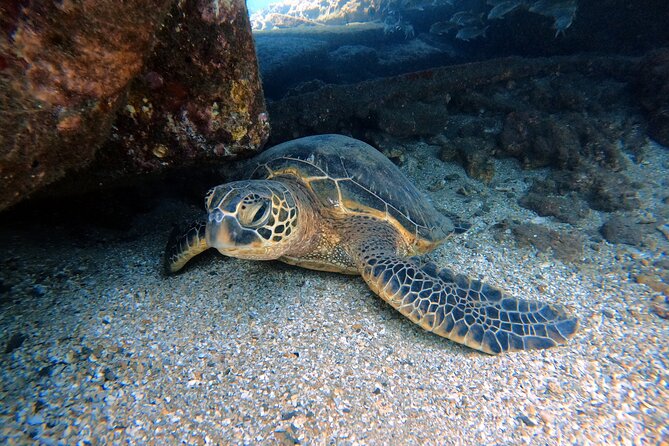
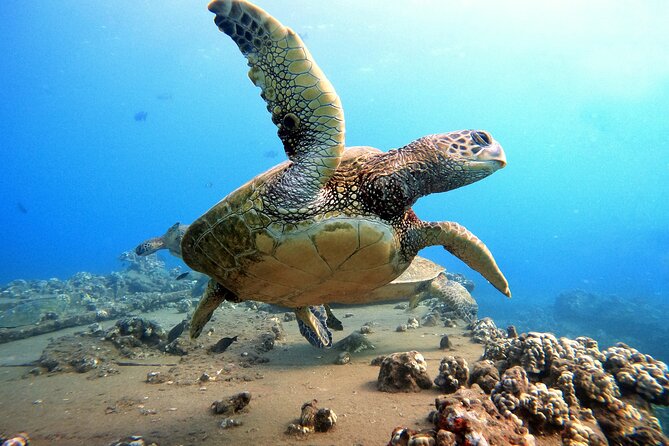
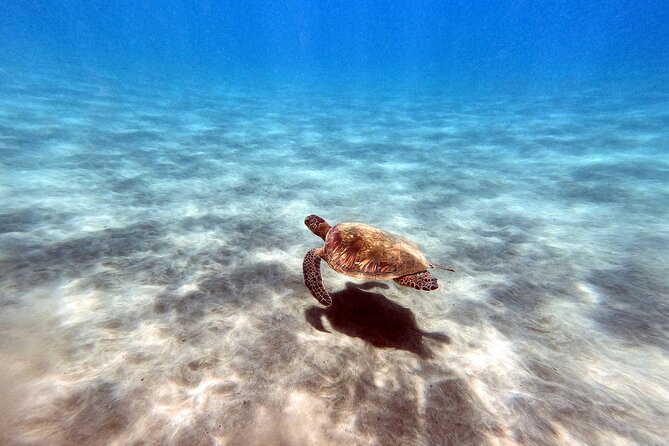
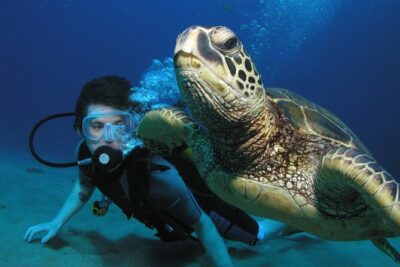
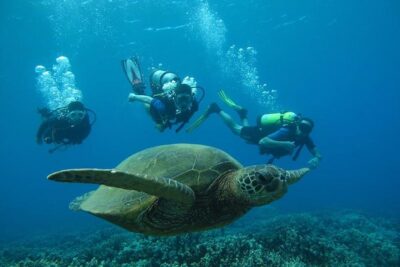
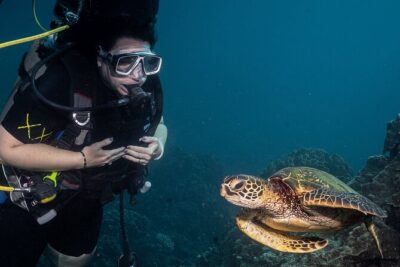
- Green turtles
- Octopus
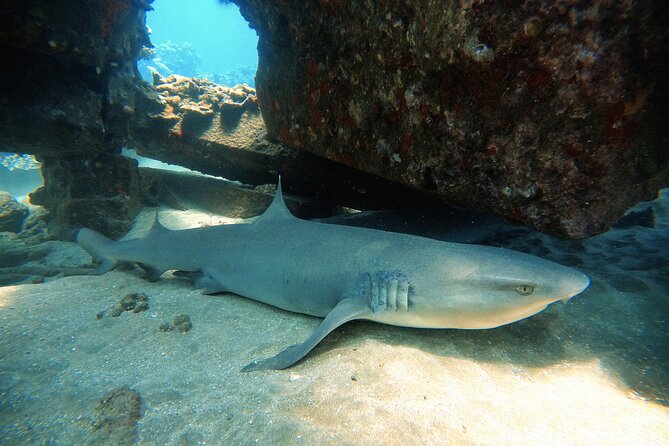
- White tip reef sharks
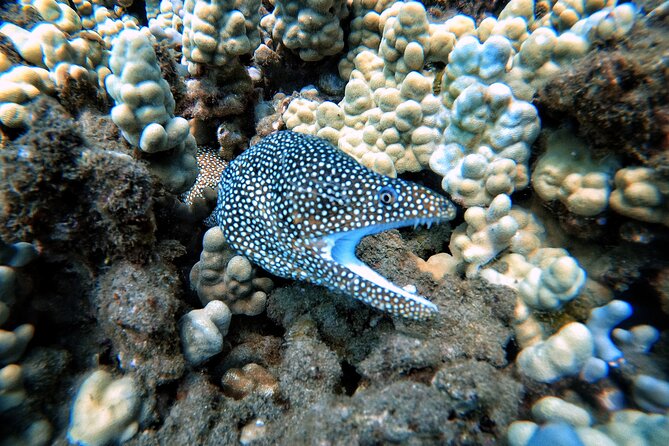
- Moray eels
- Spotted eagle rays
- Frogfish
- Nudibranchs (sea slugs, often small and camouflaged)
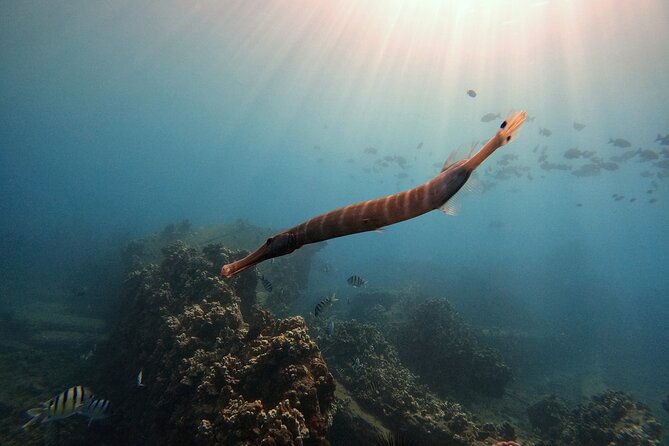
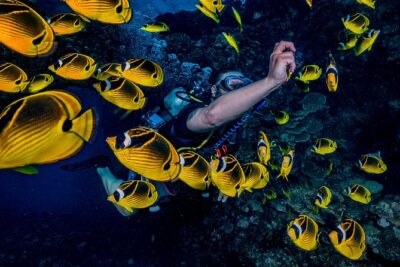
- Lots of colorful reef fish
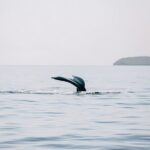
Seasonal note: you may hear whale song when in season. Even if you don’t catch whales on the surface, that audio can add a “big ocean” feeling to a shore outing.
Now, a realistic heads-up: ocean conditions vary. You might see all the “headline” animals, or you might see some and miss others. But the way this outing is set up helps you maximize your chances—your guide is there to help you find and interpret what you’re looking at instead of blindly cruising around.
The guides and the safety rhythm that makes it feel professional
The vibe you want from a scuba team is calm, clear, and safety-minded. This operation is known for running that way.
In particular, the guides get praised for being:
- thorough in briefings
- safety conscious
- friendly and supportive
- good at spotting what others miss
Sarah Sisco shows up in multiple experiences, from leading groups to guiding guests through new-to-shore scenarios with patience. Sarah also earns strong marks as a capable leader with a positive, energetic style. Deborah (owner/manager) is mentioned for making arrangements smoothly and keeping the operation organized, and Brian is also referenced for doing well as a leader on later sessions.
A key detail: on at least one occasion, the leader had a spare regulator ready when someone forgot theirs. That’s not something you should plan for, but it tells you the shop is prepared for real-world chaos—exactly what you want on a shoreline where you can’t just “call the boat” if something goes sideways.
The best part of this safety rhythm is how it affects your comfort. When the briefing is clear and the group size is small, you stop thinking about the mechanics and start using your brain on what’s in front of you.
A few more Maui experiences we would happily do again
Shore entry and gear weight: the part that can make or break your comfort
This outing is shore-based, so the underwater experience depends on what happens before you ever reach the water.
You’ll need to be able to:
- carry gear (the notes mention minimum carrying ability of 50 lbs)
- manage shore entry and exit with the ability to handle at least 40 lbs
- be in good physical health
- stay within the tour’s comfort/safety expectations
That matters because shore entries can be physically demanding. Even if you’re an experienced scuba participant, the “walk in, manage the tank, adjust balance, then go” step is different than jumping off a boat.
If you’re the type who gets tense when you’re not on firm, flat ground, this is worth considering in advance. Choose your prep carefully:
- confirm your weight and gear handling are realistic for you
- plan to be mentally ready for a short but physical start
- be honest about comfort level—if you’re unsafe or uncomfortable in the ocean and decide not to continue, the experience notes say you may not be able to complete it and no refunds are issued
This isn’t meant to scare you. It’s simply how the operator keeps the session fair and safe for everyone.
The 1000-foot elevation rule: don’t treat this like trivia
One of the more important parts of the “fine print” is also the easiest to miss: after your session, you must stay below 1000 ft for 18 hours.
That affects what you do the rest of the day. Attractions above 1,000 ft include:
- Mt. Haleakala
- certain hikes
- upcountry towns like Kula and Makawao
- activities like helicopter tours, paragliding, hiking, and ziplining
If your vacation schedule includes any of those, plan to move them to a different day. This rule is about how your body responds after scuba work, so treating it as a real constraint helps you avoid turning a great reef day into a day you feel off.
Price and value: $169 for 2 hours with gear and fees
At $169 per person for about 2 hours, this is not trying to be the cheapest option. It is, however, one of the cleaner value propositions in the category because equipment and government fees are included.
Here’s what that means for you:
- You don’t have to add equipment rental separately.
- You’re not paying mystery add-ons for local fees.
- You’re budgeting for the experience instead of building a spreadsheet.
Not included: private transportation. That’s the one planning gap. If you’re staying nearby, you might be able to keep it simple. The meeting location is also described as near public transportation, which can help if you’re not renting a car.
Also note the small group max of 6 travelers. You’re paying a bit for that attention and for the team to safely run a shore program with professional pacing.
When night or other site types might come up
While this specific experience is shore-based, you can also see evidence that the shop runs different shoreline locations and even night sessions.
For example, guides have been praised for leading night underwater sessions around Black Rock at Ka’anapali Beach. Others mention excellent sessions at Mala Pier/Mala Ramp and the Old Airport area. You won’t always control the exact site based on conditions, but it’s a sign the operator isn’t guessing—they’re using known shoreline areas that reliably produce good underwater encounters.
If you’re planning a whole week of scuba, this kind of flexibility is a plus because you can spread your time across locations instead of repeating the same view.
Who this Ka’anapali shore scuba outing suits best
This is for certified scuba participants who want a guided reef experience from shore and who meet the practical requirements.
You’ll likely enjoy it most if:
- you’re comfortable managing a tank on shore entry/exit
- you’re fluent in English for clear instruction
- you’re okay with the 18-hour / 1000-ft post-session rule
- you want to see more than just “some fish,” and you like having a guide point out critters like frogfish, nudibranchs, and moray eels
It’s a tougher match if you:
- don’t have proof of certification (required)
- haven’t been in the water in a long time without a refresher
- expect a fully relaxed “no effort” start
- don’t want to plan your rest-of-day itinerary around elevation limits
If you’re on your first scuba steps as a certified participant again after a long break, you’ll get more value by doing a refresher before you come.
Should you book this shore scuba session with Aloha Maui Diving?
Book it if you want a structured, professional shore scuba outing at Ka’anapali that focuses on real reef life, clear briefings, and a small group feel. The included gear and government fees make budgeting easy, and the guide quality shows up repeatedly—especially around safety, patience, and spotting marine life.
Skip it or rethink the timing if you can’t meet the physical gear/shore requirements, can’t follow the 1000-foot elevation rule for 18 hours, or you’re not fluent enough in English to follow instructions confidently. Also, if you’re unsure about your certification currency, do a refresher first so you don’t lose enjoyment to basic re-adjustments.
FAQ
How long is the Ka’anapali coast shore scuba experience?
It runs for about 2 hours.
Where do we meet for the tour?
You meet at Kahekili Beach Park, 65 Kai Ala Dr, Lahaina, HI 96761, USA. The tour ends back at the same meeting point.
Is private transportation included?
No. Private transportation is not included.
Do I need proof of certification?
Yes. You must bring proof of certification. If you haven’t dived in the last two years, a refresher is strongly recommended.
What fitness level do I need?
You should have moderate physical fitness. You must be able to carry at least 50 lbs, and shore diving requires the ability to enter and exit the water with at least 40 lbs.
What is the elevation restriction after the scuba session?
You must stay below 1000 ft for 18 hours after your dive. Activities above that elevation include Mt. Haleakala, certain hikes, upcountry towns like Kula and Makawao, and some activities such as helicopter tours, paragliding, hiking, and ziplining.
More Scuba Diving in Maui
- 2 Tank Lanai Cathedral Scuba Dive Via Boat for Certified Divers
★ 5.0 · 548 reviews - Beginner Scuba Dive in Lahaina: Swimming Required
★ 5.0 · 219 reviews - Discover Scuba Diving Class from Lahaina
★ 5.0 · 185 reviews - Maui Scuba Diving Introductory Lesson from Lahaina
★ 5.0 · 179 reviews - VIP Aloha Nui Snorkel Adventure w/ optional SCUBA from Lahaina
★ 5.0 · 136 reviews
More Tour Reviews in Maui
- Maui Pineapple Farm Tour in Haliimaile
★ 5.0 · 2,855 reviews - Small-Group Road to Hana Adventure Tour with Pickup & Lunch
★ 5.0 · 2,637 reviews - Maui Eco-Raft Tour: Eye-Level Whale or Dolphin Watching – Lahaina
★ 5.0 · 2,482 reviews - Maui Snorkeling Adventure to Molokini and Turtle Town
★ 4.5 · 2,221 reviews - Maui: Haleakala Sunrise Spectacular with Local Breakfast
★ 4.5 · 2,155 reviews
Diving Deeper Off Maui
- 2 Tank Lanai Cathedral Scuba Dive Via Boat for Certified Divers
★ 5.0 · 548 reviews - Intro/Refresher Dive Swim Ability Required
★ 5.0 · 248 reviews - Small-Group Shark and Turtle Dive for Certified Divers
★ 5.0 · 219 reviews - Beginner Scuba Dive in Lahaina: Swimming Required
★ 5.0 · 219 reviews - Discover Scuba Diving Class from Lahaina
★ 5.0 · 185 reviews
More of Maui we have reviewed, from the crater to the coast

Maui Scuba Diving, compared.
 ★ 5.02 Tank Lanai Cathedral Scuba Dive Via Boat for Certified DiversFrom $306548 reviews
 ★ 5.0Intro/Refresher Dive Swim Ability RequiredFrom $239248 reviews
 ★ 5.0Beginner Scuba Dive in Lahaina: Swimming RequiredFrom $229219 reviews
 ★ 5.0Small-Group Shark and Turtle Dive for Certified DiversFrom $135219 reviews
 ★ 5.0Discover Scuba Diving Class from LahainaFrom $158185 reviews
 ★ 5.0Maui Scuba Diving Introductory Lesson from LahainaFrom $227179 reviews
 ★ 5.0South Maui Shore DiveFrom $155147 reviews
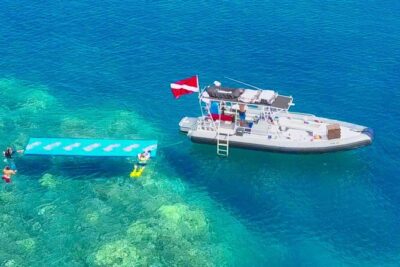 ★ 5.0VIP Aloha Nui Snorkel Adventure w/ optional SCUBA from LahainaFrom $235136 reviews
Browse the lists this tour appears in