
Reviewed · MOLOKINI SNORKEL CRUISES
3-Tank Dive Featuring the Molokini Crater
Clear water makes Molokini easy to love. This 3-tank Molokini Crater trip is built for divers who want more time in the water and a strong shot at wildlife in a protected marine preserve. I especially like the small-boat, tightly managed group feel—max 12 total, split into groups of about 6–8—so you’re not lost in a crowd. I also like the operator’s long track record, with staff focused on one-on-one attention. The main drawback is that it’s not casual: it has strict experience requirements and an early 6:15 am departure that starts the day fast.
Molokini sits just offshore from Kihei, reachable by a short 20–25 minute boat ride. When conditions cooperate, visibility can be excellent year-round, and the area offers a shot at big and small characters—from manta and eagle rays to white-tip sharks, barracuda, and even humpback whales, plus the rare monk seal sighting. You’ll get three separate underwater sessions on this outing, which is why it feels more intense than a basic single-tank trip.
If you’re even a little rusty, this is where the limits show. You must have logged underwater time recently, you’ll need to provide your last dive date and lifetime counts at booking, and you can’t fly or go to high altitude right after the trip (no above 500 feet altitude within 24 hours). So if you’re the type who likes to travel on a whim, plan ahead.
In This Review
- Key things I’d zero in on
- Morning Start at Kīhei Boat Landing
- Why Molokini Crater Is the Main Reason to Go
- The 3-Tank Format: What It Changes for Your Day
- How the Boat Ride Shapes Your Underwater Time
- What You’ll Do at Stop 1: Molokini Crater
- What You’ll Do at Stop 2: Maui Sites and Variety
- Advanced Requirements: Are You Eligible to Board?
- Body Stats, Gear Fit, and Why They Care
- Wildlife Chances: What Premium Encounters Look Like
- Price and Value: Does $375 Make Sense?
- Who This Trip Fits Best (and Who Should Skip It)
- Should You Book This Molokini 3-Tank Trip?
- FAQ
- How long is the Molokini crater 3-tank experience?
- Where do I meet for the tour?
- What time does the trip start?
- What level of recent experience do I need to board?
- How many divers are on the boat?
- What information about my body and gear do I need to provide?
- Is there an altitude restriction after the trip?
- What does the cancellation policy look like?
Key things I’d zero in on
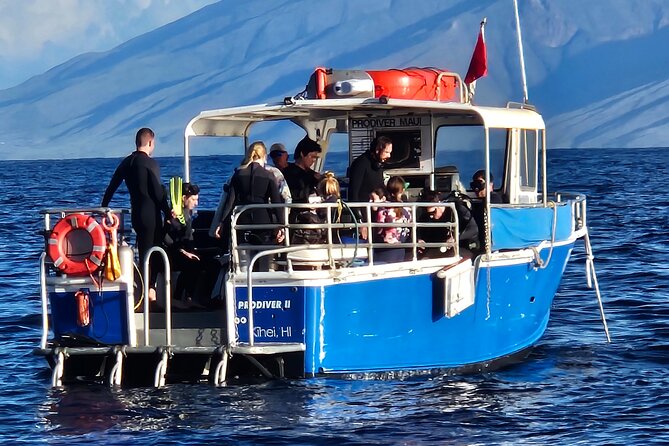
- Small groups, not a cattle call: max 12 divers and group sizes around 6–8 help with control and attention.
- Three underwater sessions: more chances to see wildlife and hit different kinds of underwater terrain.
- Molokini’s protection matters: it’s a marine preserve, which supports strong year-round visibility.
- Targets for different interests: you can cross paths with manta/eagle rays, white-tip sharks, barracuda, and sometimes humpbacks or monk seals.
- Advanced eligibility is real: you must meet experience and recent-log requirements to board.
- Weather decides the plan: it runs weather permitting, so keep your schedule flexible.
More boats out to Molokini Crater, rated and ranked
- Maui Snorkeling Adventure to Molokini and Turtle Town★ 4.5 · 2,221 reviews
- Maui Snorkeling Adventure From Ma’alaea Harbor to Molokini★ 4.5 · 1,997 reviews
- Maui South Coast and Molokini Crater Adventure from Kihei★ 5.0 · 1,575 reviews
- Maui Snorkel Adventure: Molokini Crater and Turtle Cove★ 5.0 · 1,433 reviews
Morning Start at Kīhei Boat Landing
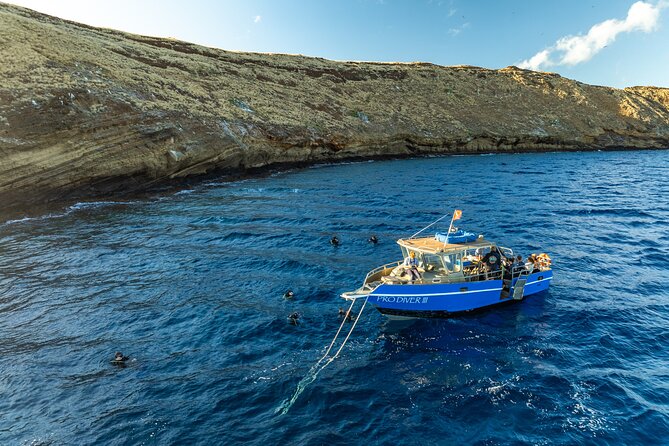
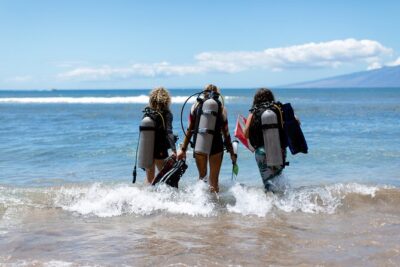
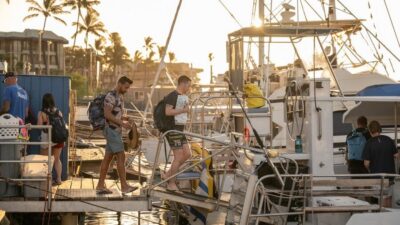
Your day begins at 6:15 am at Kīhei Boat Landing, 2920 S Kihei Rd, Kihei, HI 96753. That early start is partly about timing the best boat conditions and partly about giving you enough hours to get three underwater sessions in before the day builds. If you’re staying in Kihei, it’s usually a straightforward morning—less “Maui traffic roulette” and more getting right to the dock.
The trip ends back at the same meeting point, so you don’t have to think about a complicated end location. You also get a mobile ticket, and confirmation happens at booking, which cuts down on last-minute back-and-forth.
One thing I like about starting here instead of somewhere farther out: Kihei is closer to the boat ramp access you need for Molokini. That matters when the day is already long enough on a 3-tank schedule.
Why Molokini Crater Is the Main Reason to Go
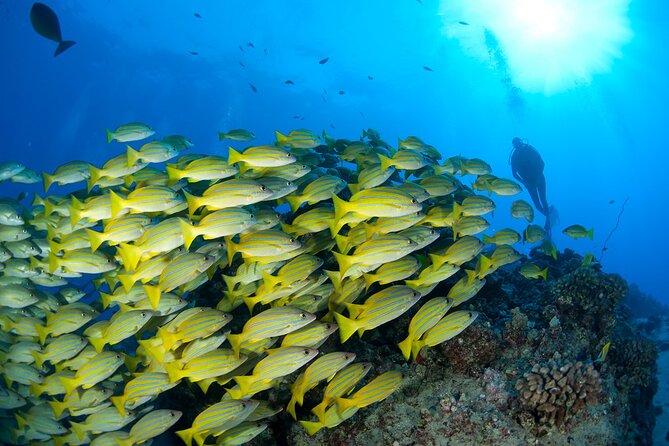
Molokini Crater is a protected marine preserve, and it’s famous for a simple reason: when conditions allow, the water is typically very clear. The trip description calls out crystal-clear visibility year-round, and you feel why divers chase this place—clear water turns casual scanning into real spotting.
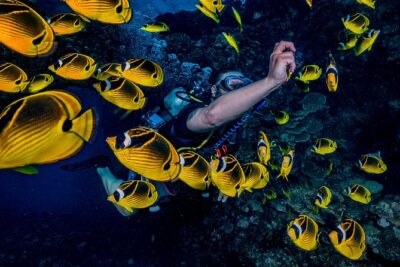
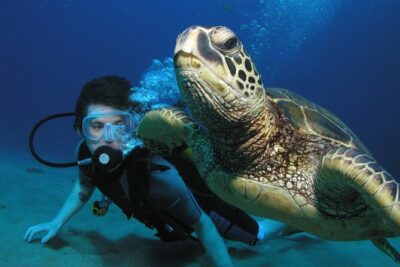
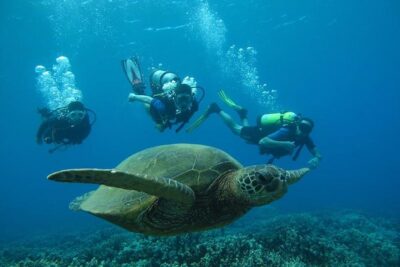
This is also a place where you can realistically hope for a mix of life. Based on what the operator highlights, you’re looking at potential encounters with:
- Manta and eagle rays
- White-tip sharks
- Barracuda
- Humpback whales (when whales are in the area)
- A rare visiting protected monk seal
Now, let’s keep it honest: you can’t control which animals show up on your specific morning. But Molokini is one of the better bets in Maui for trying, because it’s a known preserve with conditions that support good sight.
And if you’re the kind of diver who likes variety, Molokini delivers a different underwater feeling than many shore sites. It’s a crater setting with structured marine life and a strong sense of being in a living ecosystem rather than just drifting past sand.
The 3-Tank Format: What It Changes for Your Day
This outing is designed as an advance 3-tank style experience, which means you’re not doing just one quick underwater session and calling it a day. Three separate sessions typically make the schedule feel “full,” and it also changes how you experience the water.
Here’s what the 3-tank format generally does for you:
- More chances to see wildlife. Even if the first session is quiet, the next one might connect.
- More time in different underwater conditions. Some areas favor scanning; others favor structure and close-up observation.
- A more advanced pace. You should be ready for a plan that’s longer, deeper, or more demanding than entry-friendly trips.
The operator also frames this as a step up from longer, deeper single trips. That’s a useful distinction: instead of just going farther once, you’re getting multiple opportunities while staying within a structured boat-day.
One practical note: because this is advanced, your body and planning need to cooperate. If you’re tired, under-slept, or late to gear up, you’ll feel it faster on a multi-session schedule.
How the Boat Ride Shapes Your Underwater Time
Molokini is close. The boat ride from the Kihei boat ramp is about 20–25 minutes, and that proximity is a big deal for a 3-tank plan. Shorter rides mean you spend more time where you want to be and less time in transit.
The experience is also built around tight staffing and a maximum of 12 divers. The group split is designed for control and attention: no more than 6–8 divers per group. In practice, that kind of setup usually means fewer interruptions and more time for your guide to keep an eye on buoyancy, positioning, and what you’re actually seeing.
Pro-Diver positions this as one diver at a time, and the small cap supports that idea. Whether you’re chasing specific marine life or just want a calm, well-run outing, the group-size math tends to matter more than people expect.
More Maui dives, from first tank to fully certified
What You’ll Do at Stop 1: Molokini Crater
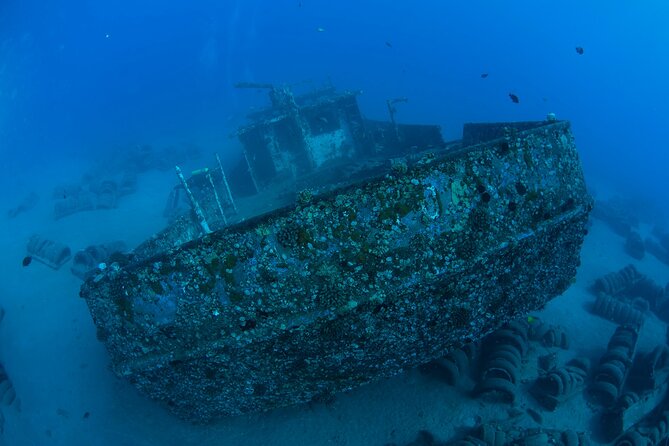
Stop 1 is the real centerpiece: Molokini Crater. The tour description keeps expectations grounded in two things—clear water and the chance of premium encounters.
When Molokini is working, you should plan on:
- Strong visibility that makes spotting easier
- A higher likelihood of seeing rays and other larger fish
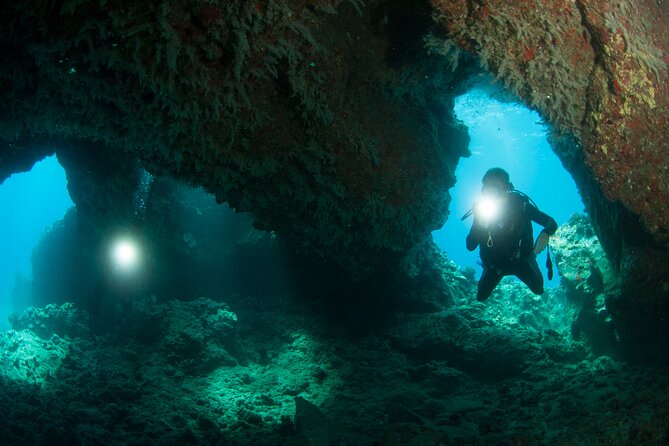
- Reef life that supports the kind of close observation advanced divers enjoy
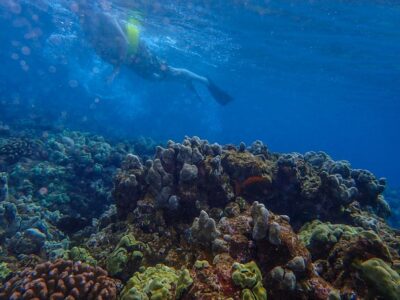
One detail worth highlighting from the experience’s reputation: guests have reported standout encounters with moray eels—described as large and close enough to feel impressive. You might also hear about reef texture being a highlight, including a rubber reef-type experience. That’s the kind of thing you can’t fake from a brochure. If you like the feeling of being above a living, textured underwater world instead of just passing through, Molokini is a smart target.
Also, keep your eyes open for the “big passerby” category. The operator calls out humpback whales and monk seals as rare possibilities. That doesn’t mean you’ll see them, but it does mean you shouldn’t lock your brain into one type of sighting.
What You’ll Do at Stop 2: Maui Sites and Variety
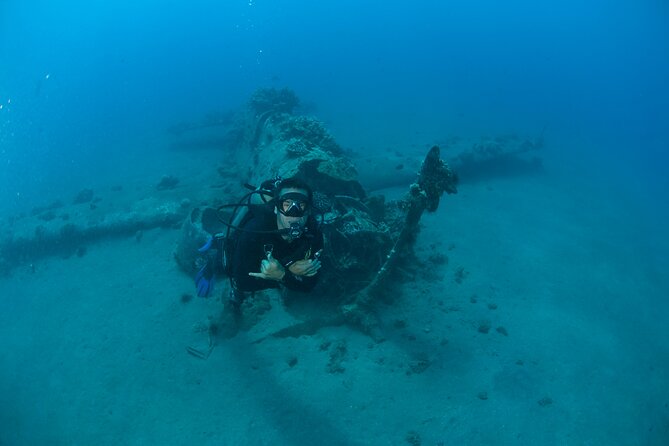
Stop 2 is listed simply as Maui, which likely means the second and/or additional underwater sessions use local sites depending on conditions and the plan for the day. The operator notes that past trips have included several advanced-oriented options.
Here are examples of sites they’ve used on prior outings:
- St. Anthony Wreck
- The Three Anchors area
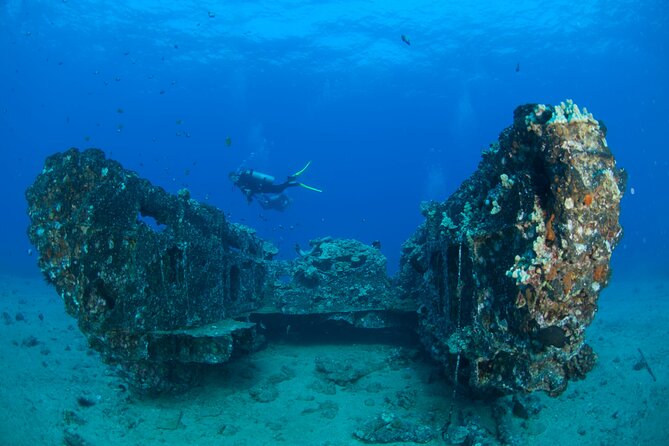
- Wasteland pinnacles, including deeper sections around 85 feet and 110 feet
- A Back Wall drift-style session
Even if your exact sites differ, these examples tell you what “advanced” can mean on this schedule: more structure, more depth potential, and more emphasis on moving water or terrain features.
If you like wrecks, you’ll appreciate the wreck option because it’s usually a magnet for fish activity. If you like vertical structure, pinnacles at those depths can deliver a very different visual experience than flat reef. If you enjoy current and drift skills, a back wall drift-style plan is where you often get that feeling of being guided through underwater terrain rather than just hovering.
The big takeaway: Stop 1 is the famous crater. Stop 2 is where you may get a change of mood—wreck to pinnacles to drift—depending on what the day gives you.
Advanced Requirements: Are You Eligible to Board?
This is the part you should take seriously, because the operator is strict about access. You must meet several requirements before you can board:
- You need to have been on underwater trips within the last 6 months of your planned outing.
- You must have completed at least 25 lifetime underwater sessions.
- You have to provide the date of your last underwater trip and your total lifetime count when booking.
- You must provide your certification level.
- You must share the Age, Height, Weight, and Shoe Size for gear setup. If you don’t provide it, the tour says you cannot board.
That last one surprises some people. Gear isn’t one-size-fits-all, and for a multi-session day, they want to avoid scrambling.
There’s also a post-trip altitude rule: divers cannot travel above 500 feet altitude within 24 hours following the event. In normal language, that means don’t plan a flight the same day. Even driving up into higher terrain could be an issue depending on your actual altitude.
If you’re uncertain whether you meet the requirements, check before you pay for anything else. It’s less stressful than trying to fix it late.
Body Stats, Gear Fit, and Why They Care
The tour requires you to submit your Age Height Weight and Shoe Size. The practical reason is simple: it helps the shop prepare gear that fits correctly, and correct fit affects comfort and safety—especially when you’re planning three sessions.
If you run “between sizes,” this is also why you should book early. You want them to have time to get the gear right rather than rushing into a day that already starts at 6:15 am.
You should also consider the fitness wording: travelers should have a strong physical fitness level. That doesn’t mean you need to be a triathlete, but it does mean this isn’t built for people who get worn out easily by long morning schedules, multiple water entries, or active underwater work.
Wildlife Chances: What Premium Encounters Look Like
The tour’s wildlife promise is a mix of resident and visitor species. The key is that Molokini is framed as a place with year-round clarity, and that clarity increases your ability to spot animals even when they aren’t close to the boat.
From the operator description, here’s what you can hope for:
- Manta and eagle rays: usually spotted by their movement and silhouette through clear water
- White-tip sharks: more likely when visibility and conditions are favorable
- Barracuda: often seen as active fish when structure holds life
- Humpback whales: a possible surface encounter when they’re around
- Monk seals: rare, but the preserve’s protection supports occasional visits
One of the best clues that this trip delivers on the “close encounter” side is the mention of a large moray eel. Large eels often give divers a different kind of thrill than just seeing a fast-moving fish. It’s the difference between spotting and observing.
If you’re the type who likes to slow down and watch behavior rather than just chase movement, this is the kind of trip where that style pays off.
Price and Value: Does $375 Make Sense?
At $375 per person for roughly 4 hours 30 minutes, you’re paying for more than just access. The value is in the structure:
- Three underwater sessions rather than a single outing
- Small group size—max 12 total, split into smaller groups
- A long-running operator with 25 years of experience
- An approach built around conscientious attention to divers, not mass throughput
When you compare multi-session trips to a basic one-tank plan, the extra cost usually pays you back in two ways: more time under water and more chances for good sightings. And because Molokini is close to Kihei, you’re not paying only for distant travel time.
Is it expensive? Yes. But for divers who meet the requirements and want an advanced, wildlife-oriented morning, it’s the kind of price that can feel fair—especially because you’re not going to be stuck in a huge group trying to find your buddy through bubbles.
The best value play is simple: book only if you’re truly ready for the advanced constraints and you can commit to the early start and the post-trip altitude restriction.
Who This Trip Fits Best (and Who Should Skip It)
This tour is built for people who are already comfortable with an advanced schedule and can handle the day physically and mentally.
You’ll likely love it if you:
- Have recent underwater experience within 6 months
- Have logged 25 or more lifetime underwater sessions
- Like structured multi-session outings instead of one longer session
- Want a shot at Molokini wildlife in a small-group setting
You should think twice if you:
- Are unsure you meet the eligibility rules
- Need to fly or change altitude within 24 hours
- Prefer very relaxed, first-timer-friendly pacing
This one is for divers who want to focus on what’s around them and trust the plan.
Should You Book This Molokini 3-Tank Trip?
I’d book this if your priority is a small-group Molokini experience with three underwater sessions and a realistic chance at premium marine life. The combination of a short boat ride, strong visibility potential, and a cap of 12 divers makes it feel like your time in the water is the point.
But don’t book it on impulse. If you can’t meet the recent-experience and lifetime-count requirements, or if you’ll need to jump to high altitude soon after, look for a more flexible option.
If you’re prepared, this is one of those Maui trips where the payoff is simple: clear water, real marine life, and enough time in the plan to make it more than a quick hit.
FAQ
How long is the Molokini crater 3-tank experience?
It runs about 4 hours 30 minutes.
Where do I meet for the tour?
You meet at Kīhei Boat Landing, 2920 S Kihei Rd, Kihei, HI 96753.
What time does the trip start?
The start time is 6:15 am.
What level of recent experience do I need to board?
You must have been on underwater outings within the last 6 months of your planned date. You also need to provide your date of last outing and your lifetime count when booking.
How many divers are on the boat?
The maximum is 12 travelers, split into groups of no more than 6–8 divers per group.
What information about my body and gear do I need to provide?
You must provide your Age, Height, Weight, and Shoe Size. Without this information, you cannot board.
Is there an altitude restriction after the trip?
Yes. Divers cannot travel above 500 feet altitude within 24 hours following the event.
What does the cancellation policy look like?
You can cancel for a full refund up to 24 hours before the start time. If weather cancels the experience, you’ll be offered a different date or a full refund.
More Tour Reviews in Maui
- Maui Pineapple Farm Tour in Haliimaile
★ 5.0 · 2,855 reviews - Small-Group Road to Hana Adventure Tour with Pickup & Lunch
★ 5.0 · 2,637 reviews - Maui Eco-Raft Tour: Eye-Level Whale or Dolphin Watching – Lahaina
★ 5.0 · 2,482 reviews - Maui Snorkeling Adventure to Molokini and Turtle Town
★ 4.5 · 2,221 reviews - Maui: Haleakala Sunrise Spectacular with Local Breakfast
★ 4.5 · 2,155 reviews
Diving Deeper Off Maui
- 2 Tank Lanai Cathedral Scuba Dive Via Boat for Certified Divers
★ 5.0 · 548 reviews - Intro/Refresher Dive Swim Ability Required
★ 5.0 · 248 reviews - Beginner Scuba Dive in Lahaina: Swimming Required
★ 5.0 · 219 reviews - Small-Group Shark and Turtle Dive for Certified Divers
★ 5.0 · 219 reviews - Discover Scuba Diving Class from Lahaina
★ 5.0 · 185 reviews
Molokini Crater, More Boats Out
- Maui Snorkeling Adventure to Molokini and Turtle Town
★ 4.5 · 2,221 reviews - Maui Snorkeling Adventure From Ma’alaea Harbor to Molokini
★ 4.5 · 1,997 reviews - Maui South Coast and Molokini Crater Adventure from Kihei
★ 5.0 · 1,575 reviews - Maui Snorkel Adventure: Molokini Crater and Turtle Cove
★ 5.0 · 1,433 reviews - Maui: Molokini and Turtle Town Snorkeling aboard Pride of Maui
★ 4.5 · 1,124 reviews
More of Maui we have reviewed, from the crater to the coast

Molokini Snorkel Cruises, compared.
 ★ 4.5Maui Snorkeling Adventure to Molokini and Turtle TownFrom $1592,221 reviews
 ★ 4.5Maui Snorkeling Adventure From Ma’alaea Harbor to MolokiniFrom $1851,997 reviews
 ★ 5.0Maui South Coast and Molokini Crater Adventure from KiheiFrom $2321,575 reviews
 ★ 5.0Maui Snorkel Adventure: Molokini Crater and Turtle CoveFrom $1981,433 reviews
 ★ 4.5Molokini and Turtle Town Snorkeling aboard Pride of MauiFrom $2031,124 reviews
 ★ 4.5South Maui: Molokini & Turtle Town Snorkeling Tour with MealFrom $159838 reviews
 ★ 4.5Four Winds Molokini Snorkeling Tour from Maalaea HarborFrom $202821 reviews
 ★ 5.02-Hour Molokini Snorkel TripFrom $143816 reviews
Browse the lists this tour appears in